Showing posts with label Descartes. Show all posts

Friday, March 4, 2022

Descartes (3)


The two aspects of Descartes split apart in his intellectual heritage. His Geometry instructed Newton and Leibniz, and is forever integrated into the living body of mathematics. Mathematicians remember him with the name “Cartesian product” for ordered pairs in set theory and geometry.

In theology, the story is more complex. It would be unfair to suppose Descartes’ bows to the Church were insincere. He really was a devout Catholic. His commitment to philosophy and science originated in a dream-vision of the Blessed Virgin.

Descartes was very considerate of the Church’s worries. Still some denounced him as a skeptic or crypto-skeptic. His First Meditation raises profound doubt. Does the Third Meditation really dispel it? Will his “clear and distinct idea” really revive faith, once his doubt has shaken it? In 1663 he was put on the Index (Vrooman, p. 252). In 1679 Leibniz wrote of Descartes’s philosophy, “I do not hesitate to say absolutely that it leads to atheism” (Leibniz, p. 1).

In the following century, nevertheless, Cartesianism became popular among Church apologists. But Descartes’s follower, the “God-intoxicated” Spinoza, was denounced as an atheist, and “Spinozism” became a synonym for atheism. Cartesians were prominent denouncers of Spinoza (Balz, pp. 218–41).

Descartes (2)


In Rules for the Direction of the Mind, Descartes wrote: “The first principles themselves are given by intuition alone, while, on the contrary, the remote conclusions are furnished only by deduction. . . . These two methods are the most certain routes to knowledge, and the mind should admit no others. All the rest should be rejected as suspect of error and dangerous.” 

Descartes was embracing the Euclidean ideal: Start from self-evident axioms, proceed by infallible deductions. But in his own research, Descartes forgot the Euclidean ideal. Nowhere in the Geometry do we find the label Axiom, Theorem, or Proof. 

In classical Greece, and again in the Renaissance and after, mathematicians distinguished two ways of proceeding—the “synthetic” and the “analytic.” The synthetic way was Euclid’s: from axioms through deductions to theorems. In the analytic mode, you start with a problem and “analyze” it to find a solution. Today we might call this a “heuristic” or “problem-solving” approach. 

In formal presentation of academic mathematics, the synthetic was and still is the norm. Foundationist schools of the nineteenth and twentieth centuries identify mathematics with its synthetic mode—true axioms followed by correct deductions to yield guaranteed true conclusions. 

In his Rules for the Direction of the Mind, Descartes insists on the synthetic method. But his own research, in the Geometry, uses only the analytic mode. He solves problems. He finds efficient methods for solving problems. Never does he bother with axioms. 

Descartes’s conviction of the certainty of mathematics might lead readers to expect that at least Descartes’s own mathematics is error-free. But of course, as we will see, the Geometry, like every other math book, has mistakes. Certitude is only a goal.

**

You won’t find in the Geometry the method we teach nowadays as Cartesian or “analytic” geometry. Our analytic geometry is based on rectangular coordinates (which we call “Cartesian”). To every point in the plane we associate a pair of real numbers, the “x” and “y” coordinates of the point. To an equation relating x and y corresponds a “graph”—the set of points whose x and y coordinates satisfy the equation. For an equation of first degree, the graph is a straight line. For an equation of second degree, it’s a circle or other conic section. Our idea is to solve geometric problems by reducing them to algebra. Nowhere in Descartes’s book do we see these familiar horizontal and vertical axes! Boyer says it was Newton who first used orthogonal coordinate axes in analytic geometry.

**
The conceptual essence of analytic geometry, the “isomorphism” or exact translation between algebra and geometry, was understood more clearly by Fermat than by Descartes. Fermat’s analytic geometry predated Descartes’s, but it wasn’t published until 1679. The modern formulation comes from a long development. Fermat and Descartes were the first steps. Instead of systematically developing the technique of orthogonal coordinate axes, the Geometry studies a group of problems centering around a problem of Pappus of Alexandria (third century A.D.). To solve Pappus’s problem Descartes develops an algebraic-geometric procedure. First he derives an algebraic equation relating known and unknown lengths in the problem. But he doesn’t then look for an algebraic or numerical solution, as we would do. He is faithful to the Greek conception, that by a solution to a geometric problem is meant a construction with specified instruments. When possible Descartes uses the Euclidean straight edge and compass. When necessary, he brings in his own instrument, an apparatus of hinged rulers. Algebra is an intermediate device, in going from geometric problem to geometric solution. Its role is to reduce a complicated curve to a simpler one whose construction is known. He solves third and fourth-degree equations by reducing them to second degree—to conic sections. He solves certain fifth-and sixth-degree equations by reducing them to third degree. A modern reader knows that the general equation of fifth degree can’t be solved by extraction of roots. So he’s skeptical about Descartes’s claim that his hinged rulers can solve equations of degree six and higher. Descartes was mistaken on several points. In themselves, these are of little interest today. But they discredit his claim of absolute certainty. Descartes’s mathematics refutes his epistemology. 

Emily Grosholz and Carl Boyer point out errors in the Geometry. “When he turns his attention to the locus of five lines, he considers only a few cases, not bothering to complete the task, because, as he says, his method furnishes a way to describe them. But Descartes could not have completed the task, which amounted to giving a catalogue of the cubics. . . . Newton, because he was able to move with confidence between graph and equation, first attempted a catalogue of the cubics; he distinguished seventy-two species of cubics, and even then omitted six” (Grosholz, referring to Whiteside).

**

Descartes claimed his Method was infallible in science and mathematics. He was more cautious with religion. He didn’t derive Holy Scripture or divine revelation by self-evident axioms and infallible deductions. When he heard that Galileo’s Dialogue on the Two Chief Systems was condemned by the Holy Church, he suppressed his first book, Le Monde, even though he was living in Holland, safe from the Church. (Galileo was kept under house arrest at first. For three years he had to recite the seven penitential psalms every week.) Descartes wrote to Father Mersenne, “I would not want for anything in the world to be the author of a work where there was the slightest word of which the Church might disapprove.”

**

Like Pascal, Newton, and Leibniz, Descartes may have valued his contributions to theology above his mathematics. His struggle against skeptics and heretics is the major half of his philosophy, more explicit than his battles with scholastics. “In Descartes’ reply to the objections of Father Bourdin, he announced that he was the first of all men to overthrow the doubts of the Sceptics . . . he discovered how the best minds of the day either spent their time advocating scepticism, or accepted only probable and possibly uncertain views, instead of seeking absolute truth. . . . It was in the light of this awakening to the sceptical menace, that when he was in Paris Descartes set in motion his philosophical revolution by discovering something so certain and so assured that all the most extravagant suppositions brought forward by the sceptics were incapable of shaking . . . in the tradition of the greatest medieval minds, (he) sought to secure man’s natural knowledge to the strongest possible foundation, the all-powerful eternal God” (Popkin, p. 72). The essence of the Meditations is a proof that the world exists by first proving Descartes exists, and then, by contemplating Descartes’s thoughts, proving that God exists and is not a deceiver. Once a non-deceiving God exists, everything else is easy.


Descartes


D’Alembert wrote that it was Descartes who first “dared . . . to show intelligent minds how to throw off the yoke of scholasticism, of opinion, of authority—in a word, of prejudices and barbarism. . . . He can be thought of as a leader of conspirators who, before anyone else, had the courage to arise against a despotic and arbitrary power, and who, in preparing a resounding revolution, laid the foundations of a more just and happier government which he himself was not able to see established.” 

Philosophers of the scholastic persuasion pointed to the dangerous parallel between Descartes’s scientific individualism and the outlawed Protestant heresy. Descartes said individual thinkers could find scientific truth; Protestants said individual souls could find direct communion with the Almighty. But the Holy Roman Catholic Church knew that individual souls and thinkers could be deceived. It took the experience and wisdom of the Church to prevent the seeker from wandering astray. Despite such scholastic criticism, Descartes quickly came to dominate West European intellectual life.

**

Like Galileo, Descartes recognized mathematics as the principal tool for revealing truths of nature. He was more explicit than Galileo about how to do it. In every scientific problem, said Descartes, find an algebraic equation relating an unknown variable to a known one. Then solve the algebraic equation! With the development of calculus, Descartes’s doctrine was essentially justified. Today we don’t say “find an algebraic equation.” We say “construct a mathematical model.” This is only a technical generalization of Descartes’s idea. Our scientific technology is an inheritance from Descartes.


Mainstream Philosophies of Mathematics


Frege
                                                          

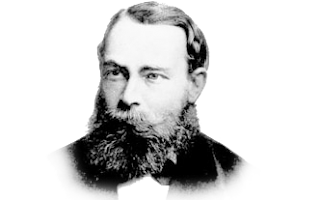
The name “foundationism” was invented by a prolific name-giver, Imre Lakatos. It refers to Gottlob Frege in his prime, Bertrand Russell in his full logicist phase, Luitjens Brouwer, guru of intuitionism, and David Hilbert, prime advocate of formalism. Lakatos saw that despite their disagreements, they all were hooked on the same delusion: Mathematics must have a firm foundation. They differ on what the foundation should be. 

Foundationism has ancient roots. Behind Frege, Hilbert, and Brouwer stands Immanuel Kant. Behind Kant, Gottfried Leibniz. Behind Leibniz, Baruch Spinoza, and René Descartes. Behind all of them, Thomas Aquinas, Augustine of Hippo, Plato, and the great grandfather of foundationism—Pythagoras. 

We will find that the roots of foundationism are tangled with religion and theology. In Pythagoras and Plato, this intimacy is public. In Kant, it’s half covered. In Frege, it’s out of sight. Then in Georg Cantor, Bertrand Russell, David Hilbert, and Luitjens Brouwer, it pops up like a jack-in-the-box.

In the twentieth century, we look at Russell, Brouwer, Hilbert, Edmund Husserl, Ludwig Wittgenstein, Kurt Gödel, Rudolph Carnap, Willard V. O. Quine, and a small sample of today’s authors. Philip Kitcher said the philosophy of mathematics is generally supposed to begin with Frege—before Frege there was only “prehistory.” Frege transformed the issues constituting philosophy of mathematics. In that sense earlier philosophy can be called prehistoric. But to understand Frege you must see him as a Kantian. To understand Kant you must see his response to Newton, Leibniz, and Hume. Those three go back to Descartes, and through him to Plato. Plato was a Pythagorean. The thread from Pythagoras to Hilbert and Gödel is unbroken. I aim to tell a connected story from Pythagoras to the present—where foundationism came from, where it left us. 

Instead of going straight through from Pythagoras, I’ve split the story into two parallel streams—the first section is about the “Mainstream.” The second is about the “humanists and mavericks.” 

For the Mainstream, mathematics is superhuman—abstract, ideal, infallible, eternal. So many great names: Pythagoras, Plato, Descartes, Spinoza, Leibniz, Kant, Frege, Russell, Carnap. (For Kant, membership in this group is partial.) 

Humanists see mathematics as a human activity, a human creation. Aristotle was a humanist in that sense, as were Locke, Hume, and Mill. Modern philosophers outside the Russell tradition—mavericks—include Peirce, Dewey, Roy Sellars, Wittgenstein, Popper, Lakatos, Wang, Tymoczko, and Kitcher (a self-styled maverick). There are some interesting authors who aren’t labeled philosophers: psychologist Jean Piaget; anthropologist Leslie White; sociologist David Bloor; chemist Michael Polányi; physicist Mario Bunge; educationists Paul Ernest, Gila Hanna, Anna Sfard; mathematicians Henri Poincaré, Alfréd Rényi, George Pólya, Raymond Wilder, Phil Davis, and Brian Rotman.

Sunday, January 3, 2016

Algebra


Algebra is the generic term for the maths of equations, in which numbers and operations are written as symbols. The word itself has a curious history. In medieval Spain, barbershops displayed signs saying Algebrista y Sangrador. The phrase means ‘Bonesetter and Bloodletter’, two trades that used to be part of a barber’s repertoire. (This is why a barber’s pole has red and white stripes—the red symbolizes blood, and the white symbolizes the bandage.)

The root of algebrista is the Arabic al-jabr, which, in addition to referring to crude surgical techniques, also means restoration or reunion. In ninth-century Baghdad, Muhammad ibn Musa al-Khwarizmi wrote a maths primer entitled Hisab al-jabr w’al-muqabala, or Calculation by Restoration and Reduction.

**
Al-Khwarizmi wasn’t the first person to use restoration and reduction—these operations could also be found in Diophantus; but when Al-Khwarizmi’s book was translated into Latin, the al-jabr in the title became algebra. Al-Khwarizmi’s algebra book, together with another one he wrote on the Indian decimal system, became so widespread in Europe that his name was immortalized as a scientific term: Al-Khwarizmi became Alchoarismi, Algorismi and, eventually, algorithm.

**
Between the fifteenth and seventeenth centuries mathematical sentences moved from rhetorical to symbolic expression. Slowly, words were replaced with letters. Diophantus might have started letter symbolism with his introduction of  for the unknown quantity, but the first person to effectively popularize the habit was François Viète in sixteenth-century France. Viète suggested that upper-case vowels—A, E, I, O, U—and Y be used for unknown quantities, and that the consonants B, C, D, etc., be used for known quantities.

Within a few decades of Viète’s death, René Descartes published his Discourse on Method. In it, he applied mathematical reasoning to human thought. He started by doubting all of his beliefs and, after stripping everything away, was left with only certainty that he existed. The argument that one cannot doubt one’s own existence, since the process of thinking requires the existence of a thinker, was summed up in the Discourse as I think, therefore I am. The statement is one of the most famous quotations of all time, and the book is considered a cornerstone of Western philosophy. Descartes had originally intended it as an introduction to three appendices of his other scientific works. One of them, La Géométrie, was equally a landmark in the history of maths.

In La Géométrie Descartes introduces what has become standard algebraic notation. It is the first book that looks like a modern maths book, full of as, bs and cs and xs, ys and zs. It was Descartes’s decision to use lower-case letters from the beginning of the alphabet for known quantities, and lower-case letters from the end of the alphabet for the unknowns. When the book was being printed, however, the printer started to run out of letters. He enquired if it mattered if x, y or z was used. Descartes replied not, so the printer chose to concentrate on x since it is used less frequently in French than y or z. As a result, x became fixed in maths—and the wider culture—as the symbol for the unknown quantity. That is why paranormal happenings are classified in the X-Files and why Wilhelm Röntgen came up with the term X-ray. Were it not for issues of limited printing stock, the Y-factor could have become a phrase to describe intangible star quality and the African-American political leader might have gone by the name Malcolm Z.


With Descartes’ symbology, all traces of rhetorical expression had been expunged.


**
In 1621, a Latin translation of Diophantus’s masterpiece Arithmetica was published in France. The new edition rekindled interest in ancient problem-solving techniques, which, combined with better numerical and symbolic notation, ushered in a new era of mathematical thought. Less convoluted notation allowed greater clarity in describing problems. Pierre de Fermat, a civil servant and judge living in Toulouse, was an enthusiastic amateur mathematician who filled his own copy of Arithmetica with numerical musings. Next to a section dealing with Pythagorean triples—any set of natural numbers a, b and c such that a2+ b2 = c2, for example 3, 4 and 5—Fermat scribbled some notes in the margin. He had noticed that it was impossible to find values for a, b and c such that a3 + b3= c3. He was also unable to find values for a, b and c such that 
a4+ b4 = c4. Fermat wrote in his Arithmetica that for any number n greater than 2, there were no possible values a, b and c that satisfied the equation an + bn = cn. ‘I have a truly marvellous demonstration of this proposition which this margin is too narrow to contain,’ he wrote.

Fermat never produced a proof—marvellous or otherwise—of his proposition even when unconstrained by narrow margins. His jottings in Arithmetica may have been an indication that he had a proof, or he may have believed he had a proof, or he may have been trying to be provocative. In any case, his cheeky sentence was fantastic bait to generations of mathematicians. The proposition became known as Fermat’s Last Theorem and was the most famous unsolved problem in maths until the Briton Andrew Wiles cracked it in 1995. Algebra can be very humbling in this way—ease in stating a problem has no correlation with ease in solving it. Wiles’s proof is so complicated that it is probably understood by no more than a couple of hundred people.