Showing posts with label Frege. Show all posts

Friday, March 4, 2022

Mainstream Philosophies of Mathematics


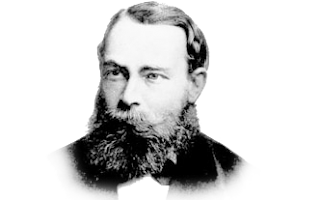
Frege
                                                          

The name “foundationism” was invented by a prolific name-giver, Imre Lakatos. It refers to Gottlob Frege in his prime, Bertrand Russell in his full logicist phase, Luitjens Brouwer, guru of intuitionism, and David Hilbert, prime advocate of formalism. Lakatos saw that despite their disagreements, they all were hooked on the same delusion: Mathematics must have a firm foundation. They differ on what the foundation should be. 

Foundationism has ancient roots. Behind Frege, Hilbert, and Brouwer stands Immanuel Kant. Behind Kant, Gottfried Leibniz. Behind Leibniz, Baruch Spinoza, and René Descartes. Behind all of them, Thomas Aquinas, Augustine of Hippo, Plato, and the great grandfather of foundationism—Pythagoras. 

We will find that the roots of foundationism are tangled with religion and theology. In Pythagoras and Plato, this intimacy is public. In Kant, it’s half covered. In Frege, it’s out of sight. Then in Georg Cantor, Bertrand Russell, David Hilbert, and Luitjens Brouwer, it pops up like a jack-in-the-box.

In the twentieth century, we look at Russell, Brouwer, Hilbert, Edmund Husserl, Ludwig Wittgenstein, Kurt Gödel, Rudolph Carnap, Willard V. O. Quine, and a small sample of today’s authors. Philip Kitcher said the philosophy of mathematics is generally supposed to begin with Frege—before Frege there was only “prehistory.” Frege transformed the issues constituting philosophy of mathematics. In that sense earlier philosophy can be called prehistoric. But to understand Frege you must see him as a Kantian. To understand Kant you must see his response to Newton, Leibniz, and Hume. Those three go back to Descartes, and through him to Plato. Plato was a Pythagorean. The thread from Pythagoras to Hilbert and Gödel is unbroken. I aim to tell a connected story from Pythagoras to the present—where foundationism came from, where it left us. 

Instead of going straight through from Pythagoras, I’ve split the story into two parallel streams—the first section is about the “Mainstream.” The second is about the “humanists and mavericks.” 

For the Mainstream, mathematics is superhuman—abstract, ideal, infallible, eternal. So many great names: Pythagoras, Plato, Descartes, Spinoza, Leibniz, Kant, Frege, Russell, Carnap. (For Kant, membership in this group is partial.) 

Humanists see mathematics as a human activity, a human creation. Aristotle was a humanist in that sense, as were Locke, Hume, and Mill. Modern philosophers outside the Russell tradition—mavericks—include Peirce, Dewey, Roy Sellars, Wittgenstein, Popper, Lakatos, Wang, Tymoczko, and Kitcher (a self-styled maverick). There are some interesting authors who aren’t labeled philosophers: psychologist Jean Piaget; anthropologist Leslie White; sociologist David Bloor; chemist Michael Polányi; physicist Mario Bunge; educationists Paul Ernest, Gila Hanna, Anna Sfard; mathematicians Henri Poincaré, Alfréd Rényi, George Pólya, Raymond Wilder, Phil Davis, and Brian Rotman.

Monday, December 27, 2021

Mathematical Objects


What’s the nature of mathematical objects?

The question is made difficult by a centuries-old assumption of Western philosophy: “There are two kinds of things in the world. What isn’t physical is mental; what isn’t mental is physical.”

Mental is individual consciousness. It includes private thoughts—mathematical and philosophical, for example—before they’re communicated to the world and become social—and also perception, fear, desire, despair, hope, and so on.

Physical is taking up space—having weight or energy. It’s flesh and bones, sound waves, X-rays, galaxies.

Frege showed that mathematical objects are neither physical nor mental. He labeled them “abstract objects.” What did he tell us about abstract objects? Only this: They’re neither physical nor mental.

Are there other things besides numbers that aren’t mental or physical?

Yes! Sonatas. Prices. Eviction notices. Declarations of war.

Not mental or physical, but not abstract either!

The U.S. Supreme Court exists. It can condemn you to death!

Is the Court physical? If the Court building were blown up and the justices moved to the Pentagon, the Court would go on. Is it mental? If all nine justices expired in a suicide cult, they’d be replaced.

The Court would go on. The Court isn’t the stones of its building, nor is it anyone’s minds and bodies. Physical and mental embodiment are necessary to it, but they’re not it. It’s a social institution. Mental and physical categories are insufficient to understand it. It’s comprehensible only in the context of American society.

**

Mathematics consists of concepts. Not pencil or chalk marks, not physical triangles or physical sets, but concepts, which may be suggested or represented by physical objects.

**

In reviewing The Mathematical Experience, the mathematical expositor and journalist Martin Gardner made this objection: When two dinosaurs wandered to the water hole in the Jurassic era and met another pair of dinosaurs happily sloshing, there were four dinosaurs at the water hole, even though no human was present to think, “2 + 2 = 4.” This shows, says Gardner, that 2+ 2 really is 4 in reality, not just in some cultural consciousness. 2 + 2 = 4 is a law of nature, he says, independent of human thought.

To untangle this knot, we must see that “2” plays two linguistic roles. Sometimes it’s an adjective; sometimes it’s a noun.

In “two dinosaurs,” “two” is a collective adjective. “Two dinosaurs plus two dinosaurs equals four dinosaurs” is telling about dinosaurs. If I say “Two discrete, reasonably permanent, non-interacting objects collected with two others makes four such objects,” I’m telling part of what’s meant by discrete, reasonably permanent non-interacting objects. That is a statement in elementary physics.

John Stuart Mill pointed out that with regard to discrete, reasonably permanent non-interacting objects, experience tells us

2 + 2 = 4.

In contrast, “Two is prime but four is composite” is a statement about the pure numbers of elementary arithmetic. Now “two” and “four” are nouns, not adjectives. They stand for pure numbers, which are concepts and objects. They are conceptual objects, shared by everyone who knows elementary arithmetic, described by familiar axioms and theorems.


The collective adjectives or “counting numbers” are finite. There’s a limit to how high anyone will ever count. Yet there isn’t any last counting number. If you counted up to, say, a billion, then you could count to a billion and one. In pure arithmetic, these two properties—finiteness, and not having a last—are contradictory. This shows that the counting numbers aren’t the pure numbers.

Consider the pure number 10^(1010). We easily ascertain some of its properties, such as: “The only prime factors of 10^(1010) are 2 and 5.” But we can’t count that high. In that sense, there’s no counting number equal to 10^(1010).

Körner made the same distinction, using uppercase for Counting Numbers (adjectives) and lowercase for “pure” natural numbers (nouns). Jacob Klein wrote that a related distinction was made by the Greeks, using their words “arithmos” and “logistiké.”

So “two” and “four” have double meanings: as Counting Numbers or as pure numbers. The formula
 

2 + 2 = 4
 

has a double meaning. It’s about counting—about how discrete, reasonably permanent, non-interacting objects behave. And it’s a theorem in pure arithmetic (Peano arithmetic if you like). This linguistic ambiguity blurs the difference between Counting Numbers and pure natural numbers. But it’s convenient. It’s comparable to the ambiguity of non-mathematical words, such as “art” or “America.”

The pure numbers rise out of the Counting Numbers. In a process related to Aristotle’s abstraction, they disconnect from “real” objects, to exist as shared concepts in the mind/brains of people who know elementary arithmetic. In that realm of shared concepts, 2 + 2 = 4 is a different fact, with a different meaning. And we can now show that it follows logically from other shared concepts, which we usually call axioms.

**

Once created and communicated, mathematical objects are there. They detach from their originator and become part of human culture. We learn of them as external objects, with known properties and unknown properties. Of the unknown properties, there are some we are able to discover.

**

Why do these objects, our own creations, so often become useful in describing nature? To answer this in detail is a major task for the history of mathematics, and for a psychology of mathematical cognition that may be coming to birth in Piaget and Vygotsky. To answer it in general, however, is easy. Mathematics is part of human culture and history, which are rooted in our biological nature and our physical and biological surroundings. Our mathematical ideas in general match our world for the same reason that our lungs match earth’s atmosphere.

**

Psychological and historical studies won’t make mathematical truth indubitable. But why expect mathematical truth to be indubitable? Correcting errors by confronting them with experience is the essence of science. What’s needed is explication of what mathematicians do—as part of general human culture, as well as in mathematical terms. The result will be a description of mathematics that mathematicians recognize—the kind of truth that’s obvious once said.  

Certain kinds of ideas (concepts, notions, conceptions, and so forth) have science-like quality. They have the rigidity, the reproducibility, of physical science. They yield reproducible results, independent of particular investigators. Such kinds of ideas are important enough to have a name. Study of the lawful, predictable parts of the physical world has a name: “physics.” 

Study of the lawful, predictable, parts of the social-conceptual world also has a name: “mathematics.” A world of ideas exists, created by human beings, existing in their shared consciousness. These ideas have objective properties, in the same sense that material objects have objective properties. The construction of proof and counterexample is the method of discovering the properties of these ideas. This branch of knowledge is called mathematics.

Saturday, December 25, 2021

Platonism vs Formalism


Frege, Russell and Wittgenstein

Two principal views of the nature of mathematics are prevalent among mathematicians—Platonism and formalism. Platonism is dominant, but it’s hard to talk about it in public. Formalism feels more respectable philosophically, but it’s almost impossible for a working mathematician to really believe it.

**

The formalist philosophy of mathematics is often condensed to a short slogan: “Mathematics is a meaningless game.” (“Meaningless” and “game” remain undefined. Wittgenstein showed that games have no strict definition, only a family resemblance.)

What do formalists mean by “game” when they call mathematics a game? Perhaps they use “game” to mean something “played by the rules.” (Now “play” and “rule” are undefined!)

For a game in that sense, two things are needed:
(2) people to play by the rules.
(1) rules.

Rule-making can be deliberate, as in Monopoly or Scrabble—or spontaneous, as in natural languages or elementary arithmetic.

In either case, the making of rules doesn’t follow rules!

Wittgenstein and some others seem to think that since the making of rules doesn’t follow rules, then the rules are arbitrary. They could just as well be any way at all. This is a gross error.

The rules of language and of mathematics are historically determined by the workings of society that evolve under pressure of the inner workings and interactions of social groups, and the physical and biological environment of earth.

**
In real life there are no totally rule-governed activities. Only more or less rule-governed ones, with more or less definite procedures for disputes. The rules and procedures evolve, sometimes formally like amending the U.S. Constitution, sometimes informally, as street games evolve with time and mixing of cultures. Is there totally unruly or ruleless behavior? Perhaps not. Mathematics is in part a rule-governed game. But one can’t overlook how the rules are made, how they evolve, and how disputes are resolved. That isn’t rule governed, and can’t be.

Computer proof is changing the way the game of mathematics is played. Wolfgang Haken thinks computer proof is permitted under the rules. Paul Halmos thinks it ought to be against the rules. Tom Tymoczko thinks it amounts to changing the rules. In the long run, what mathematicians publish, cite, and especially teach, will decide the rules. We have no French Academy to set rules, no cabal of team owners to say how to play our game. Our rules are set by our consensus, influenced and led by our most powerful or prestigious members (of course).

These considerations on games and rules in general show that one can’t understand mathematics (or any other nontrivial human activity) by simply finding rules that it follows or ought to follow. Even if that could be done, it would lead to more interesting questions: Why and whence those rules?

The notion of strictly following rules without any need for judgment is a fiction. It has its use and interest. It’s misleading to apply it literally to real life.

**

Platonism says mathematical objects are real and independent of our knowledge. Space-filling curves, uncountably infinite sets, infinite-dimensional manifolds—all the members of the mathematical zoo—are definite objects, with definite properties, known or unknown. These objects exist outside physical space and time. They were never created. They never change. By logic’s law of the excluded middle, a meaningful question about any of them has an answer, whether we know it or not. According to Platonism a mathematician is an empirical scientist, like a botanist. He can’t invent, because everything is already there. He can only discover.

**

The objections to Platonism are never answered: the strange parallel existence of two realities—physical and mathematical; and the impossibility of contact between the flesh-and-blood mathematician and the immaterial mathematical object. Platonism shares the fatal flaw of Cartesian dualism. To explain the existence and properties of mind and matter, Descartes postulated a different “substance” for each. But he couldn’t plausibly explain how the two substances interact, as mind and body do interact. In similar fashion, Platonists explain mathematics by a separate universe of abstract objects, independent of the material universe. But how do the abstract and material universes interact? How do flesh-and-blood mathematicians acquire the knowledge of number?

To answer, you have to forget Platonism, and look in the socio-cultural past and present, in the history of mathematics, including the tragic life of Georg Cantor.

The set-theoretic universe constructed by Cantor and generally adopted by Platonists is believed to include all mathematics, past, present, and future. In it, the uncountable set of real numbers is just the beginning of uncountable chains of uncountables. The cardinality of this set universe is unspeakably greater than that of the material world. It dwarfs the material universe to a tiny speck. And it was all there before there was an earth, a moon, or a sun, even before the Big Bang. Yet this tremendous reality is unnoticed! Humanity dreams on, totally unaware of it—except for us mathematicians. We alone notice it. But only since Cantor revealed it in 1890. Is this plausible? Is this credible? Roger Penrose declares himself a Platonist, but draws the line at swallowing the whole set-theoretic hierarchy.

Platonists don’t acknowledge the arguments against Platonism. They just reavow Platonism.

Frege’s point of view persists today among set-theoretic Platonists. It goes something like this:

1. Surely the empty set exists—we all have encountered it!
2. Starting from the empty set, perform a few natural operations, like forming the set of all subsets. Before long you have a magnificent structure in which you can embed the real numbers, complex numbers, quaternions, Hilbert spaces, infinite-dimensional differentiable manifolds, and anything else you like.
3. Therefore it’s vain to talk of inventing or creating mathematics. In this all-encompassing, set-theoretic structure, everything we could ever want or dream of is already present.

Yet most advances in mainstream mathematics are made without reference to any set-theoretic embedding. Saying Hilbert space was already there in the set universe is like telling Rodin, “The Thinker is a nice piece of work, but all you did was get rid of the extra marble. The statue was there inside the marble quarry before you were born.” Rodin made The Thinker by removing marble. Hilbert, von Neumann, and the rest made the theory of Hilbert space by analysing, generalizing, and rearranging mathematical ideas that were present in the mathematical atmosphere of their time.

(Reuben Hersh, What is mathematics really?)
**

“Mathematical objects are real. Their existence is an objective fact, independent of our knowledge of them. Infinite sets, uncountably infinite sets, infinite-dimensional manifolds, space-filling curves—all the denizens of the mathematical zoo—are definite objects, with definite properties. Some of their properties are known, some are unknown. These objects aren’t physical or material. They’re outside space and time. They’re immutable. They’re uncreated. A meaningful statement about one of these objects is true or false, whether we know it or not. Mathematicians are empirical scientists, like botanists. We can’t invent anything; it’s there already. We try to discover.”

**