Showing posts with label Mustafa Akyol. Show all posts

Saturday, February 10, 2018

Religion and Morals


Religion can be a source of self-education, because religious texts often have moral teachings with which people can question and instruct themselves. The Quran, just like the Bible, has such pearls of wisdom. It tells believers to “uphold justice” “even against yourselves or your parents and relatives.” It praises “those who control their wrath and are forgiving toward mankind.” It counsels: “Repel evil with what is better so your enemy will become a bosom friend.” A person who follows such virtuous teachings will likely develop a moral character, just as a person who follows similar teachings in the Bible will.

But trying to nurture moral virtues is one thing; assuming that you are already moral and virtuous simply because you identify with a particular religion is another. The latter turns religion into a tool for self-glorification. A religion’s adherents assume themselves to be moral by default, and so they never bother to question themselves. At the same time, they look down on other people as misguided souls, if not wicked infidels.

For such people, religion works not as cure for the soul, but as drug for the ego. It makes them not humble, but arrogant.

In legalistic religious traditions, like Judaism and Islam, this problem occurs when religion is reduced to the practice of rituals. Abiding by a legal code makes the believer feel upright in the eyes of God, even if she or he is immoral when dealing with fellow human beings.

Mustafa Akyol
https://www.nytimes.com/2017/11/28/opinion/does-religion-make-people-moral.html

Thursday, October 16, 2014

Islam Without Extremes

And We have sent down the Book [the Qur’an] to you with truth, confirming and conserving the previous Books. . . . We have appointed a law and a practice for every one of you. Had God willed, He would have made you a single community, but He wanted to test you regarding what has come to you. So compete with each other in doing good. Every one of you will return to God and He will inform you regarding the things about which you differed.

This striking Qu’ranic passage clearly describes a world in which Islam is one religion among others, not the only one. The differences between them will be reconciled only in the afterlife. Meanwhile, people of different faiths—Muslims, Christians, Jews, and all others—are expected to “compete with each other in doing good.

To be able to realize this pluralist vision, what we would need is a world in which all faiths could freely express and advance themselves.

Granted, such a pluralist world sounds different from the ideal of the medieval Muslim scholars—the Abode of Islam. This term, referred to lands ruled by Muslims and governed according to the Shariah. Only such places then looked safe for practicing Islam. The rest of the world was either hostile (Abode of War—i.e., lands ruled by non-Muslims) or only conditionally safe (Abode of Treaty—i.e., lands ruled by non-Muslims who made treaties with a Muslim state).

Yet none of these medieval categories can explain the modern world. Today, in fact, some Muslims seem to find it easier to live by their religion in the non-Muslim countries of the West, which grant more safety and freedom than some of the Muslim-majority countries with dictatorial regimes.

So it is time to stop seeing the world as divided between an Abode of Islam versus an Abode of War. Rather, what exists now is an Abode of Freedom versus an Abode of Tyranny. The former is what Muslims should seek.

In this free world, there surely will be ideas that Muslims, including me, will not like. What we need to do is to respond to them with reason and wisdom—an effort that might help us revitalize the intellectual dynamism of our earliest generations, as in the way the Mutazilites dealt with the challenges, and the contributions, of Greek philosophy.


Comments on Apostasy Punishment

On the other hand, there were other Hadiths suggesting that the Prophet in fact did not consider apostasy to be a crime. One of them is a narrative about a Muslim named Husayn, whose two sons were converted to Christianity by Byzantine merchants who had come to Medina to sell their goods. Following their conversion, the two sons left for Syria with the merchants. When this happened, their father asked the Prophet to pursue them and bring them back, apparently in order to make them embrace Islam again. On this occasion, the tradition holds, the famous Qur’anic verse, “There is no compulsion in religion,” was revealed. Consequently, the Prophet did not send anyone to pursue the two converts.

---

It is crucial to recognize that the earthly punishment for apostasy is not Qur’anic but post-Qur’anic. The latter reflects a historical context in which one’s religious affiliation also determined his political allegiance. No wonder other civilizations of the time, such as the Sassanids and the Byzantines, also punished apostasy with death. The early Muslims merely adopted the norms of their time.

Now, of course, we live in a very different world with very different norms. Religious affiliation and political allegiance are regarded as totally separate. Insisting on keeping a medieval notion of apostasy is pointless. It is also damaging, for it leads to the persecution of innocent people (such as the Afghan convert Abdul Rahman) as well as the portrayal of Islam as a tyrannical religion.

Here Muslims also need to think how they would respond if, say, Christians ordered death sentences for their apostates who chose to accept Islam. What would they think, for example, if someone like Yusuf Islam—formerly Cat Stevens, who became a Muslim in 1977—had been put on trial in a British court and given three days to recant before being executed?

Converts to Islam don’t face such treatment in the Western world, because the West has embraced freedom of religion, which includes freedom from their own religion as well. Muslims need to do the same.


Trade vs. Military


In its dynamic formative centuries, Islam was a religion driven by merchants and their rational, vibrant, and cosmopolitan mindset. But then the more powerful classes of the Orient—the landlords, the soldiers, and the peasants—became dominant, and a less rational and more static mindset began to shape the religion. The more trade declined, the more the Muslim mind stagnated. In the later stages, with the rise of powerful states such as the Ottoman Empire, modern-style bureaucrats entered the scene, followed in the nineteenth century by modern-style intellectuals. But even their valuable efforts to effect change continued as a top-down process in which the majority of the society remained uninvolved.

What was painfully lacking was a dynamic that would turn the society itself into an agent for change. The statist and socialist economic models toward which the Muslim world was mistakenly driven in the twentieth century—along with the political tyrannies of secularists and others—tragically blocked the way.


The Calvinists of Islam

One of the urban centers that gave rise to the Anatolian Tigers was Kayseri, a midsize city in the heartland of Turkey. Kayserians had always been famous for both business-mindedness and religiosity, but they had their great leap forward courtesy of the Özal Revolution. From the mid-1980s onward, the city experienced an industrial boom, with hundreds of new factories opened. By the mid-2000s, just one of its textile companies produced one percent of the world’s denim for brands such as Levi’s, Wrangler, and Diesel. Kayseri’s furniture companies supplied 70 percent of the Turkish market and exported their wares to many countries in the Middle East.

In 2005, a Berlin-based think tank, the European Stability Initiative (ESI), studied Kayseri to understand the secret of its economic miracle. After several weeks conducting interviews with the city’s prominent businessmen, the ESI team wrote a report that emphasized the curious role of religion in the motivation of these entrepreneurs. “Nine out of ten of one’s fate depends on commerce and courage,” one of the Kayseri businessmen said, quoting the Prophet Muhammad. Another businessman argued, “It is good for a religious person to work hard,” and “to open a factory is a kind of prayer.” The founder of a furniture company stated, “I see no black and white opposition between being modern and [being] traditional,” and said that he was “open to innovation.

“To understand Kayseri,” the former mayor of the town, Şükrü Karatepe, told the ESI researchers, “one must read Max Weber.” Weber, of course, pointed to the role that the ascetic and hardworking ethic of early Protestants, particularly Calvinists, played in the rise of modern capitalism in Europe. According to Karatepe, one could observe the same work ethic in Kayseri and a few other Anatolian cities, thanks to the teachings of Islam. Fittingly, the ESI researchers titled their report Islamic Calvinists. Their conclusion was that Kayseri was only a single case study, and, in general, “over the past decade [1995–2005], individualistic, pro-business currents [had] become prominent within Turkish Islam.”

These “individualistic, pro-business currents” were certainly capitalist, but not materialist, hedonist, or selfish. Quite the contrary, they went hand in hand with a strong sense of social responsibility, as emphasized by Islam. Kayseri’s Islamic entrepreneurs spent more than $300 million in five years to support clinics, schools, and various other charitable organizations. By 2005, sixteen separate soup kitchens in the city were serving almost ten thousand people daily. Kayseri’s culture was a combination of “entrepreneurship, asceticism, and altruism.

Kemalism and Turkey

Islam, according to this vision [Kemalism], would be allowed no influence whatsoever in society. “The boundary of religious consideration in Turkey,” wrote Recep Peker, the secretary general of the single-party Kemalist regime in 1936, “cannot exceed the skin of a citizen.” In other words, religion could exist only on the “inside” of citizens, and not in public life. There would be no religious education, no religious communities, no religious movements—and nothing like the First Amendment of the U.S. Constitution to protect such public expressions of religion from the state.

In just two decades, from 1925 to 1945, the Kemalist vision successfully dominated the “center” of Turkish society, which included the bureaucracy, the military, the judiciary, and the universities. The “purification” of the latter was realized by the 1933 “university reform,” in which professors who disagreed with the Kemalist ideology—including its pseudoscientific theories about the Aryan origins of the “Turkish race”—lost their jobs. At Istanbul University, almost two-thirds of the scholars were deemed “backward-minded” and were fired.

Since the “center” of society became so dominated by the secularists, Islam would be able to survive only in its “periphery”—the rural areas, small towns, and the lower classes.4 As a result, the more sophisticated Islamic tradition of the Ottoman elite disappeared, while religion became part of the culture of the less-educated masses. As a result, for many decades upper-class secular Turks considered that being a practicing Muslim was synonymous with being a köylü—a peasant.
Yet still, some of the liberal ideas developed by the Ottoman Islamic elite found their way into Republican Turkey. And no one was more influential in building this bridge than an exceptional Kurdo-Turkish scholar named Said Nursi.


Saturday, October 11, 2014

Islamism


Biggest Trauma Ever

For a conservative Muslim living in the late 1920s, the world must have looked grim. The Ottoman caliphate was destroyed and most Muslim peoples had become slaves to European or, worse, Communist rulers. The few independent nations, such as Turkey and Iran, were overtaken by authoritarian regimes that suppressed the faith of their own people. Moreover, the “infidel” culture was penetrating Muslim societies via imposition by the secularists and the seduction of materialistic Western mores.

This was probably the biggest crisis the umma had ever faced. Now, some Muslims thought, was the time to resist, and even fight back. Here lay the origins of twentieth-century Islamism, the reactionary ideology created in the name of Islam, and jihadism, its terrorist offshoot.

Now We May Bring Them to Realization!

While the Garpçılar proved to be a marginal movement during the Ottoman Empire, its members had a golden opportunity to advance their philosophy with the establishment of the Turkish Republic. Mustafa Kemal, one of their disciples, was determined to shape the new regime based on their agenda. “Doctor, until now you have written about many things,” he said to Abdullah Cevdet in 1925, as the latter wrote in his memoirs. “Now we may bring them to realization.”


Reforms (!)

Atıf Hodja had written the booklet a year and a half before the Hat Reform. Its first edition had already sold out and there was no plan for a reprint. So, while trying him for his views was unfair, trying him for views he expressed before the revolution was absurd. That’s why the first court found him innocent and granted his release.

But the new regime, eager to crush all opponents of the brimmed hat, needed a scapegoat for teaching a lesson to all dissidents. So an order came from Ankara, the new capital, for Atıf Hodja’s rearrest and retrial in the Independence Tribunal—an arbitrary court that the new regime, following the example of the French Revolution’s Tribunal Révolutionnaire, had established for eliminating political opponents. After a brief trial, the Independence Tribunal announced its verdict, which came as a shock to almost everyone. Both Atıf Hodja and a cleric named Ali Rıza, his “collaborator,” were sentenced to death; both were hung on the gallows on February 4, 1926. Other so-called collaborators were sentenced to prison terms.


Nor were these men the only victims of the Hat Reform. Right after Mustafa Kemal’s August 1925 declaration that all Turks must wear brimmed hats, dissatisfaction grew in many parts of Anatolia. Protests in late 1925 and early 1926 were brutally suppressed. In Maras¸, people marched in the streets, shouting, “We don’t want hats,” and twenty “reactionaries” were executed while others were sentenced to prison terms of three to ten years.


In the city of Erzurum, a local sheikh and his supporters petitioned the governor for permission to continue to wear traditional headgear—which was not only culturally preferred but also better suited to the cold winters of Eastern Anatolia. After the governor’s dismissal of the request and his order that the spokesmen be arrested, protests grew and gendarmes opened fire on the crowd, killing as many as twenty-three people.


In Rize, a town on the Black Sea coast, a similar protest erupted, soon becoming a full-blown uprising. In response, the government sent a warship to bombard the rebellious villages. A British consular document reports that government troops suffered a hundred or so casualties while suppressing the insurgency. The number of civilian casualties, which probably was much higher, is unknown.


Fundamentalism


Thursday, October 9, 2014

'Islam Without Muslims'


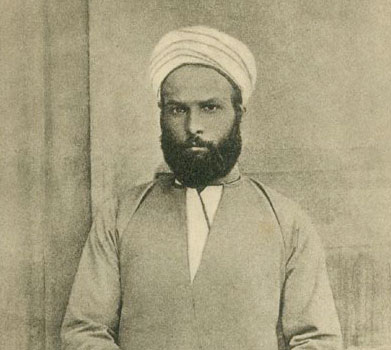
Abduh, who traveled in Europe, famously said that in Paris he saw “Islam without Muslims,” and on his return to Egypt he saw “Muslims without Islam.” He felt that all the good things Muslim societies should have were in the West but not in Islamdom. He and his followers were only proud that Islam did not share Europe’s virulent anti-Semitism.


Ottoman Protesting Slavery

In Tunis, which was part of the Ottoman Empire but very much a self-governing entity, a reform program modeled on the Tanzimat was put in practice, accompanied by important reforms such as the abolition of slavery in 1846. Soon Tunisians felt themselves so advanced that on October 31, 1863, Husayn Paşa, the mayor of Tunis, wrote a letter to Amos Perry, the American consul general, urging the Americans to reconsider their attitude toward slavery in the name of “human mercy and compassion.” This was fifteen months before the Thirteenth Amendment, which abolished slavery, was passed by the U.S. Congress.

Nationalism and the End of All Peace

The most lethal nail in the empire’s coffin, though, was what ultimately tore apart its pluralist system: nationalism. One by one, the Christian peoples of the Balkans launched rebellions to achieve independence. Each was a joyful moment of national liberation for the new nation, but for those in the minority, it was a nightmare. “Serbia for the Serbs, Bulgaria for the Bulgarians, Greece for the Greeks,” went a popular slogan of the early nineteenth century, along with a crucial caveat: “Turks and Jews out!”

The fate of Turks and Jews converged—as the latter, who had no territorial claims, remained loyal to the empire until its end. As late as the Balkan Wars of 1912–13, the Turco-Jewish axis was operative. “In Fear of Greeks, Jews Plead for Aid,” read a 1913 New York Times headline. The Greek nationalists, the story reported, were “punishing [the Jews] for being friendly with the Turks.”

During such nationalist campaigns against the empire, both the Ottoman Jews and the much more numerous Turks—a term that then referred to almost all Ottoman Muslims—faced several tides of ethnic cleansing in the Balkans, the Caucasus, and the Crimea. According to some estimates, more than five million Ottoman Muslims perished in these regions between 1821 and 1922. Some of them were killed in battle, others died from starvation and disease. Those who could make it to Turkey itself (including my own great-grandfather from the northern Caucasus) brought with them many stories about the cruelty of the Russians and their allies.

Nationalism slowly crept into the minds of the Muslim peoples of the empire as well. In fact, Ottoman administration was not considered alien rule in any Muslim province of the empire until the beginning of the twentieth century. But in less than two decades, the desire for independence affected first the Albanians and then some (not many) Arabs. Hence, on the eve of World War I, Ottoman armies found themselves engaged in hopeless wars throughout a vast territory stretching from Macedonia to Yemen.

The century-long shrinking of the empire, and the enormous suffering it caused Turks, created a deep fear among the Ottoman elite and propelled them to develop their own nationalism. That’s why the Young Turk party that encapsulated this trend, the Committee of Union and Progress (CUP), which took over the Ottoman state with a military coup in 1913, was ready to save the remaining part of the country—Asia Minor—by any means possible. When they entered the Great War in October 1914, the Turks, once again, faced the Russian onslaught from the east, and they found that Armenian nationalists had established paramilitary units to support the enemy. This discovery formed the basis for the catastrophic decision made by the CUP government in April 1915, when it chose to expel all Armenians in Eastern Turkey to Syria. Hundreds of thousands perished en route, due to massacres, other atrocities, famine, and disease. This awful ethnic cleansing is certainly the biggest stain on Ottoman history, and is inexcusable, but it did not happen because of the Ottoman system. Rather, it occurred because of the fall of the Ottoman system.

The collapse of the empire would have other tragic consequences that only time would reveal. Yet Archibald Wavell, a British officer, had the foresight to see them as early as 1918. Watching the victorious European powers happily carving up the Ottoman Empire in Paris after “the war to end war,” he dismissed the optimism. What the Europeans achieved instead, he said, was “a peace to end peace.”


Liberalism and Ottomans

The Young Ottomans became the first movement in the Muslim world to devise a modern ideology inspired by Islam. And, lo and behold, their ideology was a liberal one.

***

In 1877, a general election was held—the first in Ottoman and indeed in Islamic history. The first Ottoman parliament met on March 19, 1877, with more than one-third of its seats filled by non-Muslims—Armenians, Greeks, Jews, and Bulgarians. The first Islamic liberal democracy was born.

***

In 1876, the year the Ottomans unveiled their constitution, an uprising began in Bulgaria; it was quickly joined by Serbs and Montenegrins. Russia soon entered the picture, and the Ottomans suddenly found themselves at war with Russians, Serbians, Montenegrins, Romanians, and Bulgarians. Major battles occurred in the Balkans and the Caucasus, and the Ottoman military and the Muslim populations suffered huge losses. In Bulgaria alone, a quarter of a million Muslims, mostly Turks, were either slaughtered or died as a result of the war; half a million others, including thousands of Bulgarian Jews, had to flee to Turkey to survive.

***

When he saw Russian troops just a few miles outside of his capital, Sultan Abdülhamid II, who had never been a genuine believer in democracy, decided that the empire needed order and discipline more than anything else. So, assuming “war powers,” he suspended the constitution and dismissed the parliament. The First Constitutional Period of the Ottoman Empire, as it later would be called by historians, had lasted just over a year.

This was only one of many examples of a burden that the Ottomans (and, later, other Muslims) would continually face while working toward reform: they were trying to liberalize while under foreign threat. The West, on the other hand, from the sixteenth century onward, moved toward political and economic liberalization without the pressure of a rival civilization or the insecurity of its borders. Even within the West, most liberal ideas flourished in those countries that were geographically more isolated and thus more secure than others—Great Britain and the United States.

Muslims, on the other hand, would be plagued constantly by fears for their survival (as in the Ottoman era) or by a lack of independence (as in the post-Ottoman colonial era). An additional burden would be the psychological resistance to adopting the ways of the West while the West seemed threatening or intimidating. Little wonder, then, that liberal ideas would be more popular within Muslim societies at times when they felt secure and respected, and less so when they felt insecure or humiliated.


Wednesday, October 8, 2014

Objection to Equality


Since the non-Muslims in the Ottoman Empire weren’t doing too badly under their “protected” status, some of them resisted the equality introduced by the Tanzimat and Islahat edicts. Equality ended the extra tax that the non-Muslims had to pay, but it also made them eligible to serve in the armed forces. It soon became obvious that most Christians preferred to pay the extra tax rather than be drafted. Besides, the leaders of the non-Muslim communities also did not want to lose control over their people. When the Tanzimat edict was read publicly in 1839 and then returned to its red satin pouch, the Greek Orthodox patriarch did not look happy. “God grant,” he reportedly said, “that it not be taken out of this bag again!”

Balkan Christians, too, were uninspired by the reforms, because they sought independence, not equal citizenship. That’s why, despite legal guarantees, equality for the empire’s Christians and Muslims would not be fully realized—“not because of bad faith on the part of leading Ottoman statesmen but because many of the Christians wanted it [equality] to fail.”


Ottoman Law

In line with Islam’s acceptance of the People of the Book, the Ottoman Empire was a pluralist state
that allowed non-Muslim communities to preserve their identities and religious practices. Thus, Serbs, Greeks, Armenians, or Bulgarians remained Christian. In the early sixteenth century, Selim I “the Stern,” a particularly heavy-handed sultan/caliph, had considered converting all his Christian subjects to Islam forcibly, simply for the sake of homogeneity. Yet he was convinced by his Şeyhülislam, the superior authority on the issues of religion, that this would have been unlawful.

***

The Ottoman system was also innovative in the sense that it gave the state the right to enact secular laws, called kanun, along with the Shariah. Doing so meant that the Shariah did not cover all aspects of public life, and the state thus had the religiously legitimate authority to introduce new rules and regulations. Thanks to this tradition, the empire would be able to enact many modernizing laws in the nineteenth century.

Even the Shariah itself was regulated by the Ottoman kanun. Under Sultan Mehmed II, the conqueror of Constantinople, some harsh corporal punishments (such as amputations of hands) were deemed obsolete and were replaced by beating or monetary fines assessed according to the economic status of the culprit. Stoning also became difficult to implement, and it is known to have occurred only twice during the six centuries of Ottoman rule.

***

The Ottoman flexibility also had something to do with its geography, which, as we have seen, was influential in shaping perceptions of Islam: “unlike previous Islamic states, the Ottoman Empire rose in Anatolia and the Balkans, areas of solid and steady peasantries, rather than on the edge of nomad-inhabited deserts.” This allowed the rise of autonomous guilds and provincial notables, saving the empire from a total surrender to patrimonialism—i.e., absolute domination by the central power—the hallmark of that arid Middle Eastern geography. 


Turks

The Turks, like the desert Arabs, were nomads from an arid region—this time, the steppe. Hence they lacked a sophisticated culture to bring into their new religion. But, unlike the desert Arabs, who carried their pre-Islamic conservatism and fatalism into Islam, the nomadic Turks experienced a radical rebirth. They completely “surrendered themselves to their new religion” and “sank their national identity in Islam as the Arabs and the Persians had never done”—to a degree that even the name Turk came to be almost synonymous with Muslim. The result was a passionate devotion to the faith. “In the earnestness and seriousness of their loyalty to Islam,” observes Bernard Lewis, “the Turks are equaled by no other people.”


Oriental Patrimony

The environment molded the history of the Middle East as well—by shaping not just the mindsets of individuals and the cultures of societies but also the political structures of states. One definitive outcome of the aridity of Middle Eastern land was infertility, and hence “the lack of surplus.”  This made it impossible for local (i.e., feudal) rulers to gain power. Instead, power was concentrated in central governments that could organize forced labor to build irrigation systems.In  addition, much of the Middle East has a “flat” topography on which “armies could march unhindered”—as the Mongol armies tragically did. As a result, even before Islam, this part of the world was ruled for millennia by powerful centralized states.

Now, compare this geopolitical structure with that of Europe, which, unlike the Middle East, was a rainy and fertile continent with plenty of regions that are “hard to conquer, easy to cultivate, and their rivers and seas provide ready trade routes.” This topography, explains Fareed Zakaria,
made possible the rise of communities of varying sizes—city-states, duchies, republics, nations, and empires. In 1500 Europe had within it more than 500 states, many no larger than a city. This variety had two wondrous effects. First, it allowed for diversity. People, ideas, art, and even technologies that were unwelcome or unnoticed in one area would often thrive in another. Second, diversity fueled constant competition between states, producing innovation and efficiency in political organization, military technology, and economic policy.

That’s how feudalism ultimately worked in favor of freedom in Europe. The fertile land produced enough revenue to allow the rise of powerful lords, who would compete with kings for power and force them to sign liberal texts such as the Magna Carta. And when Martin Luther was excommunicated by the pope, he found support from the powerful princes of Germany who could afford to disobey Rome.

But the arid and flat Middle East only produced the “semifeudalism” of the iqta system. Here the land continued to belong to the central power and was granted only temporarily to the landlord, leading the latter to “mere pillage rather than to private development of the lands granted.” The ultimate result was the hindrance of an “independent, responsible, and non-alienated feudal class”—and the hindrance of political pluralism.

In short, while the fortunate environment of Europe helped the advance of liberty, the unfortunate environment of the Middle East established what Karl Marx called “oriental despotism” and Max Weber redefined as “patrimonialism”—a system of governance in which all power flows directly from the leader.

There was nothing inherently Islamic about this authoritarian system—no wonder it also has dominated non-Islamic countries of the East, such as Russia and China. But, alas, the connection between Oriental patrimony and Islam worked in the former’s favor as it left its mark on the latter. According to Bryan S. Turner, a leading scholar on the sociology of Islam, here was the main reason why the religion took a less rationalist and creative form after its initial centuries:

It was under the patrimonial dynasties of mediaeval Islam, starting with the Abbasids, that a different culture with its attendant view of appropriate motivation which stressed discipline, obedience and imitation came to dominate Islam. With the formation of an alliance of necessity between the military and the ulama [scholars], the shari‘a as a formalized and unchanging code of life came to embody the only legitimate language of conduct. . . . It was under these conditions that Islam was to be characterized as a slavish, fatalistic religion, a religion of accommodation to patrimonial rule.

The problem was not, Turner adds, that Islam lacked something similar to the “Protestant ethic” that fostered capitalism in Europe. The urban merchants of medieval Islam, after all, “adhered to a distinctively Muslim form of rationality.” The Mutazilites (or the Murjiites), as we have seen, even extracted liberal principles from that rationalism. They just could not overcome the constraints of the Middle East.

Islam, one could say, had produced the seeds of freedom; regrettably, they just were not rooted in fertile soil.

Economy

Why did the same economic dynamism [of the West] fail to prevail in Islamdom?

Mahmood Ibrahim, professor of Islamic history at California State Polytechnic University, has a compelling theory that offers a possible answer. He starts by showing what we have observed so far: The Rationalists, particularly the Mutazilites, constituted an economic class. Most were merchants, others were “artisans or were associated with artisans.” Their opponents, the Traditionists, were led by the opposite class: the landlords. So the war of ideas between these camps was “not merely a theological or doctrinal dispute, but a social conflict fought on an ideological plane.”

Politically speaking, the turning point of this dispute, as noted in the previous chapter, was the arrival of al-Mutawakkil, the Abbasid caliph who ended the brief pro-Mutazilite policy of his direct predecessors and supported the Traditionists. But there was also an economic side to this change. Quite tellingly, al-Mutawakkil established a new economic system that elevated the role, and the revenues, of the landlords. This system, called iqta, was a form of land grant. The caliph would temporarily grant a piece of land to a landlord who could then tax the peasants who lived on the land. The landlord, to make sure that the peasants continued to produce crops for him, would recruit many soldiers.

The resulting system increased the power of landowners and the soldiers they employed—at the expense of the merchants. The caliphs after al-Mutawakkil would continue to prefer this system, for they could tax land, as visible wealth, more easily than they could tax merchants’ profits. The role of the soldiers would be further consolidated in the face of the threat posed and the destruction caused by the Crusaders and the Mongols in the twelfth and thirteenth centuries.

According to Dr. Ibrahim, this transition in Islamdom from “a commercially based capitalistic period” to “an agrarian based semi-feudal one beginning with the Caliphate of al-Mutawakkil” was quite fateful. It was the very infrastructure of the transition from Rationalism to Traditionism.

A study on labor in medieval Middle East also reveals this structural shift. Between the eighth and eleventh centuries, the formative period of Islamic law, the Arab-Islamic lands stretching from Iraq to Spain harbored 233 distinct commercial occupations. Later, between the twelfth and fifteenth centuries, there was a slight decline in this number, whereas the occupations in the bureaucracy and the military tripled. There was, clearly, a rise in military and state power, but “inertia in regard to commercial organization.”

This periodization in the history of Islamdom suggests that the obstacle to economic progress in this part of the world was not Islam itself, as some essentialists believe. “It was not the attitudes and ideologies inherent in Islam which inhibited the development of a capitalist economy,” notes Sami Zubaida, emeritus professor of sociology at the University of London, “but the political position of the merchant classes vis à vis the dominant military-bureaucratic classes in Islamic societies.”

In the later centuries (from the twelfth onward), stagnation would deepen as Islamdom became more and more isolated and as trade, the main engine of dynamism in the Orient, gradually shifted elsewhere. First came “the loss of the Mediterranean,” due to the Crusaders’ occupation of the whole eastern and northeastern coastline of this commercially vital sea. This, argues the great French historian Fernand Braudel, is probably the best explanation for “Islam’s abrupt reverse in the 12th century.” In the thirteenth century, the Mongol catastrophe would impose a much more abrupt, and tragic, reversal.

The final blow would come in the fifteenth century with the Age of Discovery, during which Western Europeans found direct ocean routes to India, China, and elsewhere. Consequently, world trade routes would rapidly shift to the oceans, enriching Western Europe. Not only did this further impoverish the Middle East, it even made the Mediterranean a backwater. This whole northwestern movement of “world capital” between the twelfth and the eighteenth centuries explains, in the apt title of one of Braudel’s essays, “the greatness and decline of Islam.”