Showing posts with label Pythagoras. Show all posts

Tuesday, June 21, 2022

Russell and mathematical certainty


 “I wanted certainty in the kind of way in which people want religious faith. I thought that certainty is more likely to be found in mathematics than elsewhere. But I discovered that many mathematical demonstrations, which my teachers expected me to accept, were full of fallacies, and that, if certainty were indeed discoverable in mathematics, it would be in a new field of mathematics, with more solid foundations than those that had hitherto been thought secure. But as the work proceeded, I was continually reminded of the fable about the elephant and the tortoise. Having constructed an elephant upon which the mathematical world could rest, I found the elephant tottering, and proceeded to construct a tortoise to keep the elephant from falling. But the tortoise was no more secure then the elephant, and after some twenty years of very arduous toil, I came to the conclusion that there was nothing more that I could do in the way of making mathematical knowledge indubitable.”


“Mathematics is, I believe,” says Russell, “the chief source of the belief in eternal and exact truth, as well as in a super-sensible intelligible world. Geometry deals with exact circles, but no sensible object is exactly circular; however carefully we may use our compasses, there will be some imperfections and irregularities. This suggests the view that all exact reasoning applies to ideal as opposed to sensible objects; it is natural to go further, and to argue that thought is nobler than sense, and the objects of thought more real than those of sense-perception. Mystical doctrines as to the relation of time to eternity are also reinforced by pure mathematics, for mathematical objects, such as number, if real at all, are eternal and not in time. Such eternal objects can be conceived as God’s thoughts. Hence Plato’s doctrine that God is a geometer, and Sir James Jeans’ belief that He is addicted to arithmetic. Rationalistic as opposed to apocalyptic religion has been, ever since Pythagoras, and notably ever since Plato, very completely dominated by mathematics and mathematical method.

Friday, March 4, 2022

Pythagoreans!


The number one, they argued, is the generator of numbers and the number of reason; the number two is the first even or female number, the number of opinion; three is the first true male number, the number of harmony, being composed of unity and diversity; four is the number of justice or retribution, indicating the squaring of accounts; five is the number of marriage, the union of the first true male and female numbers; and six is the number of creation. Each number had its peculiar attributes. The holiest of all was the number ten, or the tetractys, for it represented the number of the universe, including the sum of all possible dimensions. [See also Heath, 1981, p. 75.] A single point is the generator of dimensions, two points determine a line of dimension one, three points S (not on a line) determine a triangle with area of dimension two, and four points (not in a plane) determine a tetrahedron with volume of dimension three; the sum of the numbers representing all dimensions, therefore, is . . . ten. It is a tribute to the abstraction of Pythagorean mathematics that the veneration of the number ten evidently was not dictated by anatomy of the human hand or foot.”

Mainstream Philosophies of Mathematics


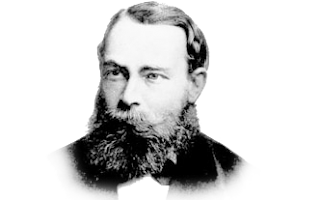
Frege
                                                          

The name “foundationism” was invented by a prolific name-giver, Imre Lakatos. It refers to Gottlob Frege in his prime, Bertrand Russell in his full logicist phase, Luitjens Brouwer, guru of intuitionism, and David Hilbert, prime advocate of formalism. Lakatos saw that despite their disagreements, they all were hooked on the same delusion: Mathematics must have a firm foundation. They differ on what the foundation should be. 

Foundationism has ancient roots. Behind Frege, Hilbert, and Brouwer stands Immanuel Kant. Behind Kant, Gottfried Leibniz. Behind Leibniz, Baruch Spinoza, and René Descartes. Behind all of them, Thomas Aquinas, Augustine of Hippo, Plato, and the great grandfather of foundationism—Pythagoras. 

We will find that the roots of foundationism are tangled with religion and theology. In Pythagoras and Plato, this intimacy is public. In Kant, it’s half covered. In Frege, it’s out of sight. Then in Georg Cantor, Bertrand Russell, David Hilbert, and Luitjens Brouwer, it pops up like a jack-in-the-box.

In the twentieth century, we look at Russell, Brouwer, Hilbert, Edmund Husserl, Ludwig Wittgenstein, Kurt Gödel, Rudolph Carnap, Willard V. O. Quine, and a small sample of today’s authors. Philip Kitcher said the philosophy of mathematics is generally supposed to begin with Frege—before Frege there was only “prehistory.” Frege transformed the issues constituting philosophy of mathematics. In that sense earlier philosophy can be called prehistoric. But to understand Frege you must see him as a Kantian. To understand Kant you must see his response to Newton, Leibniz, and Hume. Those three go back to Descartes, and through him to Plato. Plato was a Pythagorean. The thread from Pythagoras to Hilbert and Gödel is unbroken. I aim to tell a connected story from Pythagoras to the present—where foundationism came from, where it left us. 

Instead of going straight through from Pythagoras, I’ve split the story into two parallel streams—the first section is about the “Mainstream.” The second is about the “humanists and mavericks.” 

For the Mainstream, mathematics is superhuman—abstract, ideal, infallible, eternal. So many great names: Pythagoras, Plato, Descartes, Spinoza, Leibniz, Kant, Frege, Russell, Carnap. (For Kant, membership in this group is partial.) 

Humanists see mathematics as a human activity, a human creation. Aristotle was a humanist in that sense, as were Locke, Hume, and Mill. Modern philosophers outside the Russell tradition—mavericks—include Peirce, Dewey, Roy Sellars, Wittgenstein, Popper, Lakatos, Wang, Tymoczko, and Kitcher (a self-styled maverick). There are some interesting authors who aren’t labeled philosophers: psychologist Jean Piaget; anthropologist Leslie White; sociologist David Bloor; chemist Michael Polányi; physicist Mario Bunge; educationists Paul Ernest, Gila Hanna, Anna Sfard; mathematicians Henri Poincaré, Alfréd Rényi, George Pólya, Raymond Wilder, Phil Davis, and Brian Rotman.