Showing posts with label Mekke. Show all posts

Tuesday, December 26, 2017

The Destruction of Mecca

By ZIAUDDIN SARDAR  SEPT. 30, 2014 Guardian


WHEN Malcolm X visited Mecca in 1964, he was enchanted. He found the city “as ancient as time itself,” and wrote that the partly constructed extension to the Sacred Mosque “will surpass the architectural beauty of India’s Taj Mahal.”

Fifty years on, no one could possibly describe Mecca as ancient, or associate beauty with Islam’s holiest city. Pilgrims performing the hajj this week will search in vain for Mecca’s history.

The dominant architectural site in the city is not the Sacred Mosque, where the Kaaba, the symbolic focus of Muslims everywhere, is. It is the obnoxious Makkah Royal Clock Tower hotel, which, at 1,972 feet, is among the world’s tallest buildings. It is part of a mammoth development of skyscrapers that includes luxury shopping malls and hotels catering to the superrich. The skyline is no longer dominated by the rugged outline of encircling peaks. Ancient mountains have been flattened. The city is now surrounded by the brutalism of rectangular steel and concrete structures — an amalgam of Disneyland and Las Vegas.

The “guardians” of the Holy City, the rulers of Saudi Arabia and the clerics, have a deep hatred of history. They want everything to look brand-new. Meanwhile, the sites are expanding to accommodate the rising number of pilgrims, up to almost three million today from 200,000 in the 1960s.

The initial phase of Mecca’s destruction began in the mid-1970s, and I was there to witness it. Innumerable ancient buildings, including the Bilal mosque, dating from the time of the Prophet Muhammad, were bulldozed. The old Ottoman houses, with their elegant mashrabiyas — latticework windows — and elaborately carved doors, were replaced with hideous modern ones. Within a few years, Mecca was transformed into a “modern” city with large multilane roads, spaghetti junctions, gaudy hotels and shopping malls.

The few remaining buildings and sites of religious and cultural significance were erased more recently. The Makkah Royal Clock Tower, completed in 2012, was built on the graves of an estimated 400 sites of cultural and historical significance, including the city’s few remaining millennium-old buildings. Bulldozers arrived in the middle of the night, displacing families that had lived there for centuries. The complex stands on top of Ajyad Fortress, built around 1780, to protect Mecca from bandits and invaders. The house of Khadijah, the first wife of the Prophet Muhammad, has been turned into a block of toilets. The Makkah Hilton is built over the house of Abu Bakr, the closest companion of the prophet and the first caliph.

Apart from the Kaaba itself, only the inner core of the Sacred Mosque retains a fragment of history. It consists of intricately carved marble columns, adorned with calligraphy of the names of the prophet’s companions. Built by a succession of Ottoman sultans, the columns date from the early 16th century. And yet plans are afoot to demolish them, along with the whole of the interior of the Sacred Mosque, and to replace it with an ultramodern doughnut-shaped building.

The only other building of religious significance in the city is the house where the Prophet Muhammad lived. During most of the Saudi era it was used first as a cattle market, then turned into a library, which is not open to the people. But even this is too much for the radical Saudi clerics who have repeatedly called for its demolition. The clerics fear that, once inside, pilgrims would pray to the prophet, rather than to God — an unpardonable sin. It is only a matter of time before it is razed and turned, probably, into a parking lot.

The cultural devastation of Mecca has radically transformed the city. Unlike Baghdad, Damascus and Cairo, Mecca was never a great intellectual and cultural center of Islam. But it was always a pluralistic city where debate among different Muslim sects and schools of thought was not unusual. Now it has been reduced to a monolithic religious entity where only one, ahistoric, literal interpretation of Islam is permitted, and where all other sects, outside of the Salafist brand of Saudi Islam, are regarded as false. Indeed, zealots frequently threaten pilgrims of different sects. Last year, a group of Shiite pilgrims from Michigan were attacked with knives by extremists, and in August, a coalition of American Muslim groups wrote to the State Department asking for protection during this year’s hajj.

The erasure of Meccan history has had a tremendous impact on the hajj itself. The word “hajj” means effort. It is through the effort of traveling to Mecca, walking from one ritual site to another, finding and engaging with people from different cultures and sects, and soaking in the history of Islam that the pilgrims acquired knowledge as well as spiritual fulfillment. Today, hajj is a packaged tour, where you move, tied to your group, from hotel to hotel, and seldom encounter people of different cultures and ethnicities. Drained of history and religious and cultural plurality, hajj is no longer a transforming, once-in-a-lifetime spiritual experience. It has been reduced to a mundane exercise in rituals and shopping.

Mecca is a microcosm of the Muslim world. What happens to and in the city has a profound effect on Muslims everywhere. The spiritual heart of Islam is an ultramodern, monolithic enclave, where difference is not tolerated, history has no meaning, and consumerism is paramount. It is hardly surprising then that literalism, and the murderous interpretations of Islam associated with it, have become so dominant in Muslim lands.


Tuesday, December 29, 2015

Islamic Art and Mathematics

The Greeks were not the only people intrigued by the wonders of geometrical shapes. The most sacred object in Islam is a Platonic solid: the Ka’ba, or Cube, is the black palladium at the centre of Mecca’s Sacred Mosque, around which pilgrims walk anticlockwise during the Hajj. (In fact, its dimensions make it just off a perfect cube.) The Ka’ba also marks the point that worshippers must face during daily prayer, wherever they are in the world. Mathematics plays more of a role in Islam than in any other major religion. More than a millennium before the advent of GPS technology, the requirement to face Mecca relied on complicated astronomical calculations—which is one reason why Islamic science was unequalled for almost a thousand years.

Islamic art is epitomized by the ingenious geometrical mosaic arrangements on the walls, ceilings and floors of its sacred buildings, a consequence of the ban on images of people and animals in holy sites. Geometry was thought to express truth beyond what was merely human, much in keeping with the Pythagorean position that the universe reveals itself through mathematics. The symmetries and endless loops that Islamic craftsmen created in their patterns were an allegory of the Infinite, an expression of the sacred, mathematical order of the world.

**

The discovery of nonperiodic tiling was an exciting breakthrough for maths, but not as exciting as it would later be for physics and chemistry. In the 1980s researchers were amazed to discover a type of crystal that they did not believe existed. The tiny structure displayed a nonperiodic pattern, behaving in three dimensions just like Penrose’s tiles did in two. The existence of these structures—called quasicrystals —changed the way scientists understood the nature of matter, since it contradicted classical theory that all crystals must have symmetrical lattices derived from the Platonic solids. Penrose may have invented his tiles for fun, but they were unduly prophetic about the natural world.
Half a millennium ago, Islamic geometers might also have understood about non-periodic tessellations. In 2007 Peter J. Lu from Harvard University and Paul J. Steinhardt from Princeton claimed that their studies of mosaics in Uzbekistan, Afghanistan, Iran, Iraq and Turkey showed that the craftsmen had made ‘nearly perfect quasi-crystalline Penrose patterns, five centuries before discovery in the West’. It is possible, therefore, that Islamic mathematics may have been even more advanced than historians of science have traditionally thought.

Saturday, August 2, 2014

Math and Islamic History


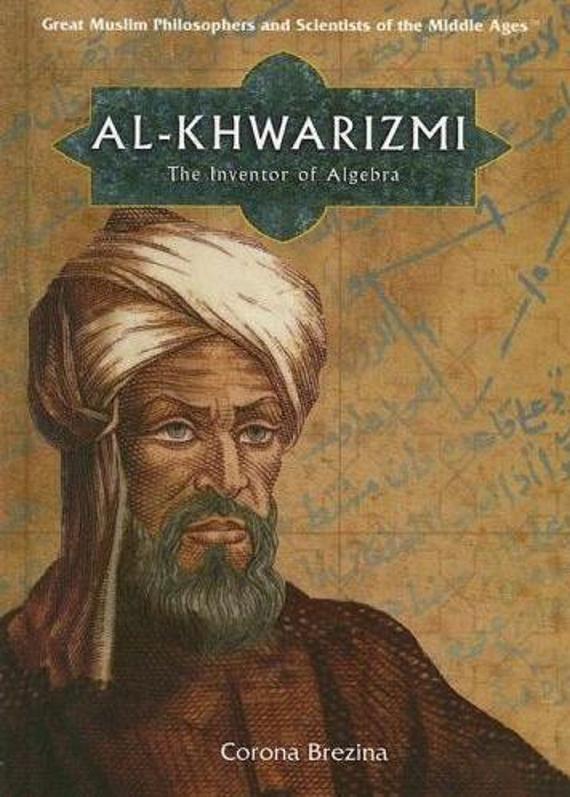
In his work on algebra, al-Khwarizmi worked with both what we now call linear equations – that is, equations that involve only units without any squared figures – and quadratic equations, which involve squares and square roots. His advance was to reduce every equation to its simplest possible form by a combination of two processes: al-jabr and al-muqabala.

Al-jabr means ‘completion’ or ‘restoration’ and involves simply taking away all negative terms. Using modern symbols, al-jabr means simplifying. Al-muqabala means ‘balancing’, and involves reducing all the postive terms to their simplest form. 


In developing algebra, al-Khwarizmi built on the work of early mathematicians from India, such as Brahmagupta, and from the Greeks such as Euclid, but it was al-Khwarizmi who turned it into a simple, all-embracing system, which is why he is dubbed the ‘father of algebra’. The very word algebra comes from the title of his book, al-Kitab al-mukhtasar fi hisab al-jabr wa’l muqabala or The Compendious Book on Calculating by Completion and Balancing.


***

Beyond al-Khwarizmi, many other Arabic-speaking scholars explored mathematics. Indeed, it was fundamental to so many things, from calculating tax and inheritance to working out the direction of Mecca, that it is hard to find a scholar who did not at some time or other work in mathematics. But it wasn’t just practical applications that fascinated many of them, and they began to push mathematics to its limits.

In the early 11th century in Cairo, Hassan ibn al-Haitham, for instance, laid many of the foundations for integral calculus, which is used for calculating areas and volumes. Half a century later, the brilliant poet/mathematician Omar Khayyam found solutions to all thirteen possible kinds of cubic equations – that is, equations in which numbers are cubed. He regretted that his solutions could only be worked out geometrically rather than algebraically. ‘We have tried to work these roots by algebra, but we have failed’, he says ruefully. ‘It may be, however, that men who come after us will succeed.’


***

Omar Khayyam is one of the most extraordinary figures in Islamic science, and tales of his mathematical brilliance abound. In 1079, for instance, he calculated the length of the year to 365.24219858156 days. That means that he was out by less than the sixth decimal place – fractions of a second – from the figure we have today of 365.242190, derived with the aid of radio telescopes and atomic clocks. And in a highly theatrical demonstration involving candles and globes, he is said to have proved to an audience that included the Sufi theologian al-Ghazali that the earth rotates on its axis.

***

Trigonometry was first developed in ancient Greece, but it was in early Islam that it became an entire branch of mathematics, as it was aligned to astronomy in the service of faith. Astronomical trigonometry was used to help determine the qibla, the direction of the Ka’bah in Mecca. Modern historians such as David King have discovered that the Ka’bah itself is astronomically inclined. On one side it points towards Canopus, the brightest star in the southern sky. The axis that is perpendicular to its longest side points towards midsummer sunrise.

Mecca’s significance is such that when a deceased person is to be buried, contemporary Islamic tradition determines that his or her body must face Mecca. When the famous call to prayer is announced, it must be done facing Mecca. And when animals are slaughtered, slaughtermen must also turn in the direction of the holy city. Islamic-era astronomers began to compute the direction of Mecca from different cities from around the 9th century. One of the earliest known examples of the use of trigonometry (sines, cosines and tangents) for locating Mecca can be found in the work of the mathematician al-Battani, which, according to David King, was in use until the 19th century.


Saturday, July 12, 2014

Harem ve Milli Park

Efendimiz (sallallâhu aleyhi ve sellem)'in dünyayı teşrif buyurduğu mekân, çöllerle kaplı bir alandı. Allah Resûlü çölle çevrili olan bu mekânı dünyevî anlamda bir cennete çevirmek için, Kur'ân'ın işârî ve sarih beyanlarının yanında birçok fiilleri, sözleri ve takrirleriyle ısrarla üzerinde durmuş ve sık sık onu vurgulamıştır. O'nun tabiatı koruma adına göstermiş olduğu bu hassasiyet, bugün ekolojik dengeyi korumak isteyen vakıf, dernek ve kuruluşların hassasiyetinden çok çok ileridedir. Meselâ; Nebiler Serveri, sıtma ve verem hastalıklarının kol gezdiği, belli ölçüde yeşillik olsa da, tam dengenin olmadığı Medine'ye hicret eder etmez, 'Allah'ım! Hz. İbrahim, Mekke'yi harem bölge ilan etmişti. Ben de Medine'yi harem bölge ilan ediyorum.' buyurmuştur. Harem'i, bugünün anlayışıyle izah edecek olursak, ona geniş alanlı 'millî park' denebilir. Zira Allah Resûlü bunu izah ve şerh eden beyanlarında 'Otları koparılmaz, ağaçları kesilmez, hayvanları öldürülmez.' buyurmuşlardır. Hatta Sahabe-i Kiram'dan bazıları kuyumcu ve demircilerin kullandığı, mezar ve çatılarda da ona ihtiyaç duyulan 'İzhir otu ne olacak?' diye sorduklarında, Allah Resûlü önce duraklamış, sonra da 'İzhir bu hükümden istisna.' buyurmuşlardır.

Wednesday, May 28, 2014

Bearer of Two Pure Lights


  • Uthman was a tenderhearted, sweet-faced, and goodtempered person of a medium height. His face had slight traces of smallpox. His hair fell to his shoulders and he occasionally applied henna to his beard, which was quite large, bushy and brownish. He was a big-boned person with broad shoulders.
  • Uthman had a twin sister named Amina bint Affan. She was a hairdresser during the Age of Ignorance (Jahiliya). She and her mother did not convert to Islam until the conquest of Mecca, finally embarking on the savior ship captained by the Prophet. The rest of Uthman’s brothers and sisters converted to Islam after them.
  • The people of Quraysh loved Uthman who stood out as a monument of modesty and civility among them. His social status, wealth, and good temper, in addition to his virtuous character captivated them. This love of the People of Quraysh towards him would manifest itself on the day of Hudaybiya. Years later, a Quraysh woman composing poems for her child could not help praising him: 

I swear I love you my son,
Just like the Quraysh loves Uthman.
  • Uthman led an exemplary life, never committing any shameful deed or crime. In a time when people consumed alcohol like water, when alcohol flowed through the veins like blood, and when houses were converted into wine cellars, he did not even drink one drop of alcohol. It was as if God was guarding and preparing him for the future. Even during the period of the Age of Ignorance, he warned about the dangers of alcohol consumption:

“Alcohol wipes out reason which is the most beautiful blessing that God has bestowed on a human being, so, it befits a human being to use his reason for taking wings and ascending towards the heights of humanity.”
  • It was the sixth year of the Hijra and Uthman made the decision of transforming the coastal town of Jeddah into a port, instead of the Sha’biya, a port town for Mecca during the Age of Ignorance. Uthman traveled to Jeddah and personally participated in the transformation project. This new port opened up a new route for both merchants and pilgrims, heading to Mecca by sea. Today, Jeddah is still serving as a port city and is an excellent example for Uthman’s vision of urbanization.

  • “May God reward with His paradise the person who behaves soft when buying or selling something, when paying a debt or asking for its payment.”(Hadith)
  • Uthman was a tenderhearted and tearful person. Whenever he stopped by a graveyard, he would begin to cry, so much so that his tears wet his blessed beard. The people who did not know the reason for his crying asked him:“O Uthman! You don’t cry even when you speak about Paradise and Hell. But you cry whenever you visit a graveyard. Are you that fearful of the grave?” Uthman replied:
“I heard the Messenger of God say:‘The grave is indeed the first stage in one’s journey in the Hereafter. If a deceased one is saved from torments of the grave, the next stages will be more relaxing. If one is not saved from torments of the grave, the coming stages will be more trying and troublesome.’” Uthman added that the Messenger of God concluded by saying:
“I have not seen any scene as grievous as the grave.”
  • I advised my daughters to read chapter Waqi’ah every night. I heard the Messenger of God saying, ‘Whoever reads the chapter Waqi’ah never faces poverty’.”


Saturday, May 3, 2014

Yesrib

“Resulullah ve muhacirler Mekke şehrinden Yesrib köyüne değil, bilâkis —birçok hayat tarzında birinciden farklı ve nisbeten daha küçük olmasına rağmen— bir şehirden diğerine göç etmişlerdi. Fakat buradaki hayat çok daha karmaşık ve Resulullah’ın karşı karşıya kalacağı meseleler çok daha çeşitliydi. Çünkü burada değişik dinler, çevreler ve kültürler vardı. Te’yid-i ilâhiye mazhar olmuş, Allah Teâlâ’nın hikmet, hakkı batıldan ayırma, çok çeşitli beşerî toplulukları, zıt kuvvetleri ve çatışan arzulan bir araya getirme gücü verdiği ve kendinden sevgi ilham ettiği bir peygamberden başkası, burayı ele geçiremez ve bütün şehri tek bir iman potasında eritemezdi.”

***

“Ensâr, Resûl-i Ekrem’in Mekke’den yola çıktığını duymuştu. Her gün, sabah namazını müteakip Medine haricine çıkıyor ve Resulullah’ı bekliyorlardı. Güneş onları gölgeye gitmeye zorlayıncaya kadar orada bekliyorlar ve sonra evlerine giriyorlardı. Mevsim yaz ve sıcaktı.

Hz. Peygamber, halkın evlerine çekildiği bir sırada geldi. Yahudiler, ensarın yaptıklarını görüyordu. Resulullah’ı ilk gören de bir yahudiydi. O, avazının çıktığı kadar yüksek sesle bağırarak Resul-i Ekrem’in geldiğini Ensâr’a haber verdi. Ensâr hemen Hz. Peygamber’i karşılamaya çıktı. O, yanında Hz. Ebû Bekir —Peygamber efendimizle aynı yaştaydı— olduğu halde bir hurma ağacının gölgesinde oturuyordu. Halkın çoğu Resulullah’ı ilk defa görüyordu ve onu görmek için itişip kakışıyorlar, fakat Hz. Ebu Bekir ile Hz. Peygamberi birbirinden tefrik edemiyorlardı. Hz. Ebû Bekir durumu hemen sezdi ve ayağa kalkıp gömleğiyle Resulullah’a gölge yaptı, halk da Resulûllah’ı tanıdı.

Ensâr’dan yaklaşık 500 kişi Resûl-i Ekrem ve Hz. Ebu Bekir’i karşılamaya çıkmıştı. Hurma ağacının yanına geldiklerinde Ensar “Buyurunuz emniyet ve huzur içinde gidelim.” dediler. Resulullah ve Hz. Ebû Bekir Ensâr’ın arasında yola koyuldu.

Medine halkı onu karşılamaya çıkmıştı. Hatta küçük kızlar bile evlerin damlarında Resulullah’ı görünce: “Hangisi o hangisi o?” diye bağrışıyorlardı. Enes b. Malik diyor ki, ‘’Böylesine bir manzarayı ilk defa görüyorduk.”

***
“Resulullah devesinden indi. Ebu Eyyûb Halid b. Zeyd en-Neccari el-Hazrecî de yükleri indirip kendi evine götürdü. Resul-i Ekrem ona misafir oldu. Ebu Eyyûb Hz. Peygamber’e çok güzel hizmet etti ve ikramda bulundu. Resulullah evin alt katında kalıyordu. Ebû Eyyûb bunu hoş görmedi ve Resulullah’a üst kata çıkması için ısrar etti. Kendisi ve ailesinin aşağıda kalabileceğini söyledi. Hz. Peygamber: “Ey Ebû Eyyûb! Bize, bizim yânımızdakilere ve bize gelenlere alt katta kalmak daha uygun ve elverişlidir.” buyurdu.

Ebu Eyyûb el-Ensârî zengin bir insan değildi. Fakat Resulullah’ı evinde ağırlamaktan büyük sevinç duyuyordu. Cenab-ı Hakk’ın bahşettiği bu şerefe lâyık olmaya ve şükrünü ifaya, Resullullah’a hizmet yolundan başka hiçbir şekilde kazanılmayacak olan sevgiye büyük bir ehemmiyet veriyordu.

Ebû Eyyûb diyor ki; “Resulullah’a akşam yemeği yapar ve gönderirdik. Artan kısmını bize geri verince, ben ve Ümmü Eyyûb O’nun elinin değdiği yerlere teberrüken elimizi sürerdik ve onu yerdik. Resulullah evin alt katında, biz de üst katında otururduk. İçinde su bulunan bir testimiz kırıldı. Resulullah’ın üzerine damlayıp onu rahatsız etmesinden korkarak, ben ve Ümmü Eyyûb biricik kadife yorganımızı su üzerine bastırarak orayı kuruttuk.”


Saturday, October 19, 2013

1979 Kâbe Baskını

20 Kasım 1979 sabahı Kâbe İmamı Şeyh Muhammed el Subayyil Kâbe'de toplanmış 50.000'den fazla Müslümana sabah namazını kıldırmak üzere son hazırlıklarını yapıyordu. Bilmediği şey birkaç dakika sonra neler yaşanacağıydı. En az 400 kişilik silahlı bir grup 'Allah-ü Ekber' nidalarıyla imamı durdurdu, içeridekilerin büyük bir kısmını dışarı çıkardı, kapıları kilitledi ve iki görevliyi öldürdü. Yüksek noktalarda savunma, minarelerde sniper pozisyonları alındı. Kâbe işgal edilmişti.

Baskıncılar Kâbe'nin ses sistemini ele geçirdi ve liderlerine mikrofonu teslim etti. Liderleri Neced'de El Kasım bölgesinin önde gelen kabilesi Uteybe'ye mensup Cuheyman bin Muhammed bin Seyf el Oteybi idi. Oteybi'nin babası ve dedesi Kral Abdülaziz'e karşı ayaklanmış olan Suudi İhvanı'na mensuptu. Oteybi, monarşinin nasıl 'gerçek' Suudi devletine ihanet içerisinde olduğu hikâyeleriyle büyümüştü. 19 yaşında Ulusal Muhafız Ordusu'na katılmış, 18 yıl sonra ayrılmış ve Medine'ye taşınarak İslam Üniversitesi'ne girmiş ancak oradan da üniversite monarşiye çok bağlı olduğu için ayrılmış, Riyad'a yerleşmişti. Daha sonra kız kardeşiyle evlendiği Muhammed bin Abdullah el Kahtani ile de monarşi karşıtı bir gösteri sonrası hapishanede tanışmıştı. Çeşitli kaynaklara göre, Oteybi rüyasında Kahtani'nin Mehdi olduğunu görmüş ve her şey böyle başlamıştı.

'MEHDİCİLER'

Oteybi, Harem-i Şerif'te Mehdi'nin geldiğini söyleyip yanında bulunan Kahtani'nin Mehdi olduğunu ilan ederek ona biat edilmesini istediğinde Hicri Takvim'e göre 1400 yılı Muharrem ayının birinci günüydü. Ayrıca Kahtani'nin adı ve babasının adı Hz. Muhammed'in (s.a.v.) adı ve babasının adıyla aynıydı. İkisi Kıyamet alametlerinin gerçekleştiğini düşünerek bir diğer alameti gerçekleştirmek üzere yola çıkmıştı. Kendilerine katılan grup içerisinde Suudi Arabistanlı ve Mısırlıların yanı sıra Müslüman olmuş Amerikalı ve Kanadalılar da vardı. Basına 'Mehdiciler' olarak yansıyan baskıncıların amacı 'Batı'nın kuklası olmuş Suudi hanedanını devirmek'ti.

Baskın için iyi hazırlanılmıştı. Kabe'nin altında bulunan ve bin civarında odadan oluşan dehlizlere mühimmat ve gıda depolanmış, yer altı yolları tutulmuştu. Silahlar ayrıca tabutlar içerisinde, bazı görevlilere rüşvet verilerek de içeri sokulmuştu. O dönemde Kâbe'de tadilat yapılıyor olması büyük avantaj sağlamıştı. Tadilatı yapan şirket ise, sıkı durun, Usame Bin Ladin ailesine ait olan Bin Ladin İnşaat Şirketi idi.

Baskının hemen ardından güvenlik görevlileri Kâbe'yi geri almaya çalıştıysa da başaramadı. El Cezire yoktu, iPhone, Twitter yoktu. Suudi Arabistan yönetimi, durumu saklamak için telefon hatlarını kesince dünya yaşananları ancak bir gün sonra öğrenebilecekti. Akşama doğru Mekke şehri boşaltıldı. Her türlü şiddetin yasak olduğu Kâbe'deki işgali bastırmak için kan akıtılabileceğine dair fetva çıkarıldı ancak işgal durdurulamadı. Baskın ancak iki hafta sonra, Suudi yönetiminin isteğiyle yardıma gelen Pakistan askerlerinin ardından, GIGN (Fransız özel amaçlı birlikleri), CIA ve Vinell timlerinden destek alınarak durdurulabildi. Gayrimüslimlerin girmesi yasak olan Mekke'ye giriş için askerlere fetva verildi, Mekke'ye varmalarından önce kendilerine Kelime-i Şahadet okutuldu ve Kâbe'nin çevresi sarıldı. Bundan sonra olanlarsa, Kâbe'de yaşanmasının imkansız olduğu sahnelerdi. Şehir su şebekesinden borular vasıtasıyla Mescid-i Haram'ın altındaki labirente tonlarca su sıkıldı, ardından bu suya elektrik verildi. Geriye kalansa, Kâbe'de yüzen cesetleri toplamaktı. Dışarıda 127, içeride 117 kişinin öldüğü söylendi ancak daha fazla olması muhtemel. Canlı olarak ele geçirilen Oteybi ve 62 (bazı kaynaklara göre 170) kişi, ibret olsun diye 8 ayrı şehirde önce kolları, sonra bacakları, hala hayatta kalanlarınsa başları kesilerek infaz edildi.

Thursday, October 10, 2013

O Günün Mekke'si ve Öne Çıkan İsimler


O günün Mekke’sinde, bu türlü önemli işleri yürüten on kişi bulunmaktaydı ve Ebû Cehil, bu isimler üzerindeki etkinliğini yavaş yavaş artırmaya başlamıştı. Mekke’de Ebû Cehil için Benî Ümeyye’den Ebû Süfyân, ikinci bir “rakip” gibi duruyordu; o gün itibarıyla o, Kureyş adına “Ukâb” denilen sancağı taşıma işiyle “kıyâde” tabir edilen kumandanlık
işlerini yürütüyordu. Efendimiz’in amcası Abbâs İbn-i Abdilmuttalib, Benî Hâşim
adına hacılara Zemzem ikram etme işi olan “sikâye” vazifesini deruhte ediyordu. Benî Nevfel’den Hâris İbn-i Âmir, hac ibadetini yerine getirmek için Mekke’ye gelen fakirlere, Mekkeli zenginlerden toplanan maddî yardımları dağıtma işi olan “rifâde” işini üstlenmişti.
Benî Abdiddâr’dan Osman İbn-i Talha, Mekke hâkimiyetinin remzi olan ve “Livâ” tabir edilen sancağı muhafaza edip gereğini yerine getirme vazifesiyle Kâbe’nin anahtarlarını taşıma işi olan “sidâne” işleriyle vazifeliydi. Kâbe’nin örtüsüyle ilgili işleri ifade
eden “hicâbe” işiyle, Mekkelilerin oturup karar aldıkları meclisleri “Nedve”nin işleyişi de aynı şahsın uhdesindeydi. Benî Esed’den Yezîd İbn-i Zem’a, Mekkeliler adına karar alınacağı zaman devreye giren istişare mekanizması “meşveret” işlerini
koordine eden isimdi. Kabilelerin kökenleri ve eskiye ait bilgilerine vukûfiyetiyle
tanınan Benî Teym’in bilgesi Hazreti Ebû Bekir (radıyallahu anh) o gün, husûmetleri çözme ve kan davalarını bir karara bağlama manasında “eşnâf” denilen bir çözümün mercii olarak biliniyordu. Ebû Cehil ile aynı kabileye mensup olan Hâlid İbn-i Velîd,
sefere çıkacak ordunun donatılması için herkesin üzerine düşen payı tahsil işi olan “kubbe” ile savaş esnasında Kureyşlilerin süvarikıtaları komutanlığı olan “e’ınne” işlerinden mes’uldü.

Gözü çok yükseklerde olan Ebû Cehil için Hâlid İbn-i Velîd’in bu görevleri ayrı bir ehemmiyet ifade ediyor, “kubbe” ve “e’ınne”yi ayrıca önemsiyordu. Bunun için Hâlid İbn-i Velîd’i el üstünde tutuyor, gelecekte elde edeceği misyona sahip olmada dayanak yapacağı
bu iki vazifenin hatırına, amca oğlu olan Hâlid İbn Velîd’e toz kondurmuyordu.
Benî Adiyy’den Hazreti Ömer (radıyallahu anh), “sifâre” denilen tam yetkili siyâsî temsilcilik ve elçilik işlerini yürütüyordu. Benî Cümah’tan Safvân İbn-i Ümeyye, “eysâr” denilen ve sözde alın yazısını okumak için kullanılan talih oyunu aletlerinden
sorumluydu. Benî Sehm’den Hâris İbn-i Kays ise, “emvâl-i muhaccere” denilen
tanrılara sunulmak üzere alıkonulmuş mallarla, “hükûmet” namıyla bunları muhafaza işinin sahibi bulunuyordu. Aslında Ebû Cehil’in ne dinle ne de diyânetle alakası vardı;
onun tek hedefi, ulaşmak istediği makamı elde edebilmek için bütün bunları basamak yapmaktı. Onun için zâhiren bu işleri destekliyor, böylelikle onları deruhte edenlerin sevgi ve desteğini de kazanmaya çalışıyordu. İşin gerçeğinde ise o, eyyâmcı tavrına devam ediyordu; gününü gün etmeye çalışıyor, iş başa düştüğünde ise çoğu kez başkalarını
kullanmayı tercih ediyordu!