Showing posts with label Plato. Show all posts

Tuesday, June 28, 2022

For Teaching, Philosophy Makes a Difference


What’s the connection between philosophy of mathematics and teaching of mathematics? Each influences the other. The teaching of mathematics should affect the philosophy of mathematics, in the sense that philosophy of mathematics must be compatible with the fact that mathematics can be taught. A philosophy that obscures the teachability of mathematics is unacceptable. Platonists and formalists ignore this question. If mathematical objects were an other-worldly, nonhuman reality (Platonism), or symbols and formulas whose meaning is irrelevant (formalism), it would be a mystery how we can teach it or learn it. Its teachability is the heart of the humanist conception of mathematics.

In the other direction, the philosophy of mathematics held by the teacher can’t help but affect her teaching. The student takes in the teacher’s philosophy through her ears and the textbook’s philosophy through her eyes. The devastating effect of formalism on teaching has been described by others. (See Khinchin or Ernest.) I haven’t seen the effect of Platonism on teaching described in print. But at a teachers’ meeting I heard this:

“Teacher thinks she perceives other-worldly mathematics. Student is convinced teacher really does perceive other-worldly mathematics. No way does student believe he’s about to perceive other-worldly mathematics.” Platonism can justify a student’s certainty that it’s impossible for her/him to understand mathematics. Platonism can justify the belief that some people can’t learn math. Elitism in education and Platonism in philosophy naturally fit together. Humanist philosophy, on the other hand, links mathematics with people, with society, with history. It can’t do damage the way formalism and Platonism can. It could even do good. It could narrow the gap between pupil and subject matter. Such a result would depend on many other factors. But if other factors are compatible, adoption by teachers of a humanist philosophy of mathematics could benefit mathematics education.
**

Political conservatism favors an elite over the lower orders. In mathematics teaching, Platonism suggests that the student either can “see” mathematical reality or she/he can’t.

A humanist/social constructivist/social conceptualist/quasi-empiricist/naturalist/maverick philosophy of mathematics pulls mathematics out of the sky and sets it on earth. This fits with left-wing anti-elitism—its historic striving for universal literacy, universal higher education, universal access to knowledge, and culture. If the Platonist view of number is associated with political conservatism, and the humanist view of number with democratic politics, is that a big surprise?

Tuesday, June 21, 2022

How platonism views mathematics


“Mathematical objects are real. Their existence is an objective fact, independent of our knowledge of them. Infinite sets, uncountably infinite sets, infinite-dimensional manifolds, space-filling curves—all the denizens of the mathematical zoo—are definite objects, with definite properties. Some of their properties are known, some are unknown. These objects aren’t physical or material. They’re outside space and time. They’re immutable. They’re uncreated. A meaningful statement about one of these objects is true or false, whether we know it or not. Mathematicians are empirical scientists, like botanists. We can’t invent anything; it’s there already. We try to discover.”

Russell and mathematical certainty


 “I wanted certainty in the kind of way in which people want religious faith. I thought that certainty is more likely to be found in mathematics than elsewhere. But I discovered that many mathematical demonstrations, which my teachers expected me to accept, were full of fallacies, and that, if certainty were indeed discoverable in mathematics, it would be in a new field of mathematics, with more solid foundations than those that had hitherto been thought secure. But as the work proceeded, I was continually reminded of the fable about the elephant and the tortoise. Having constructed an elephant upon which the mathematical world could rest, I found the elephant tottering, and proceeded to construct a tortoise to keep the elephant from falling. But the tortoise was no more secure then the elephant, and after some twenty years of very arduous toil, I came to the conclusion that there was nothing more that I could do in the way of making mathematical knowledge indubitable.”


“Mathematics is, I believe,” says Russell, “the chief source of the belief in eternal and exact truth, as well as in a super-sensible intelligible world. Geometry deals with exact circles, but no sensible object is exactly circular; however carefully we may use our compasses, there will be some imperfections and irregularities. This suggests the view that all exact reasoning applies to ideal as opposed to sensible objects; it is natural to go further, and to argue that thought is nobler than sense, and the objects of thought more real than those of sense-perception. Mystical doctrines as to the relation of time to eternity are also reinforced by pure mathematics, for mathematical objects, such as number, if real at all, are eternal and not in time. Such eternal objects can be conceived as God’s thoughts. Hence Plato’s doctrine that God is a geometer, and Sir James Jeans’ belief that He is addicted to arithmetic. Rationalistic as opposed to apocalyptic religion has been, ever since Pythagoras, and notably ever since Plato, very completely dominated by mathematics and mathematical method.

Friday, March 4, 2022

Plato's mathematics


Plato didn’t have a “philosophy of mathematics” as we understand that phrase today. Mathematics is central in his philosophy. His believes the physical world of visible, changeable entities is illusion. What’s real is invisible, immaterial, eternal. Mathematics is real because it’s immaterial and eternal. It’s tied to religion, as a stepping stone in one’s ascent toward “the good,” the loftiest aspect of invisible reality. A challenge to his notion of mathematics would be a challenge to his religion.

Rules for educating "guardians"


My dear Glaucon, what study could draw the soul from the world of becoming to the world of being? . . . this, which they all have in common, which is used in addition by all arts and all sciences and ways of thinking, which is one of the first things every man must learn of necessity.” 

“What’s that?” he asked again. 

“Just this trifle, I said—to distinguish between one and two and three: I mean, in short, number and calculation . . .” 

“Number, then, appears to lead towards the truth?” 

“That is abundantly clear.” 

“Then, as it seems, this would be one of the studies we seek; for this is necessary for the soldier to learn because of arranging his troops, and for the philosopher, because he must rise up out of the world of becoming and lay hold of real being or he will never become a reckoner.” 

“That is true,” said he. 

“Again, our guardian is really both soldier and philosopher.” 

“Certainly.”

“Then, my dear Glaucon, it is proper to lay down that study by law, and to persuade those who are to share in the highest things in the city to go for and tackle the art of calculation, and not as amateurs; they must keep hold of it until they are led to contemplate the very nature of numbers by thought alone, practicing it not for the purpose of buying and selling like merchants or hucksters, but for war, and for the soul itself, to make easier the change from the world of becoming to real being and truth.” 

“Excellently said,” he answered. 

“And besides,” I said, “it comes into my mind, now the study of calculations has been mentioned, how refined that is and useful to us in many ways for what we want, if it is followed for the sake of knowledge and not for chaffering.” 

“How so?” he asked. 

“In this way, as we said just now; how it leads the soul forcibly into some upper region and compels it to debate about numbers in themselves; it nowhere accepts any account of numbers as having tacked onto them bodies which can be seen or touched. . . . I think they are speaking of what can only be conceived in the mind, which it is impossible to deal with in any other way.” 

“You see then, my friend, said I, that really this seems to be the study we need, since it clearly compels the soul to use pure reason in order to find out the truth.” 

“So it most certainly does. . . . 

“For all these reasons, the best natures must be trained in it.” 

After arithmetic, Glaucon and Socrates consider geometry. 

Says Socrates, “The knowledge the geometricians seek is not knowledge of something which comes into being and passes, but knowledge of what always is.”

“Agreed with all my heart, said he, for geometrical knowledge is of that which always is.” 

“A generous admission! Then it would attract the soul toward truth, and work out the philosopher’s mind so as to direct upwards what we now improperly keep downwards.” 

After arithmetic and plane geometry, Glaucon proposes astronomy as the third subject in the curriculum of the Guardians. Socrates objects; solid geometry is more appropriate, he says. 

“Quite so,” says Glaucon, “but it seems that those problems have not yet been solved.” 

“For two reasons,” I said, “because no city holds them in honour, they are weakly pursued, being difficult. Again, the seekers lack a guide, without whom they could not discover; it is hard to find one in the first place, and if they could, as things now are, the seekers in these matters would be too conceited to obey him. But if any whole city should hold these things honourable and take a united lead and supervise, they would obey, and solutions sought constantly and earnestly would become clear. Indeed even now, although dishonoured by the multitude, and held back by the seekers themselves having no conception of the objects for which they are useful, these things do nevertheless force on and grow against all this by their own charm, and I should not be too surprised if they should really come to light. . . . 

“Let us put astronomy as the fourth study, assuming that solid geometry, which we leave aside now, is there for us if only the city would support it.”

[The Republic (“Great Dialogues of Plato,” pp. 315–16, 323–31). Plato gave Socrates the first person, “I.”]


Mainstream Philosophies of Mathematics


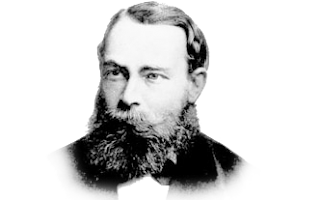
Frege
                                                          

The name “foundationism” was invented by a prolific name-giver, Imre Lakatos. It refers to Gottlob Frege in his prime, Bertrand Russell in his full logicist phase, Luitjens Brouwer, guru of intuitionism, and David Hilbert, prime advocate of formalism. Lakatos saw that despite their disagreements, they all were hooked on the same delusion: Mathematics must have a firm foundation. They differ on what the foundation should be. 

Foundationism has ancient roots. Behind Frege, Hilbert, and Brouwer stands Immanuel Kant. Behind Kant, Gottfried Leibniz. Behind Leibniz, Baruch Spinoza, and René Descartes. Behind all of them, Thomas Aquinas, Augustine of Hippo, Plato, and the great grandfather of foundationism—Pythagoras. 

We will find that the roots of foundationism are tangled with religion and theology. In Pythagoras and Plato, this intimacy is public. In Kant, it’s half covered. In Frege, it’s out of sight. Then in Georg Cantor, Bertrand Russell, David Hilbert, and Luitjens Brouwer, it pops up like a jack-in-the-box.

In the twentieth century, we look at Russell, Brouwer, Hilbert, Edmund Husserl, Ludwig Wittgenstein, Kurt Gödel, Rudolph Carnap, Willard V. O. Quine, and a small sample of today’s authors. Philip Kitcher said the philosophy of mathematics is generally supposed to begin with Frege—before Frege there was only “prehistory.” Frege transformed the issues constituting philosophy of mathematics. In that sense earlier philosophy can be called prehistoric. But to understand Frege you must see him as a Kantian. To understand Kant you must see his response to Newton, Leibniz, and Hume. Those three go back to Descartes, and through him to Plato. Plato was a Pythagorean. The thread from Pythagoras to Hilbert and Gödel is unbroken. I aim to tell a connected story from Pythagoras to the present—where foundationism came from, where it left us. 

Instead of going straight through from Pythagoras, I’ve split the story into two parallel streams—the first section is about the “Mainstream.” The second is about the “humanists and mavericks.” 

For the Mainstream, mathematics is superhuman—abstract, ideal, infallible, eternal. So many great names: Pythagoras, Plato, Descartes, Spinoza, Leibniz, Kant, Frege, Russell, Carnap. (For Kant, membership in this group is partial.) 

Humanists see mathematics as a human activity, a human creation. Aristotle was a humanist in that sense, as were Locke, Hume, and Mill. Modern philosophers outside the Russell tradition—mavericks—include Peirce, Dewey, Roy Sellars, Wittgenstein, Popper, Lakatos, Wang, Tymoczko, and Kitcher (a self-styled maverick). There are some interesting authors who aren’t labeled philosophers: psychologist Jean Piaget; anthropologist Leslie White; sociologist David Bloor; chemist Michael Polányi; physicist Mario Bunge; educationists Paul Ernest, Gila Hanna, Anna Sfard; mathematicians Henri Poincaré, Alfréd Rényi, George Pólya, Raymond Wilder, Phil Davis, and Brian Rotman.

Saturday, December 25, 2021

Platonism vs Formalism


Frege, Russell and Wittgenstein

Two principal views of the nature of mathematics are prevalent among mathematicians—Platonism and formalism. Platonism is dominant, but it’s hard to talk about it in public. Formalism feels more respectable philosophically, but it’s almost impossible for a working mathematician to really believe it.

**

The formalist philosophy of mathematics is often condensed to a short slogan: “Mathematics is a meaningless game.” (“Meaningless” and “game” remain undefined. Wittgenstein showed that games have no strict definition, only a family resemblance.)

What do formalists mean by “game” when they call mathematics a game? Perhaps they use “game” to mean something “played by the rules.” (Now “play” and “rule” are undefined!)

For a game in that sense, two things are needed:
(2) people to play by the rules.
(1) rules.

Rule-making can be deliberate, as in Monopoly or Scrabble—or spontaneous, as in natural languages or elementary arithmetic.

In either case, the making of rules doesn’t follow rules!

Wittgenstein and some others seem to think that since the making of rules doesn’t follow rules, then the rules are arbitrary. They could just as well be any way at all. This is a gross error.

The rules of language and of mathematics are historically determined by the workings of society that evolve under pressure of the inner workings and interactions of social groups, and the physical and biological environment of earth.

**
In real life there are no totally rule-governed activities. Only more or less rule-governed ones, with more or less definite procedures for disputes. The rules and procedures evolve, sometimes formally like amending the U.S. Constitution, sometimes informally, as street games evolve with time and mixing of cultures. Is there totally unruly or ruleless behavior? Perhaps not. Mathematics is in part a rule-governed game. But one can’t overlook how the rules are made, how they evolve, and how disputes are resolved. That isn’t rule governed, and can’t be.

Computer proof is changing the way the game of mathematics is played. Wolfgang Haken thinks computer proof is permitted under the rules. Paul Halmos thinks it ought to be against the rules. Tom Tymoczko thinks it amounts to changing the rules. In the long run, what mathematicians publish, cite, and especially teach, will decide the rules. We have no French Academy to set rules, no cabal of team owners to say how to play our game. Our rules are set by our consensus, influenced and led by our most powerful or prestigious members (of course).

These considerations on games and rules in general show that one can’t understand mathematics (or any other nontrivial human activity) by simply finding rules that it follows or ought to follow. Even if that could be done, it would lead to more interesting questions: Why and whence those rules?

The notion of strictly following rules without any need for judgment is a fiction. It has its use and interest. It’s misleading to apply it literally to real life.

**

Platonism says mathematical objects are real and independent of our knowledge. Space-filling curves, uncountably infinite sets, infinite-dimensional manifolds—all the members of the mathematical zoo—are definite objects, with definite properties, known or unknown. These objects exist outside physical space and time. They were never created. They never change. By logic’s law of the excluded middle, a meaningful question about any of them has an answer, whether we know it or not. According to Platonism a mathematician is an empirical scientist, like a botanist. He can’t invent, because everything is already there. He can only discover.

**

The objections to Platonism are never answered: the strange parallel existence of two realities—physical and mathematical; and the impossibility of contact between the flesh-and-blood mathematician and the immaterial mathematical object. Platonism shares the fatal flaw of Cartesian dualism. To explain the existence and properties of mind and matter, Descartes postulated a different “substance” for each. But he couldn’t plausibly explain how the two substances interact, as mind and body do interact. In similar fashion, Platonists explain mathematics by a separate universe of abstract objects, independent of the material universe. But how do the abstract and material universes interact? How do flesh-and-blood mathematicians acquire the knowledge of number?

To answer, you have to forget Platonism, and look in the socio-cultural past and present, in the history of mathematics, including the tragic life of Georg Cantor.

The set-theoretic universe constructed by Cantor and generally adopted by Platonists is believed to include all mathematics, past, present, and future. In it, the uncountable set of real numbers is just the beginning of uncountable chains of uncountables. The cardinality of this set universe is unspeakably greater than that of the material world. It dwarfs the material universe to a tiny speck. And it was all there before there was an earth, a moon, or a sun, even before the Big Bang. Yet this tremendous reality is unnoticed! Humanity dreams on, totally unaware of it—except for us mathematicians. We alone notice it. But only since Cantor revealed it in 1890. Is this plausible? Is this credible? Roger Penrose declares himself a Platonist, but draws the line at swallowing the whole set-theoretic hierarchy.

Platonists don’t acknowledge the arguments against Platonism. They just reavow Platonism.

Frege’s point of view persists today among set-theoretic Platonists. It goes something like this:

1. Surely the empty set exists—we all have encountered it!
2. Starting from the empty set, perform a few natural operations, like forming the set of all subsets. Before long you have a magnificent structure in which you can embed the real numbers, complex numbers, quaternions, Hilbert spaces, infinite-dimensional differentiable manifolds, and anything else you like.
3. Therefore it’s vain to talk of inventing or creating mathematics. In this all-encompassing, set-theoretic structure, everything we could ever want or dream of is already present.

Yet most advances in mainstream mathematics are made without reference to any set-theoretic embedding. Saying Hilbert space was already there in the set universe is like telling Rodin, “The Thinker is a nice piece of work, but all you did was get rid of the extra marble. The statue was there inside the marble quarry before you were born.” Rodin made The Thinker by removing marble. Hilbert, von Neumann, and the rest made the theory of Hilbert space by analysing, generalizing, and rearranging mathematical ideas that were present in the mathematical atmosphere of their time.

(Reuben Hersh, What is mathematics really?)
**

“Mathematical objects are real. Their existence is an objective fact, independent of our knowledge of them. Infinite sets, uncountably infinite sets, infinite-dimensional manifolds, space-filling curves—all the denizens of the mathematical zoo—are definite objects, with definite properties. Some of their properties are known, some are unknown. These objects aren’t physical or material. They’re outside space and time. They’re immutable. They’re uncreated. A meaningful statement about one of these objects is true or false, whether we know it or not. Mathematicians are empirical scientists, like botanists. We can’t invent anything; it’s there already. We try to discover.”

**