Showing posts with label Buda. Show all posts
Saturday, August 11, 2018
“Suffering exists. How do I escape it?”
“The religious history of the world does not boil down to the history of gods. During the first millennium BC, religions of an altogether new kind began to spread through Afro-Asia. The newcomers, such as Jainism and Buddhism in India, Daoism and Confucianism in China, and Stoicism, Cynicism and Epicureanism in the Mediterranean basin, were characterised by their disregard of gods.
These creeds maintained that the superhuman order governing the world is the product of natural laws rather than of divine wills and whims. Some of these natural-law religions continued to espouse the existence of gods, but their gods were subject to the laws of nature no less than humans, animals and plants were. Gods had their niche in the ecosystem, just as elephants and porcupines had theirs, but could no more change the laws of nature than elephants can. A prime example is Buddhism, the most important of the ancient natural law religions, which remains one of the major faiths.
The central figure of Buddhism is not a god but a human being, Siddhartha Gautama. According to Buddhist tradition, Gautama was heir to a small Himalayan kingdom, sometime around 500 BC. The young prince was deeply affected by the suffering evident all around him. He saw that men and women, children and old people, all suffer not just from occasional calamities such as war and plague, but also from anxiety, frustration and discontent, all of which seem to be an inseparable part of the human condition. People pursue wealth and power, acquire knowledge and possessions, beget sons and daughters, and build houses and palaces. Yet no matter what they achieve, they are never content. Those who live in poverty dream of riches. Those who have a million want two million. Those who have two million want 10 million. Even the rich and famous are rarely satisfied. They too are haunted by ceaseless cares and worries, until sickness, old age and death put a bitter end to them. Everything that one has accumulated vanishes like smoke. Life is a pointless rat race. But how to escape it?
At the age of twenty-nine Gautama slipped away from his palace in the middle of the night, leaving behind his family and possessions. He travelled as a homeless vagabond throughout northern India, searching for a way out of suffering. He visited ashrams and sat at the feet of gurus but nothing liberated him entirely – some dissatisfaction always remained. He did not despair. He resolved to investigate suffering on his own until he found a method for complete liberation. He spent six years meditating on the essence, causes and cures for human anguish. In the end he came to the realisation that suffering is not caused by ill fortune, by social injustice, or by divine whims. Rather, suffering is caused by the behaviour patterns of one’s own mind.
Gautama’s insight was that no matter what the mind experiences, it usually reacts with craving, and craving always involves dissatisfaction. When the mind experiences something distasteful it craves to be rid of the irritation. When the mind experiences something pleasant, it craves that the pleasure will remain and will intensify. Therefore, the mind is always dissatisfied and restless. This is very clear when we experience unpleasant things, such as pain. As long as the pain continues, we are dissatisfied and do all we can to avoid it. Yet even when we experience pleasant things we are never content. We either fear that the pleasure might disappear, or we hope that it will intensify. People dream for years about finding love but are rarely satisfied when they find it. Some become anxious that their partner will leave; others feel that they have settled cheaply, and could have found someone better. And we all know people who manage to do both.
Great gods can send us rain, social institutions can provide justice and good health care, and lucky coincidences can turn us into millionaires, but none of them can change our basic mental patterns. Hence even the greatest kings are doomed to live in angst, constantly fleeing grief and anguish, forever chasing after greater pleasures.
Gautama found that there was a way to exit this vicious circle. If, when the mind experiences something pleasant or unpleasant, it simply understands things as they are, then there is no suffering. If you experience sadness without craving that the sadness go away, you continue to feel sadness but you do not suffer from it. There can actually be richness in the sadness. If you experience joy without craving that the joy linger and intensify, you continue to feel joy without losing your peace of mind.
But how do you get the mind to accept things as they are, without craving? To accept sadness as sadness, joy as joy, pain as pain? Gautama developed a set of meditation techniques that train the mind to experience reality as it is, without craving. These practices train the mind to focus all its attention on the question, ‘What am I experiencing now?’ rather than on ‘What would I rather be experiencing?’ It is difficult to achieve this state of mind, but not impossible.
Gautama grounded these meditation techniques in a set of ethical rules meant to make it easier for people to focus on actual experience and to avoid falling into cravings and fantasies. He instructed his followers to avoid killing, promiscuous sex and theft, since such acts necessarily stoke the fire of craving (for power, for sensual pleasure, or for wealth). When the flames are completely extinguished, craving is replaced by a state of perfect contentment and serenity, known as nirvana (the literal meaning of which is ‘extinguishing the fire’). Those who have attained nirvana are fully liberated from all suffering. They experience reality with the utmost clarity, free of fantasies and delusions. While they will most likely still encounter unpleasantness and pain, such experiences cause them no misery. A person who does not crave cannot suffer.
According to Buddhist tradition, Gautama himself attained nirvana and was fully liberated from suffering. Henceforth he was known as ‘Buddha’, which means ‘The Enlightened One’. Buddha spent the rest of his life explaining his discoveries to others so that everyone could be freed from suffering. He encapsulated his teachings in a single law: suffering arises from craving; the only way to be fully liberated from suffering is to be fully liberated from craving; and the only way to be liberated from craving is to train the mind to experience reality as it is.
“This law, known as dharma or dhamma, is seen by Buddhists as a universal law of nature. That ‘suffering arises from craving’ is always and everywhere true, just as in modern physics E always equals mc squared. Buddhists are people who believe in this law and make it the fulcrum of all their activities. Belief in gods, on the other hand, is of minor importance to them. The first principle of monotheist religions is ‘God exists. What does He want from me?’ The first principle of Buddhism is ‘Suffering exists. How do I escape it?’
Buddhism does not deny the existence of gods – they are described as powerful beings who can bring rains and victories – but they have no influence on the law that suffering arises from craving. If the mind of a person is free of all craving, no god can make him miserable. Conversely, once craving arises in a person’s mind, all the gods in the universe cannot save him from suffering.
Yet much like the monotheist religions, premodern natural-law religions such as Buddhism never really rid themselves of the worship of gods. Buddhism told people that they should aim for the ultimate goal of complete liberation from suffering, rather than for stops along the way such as economic prosperity and political power. However, 99 per cent of Buddhists did not attain nirvana, and even if they hoped to do so in some future lifetime, they devoted most of their present lives to the pursuit of mundane achievements. So they continued to worship various gods, such as the Hindu gods in India, the Bon gods in Tibet, and the Shinto gods in Japan.
Moreover, as time went by several Buddhist sects developed pantheons of Buddhas and bodhisattvas. These are human and non-human beings with the capacity to achieve full liberation from suffering but who forego this liberation out of compassion, in order to help the countless beings still trapped in the cycle of misery. Instead of worshipping gods, many Buddhists began worshipping these enlightened beings, asking them for help not only in attaining nirvana, but also in dealing with mundane problems. Thus we find many Buddhas and bodhisattvas throughout East Asia who spend their time bringing rain, stopping plagues, and even winning bloody wars – in exchange for prayers, colourful flowers, fragrant incense and gifts of rice and candy.”
Friday, March 17, 2017
Homo Deus: A Brief History of Tomorrow
It is far from certain that humankind should invest so much effort in the biochemical pursuit of happiness. Some would argue that happiness simply isn’t important enough, and that it is misguided to regard individual satisfaction as the highest aim of human society. Others may agree that happiness is indeed the supreme good, yet would take issue with the biological definition of happiness as the experience of pleasant sensations.
Some 2,300 years ago Epicurus warned his disciples that immoderate pursuit of pleasure is likely to make them miserable rather than happy. A couple of centuries earlier Buddha had made an even more radical claim, teaching that the pursuit of pleasant sensations is in fact the very root of suffering. Such sensations are just ephemeral and meaningless vibrations. Even when we experience them, we don’t react to them with contentment; rather, we just crave for more. Hence no matter how many blissful or exciting sensations I may experience, they will never satisfy me.
If I identify happiness with fleeting pleasant sensations, and crave to experience more and more of them, I have no choice but to pursue them constantly. When I finally get them, they quickly disappear, and because the mere memory of past pleasures will not satisfy me, I have to start all over again. Even if I continue this pursuit for decades, it will never bring me any lasting achievement; on the contrary, the more I crave these pleasant sensations, the more stressed and dissatisfied I will become. To attain real happiness, humans need to slow down the pursuit of pleasant sensations, not accelerate it.
This Buddhist view of happiness has a lot in common with the biochemical view. Both agree that pleasant sensations disappear as fast as they arise, and that as long as people crave pleasant sensations without actually experiencing them, they remain dissatisfied. However, this problem has two very different solutions. The biochemical solution is to develop products and treatments that will provide humans with an unending stream of pleasant sensations, so we will never be without them. The Buddha’s suggestion was to reduce our craving for pleasant sensations, and not allow them to control our lives. According to Buddha, we can train our minds to observe carefully how all sensations constantly arise and pass. When the mind learns to see our sensations for what they are – ephemeral and meaningless vibrations – we lose interest in pursuing them. For what is the point of running after something that disappears as fast as it arises?
**
Increasing numbers of schoolchildren take stimulants such as Ritalin. In 2011, 3.5 million American children were taking medications for ADHD (attention deficit hyperactivity disorder). In the UK the number rose from 92,000 in 1997 to 786,000 in 2012. The original aim had been to treat attention disorders, but today completely healthy kids take such medications to improve their performance and live up to the growing expectations of teachers and parents. Many object to this development and argue that the problem lies with the education system rather than with the children. If pupils suffer from attention disorders, stress and low grades, perhaps we ought to blame outdated teaching methods, overcrowded classrooms and an unnaturally fast tempo of life. Maybe we should modify the schools rather than the kids? It is interesting to see how the arguments have evolved. People have been quarrelling about education methods for thousands of years. Whether in ancient China or Victorian Britain, everybody had his or her pet method, and vehemently opposed all alternatives. Yet hitherto everybody still agreed on one thing: in order to improve education, we need to change the schools. Today, for the first time in history, at least some people think it would be more efficient to change the pupils’ biochemistry.
**
For example, the Igbo people of Nigeria believe that the creator god Chukwu initially wanted to make people immortal. He sent a dog to tell humans that when someone dies, they should sprinkle ashes on the corpse, and the body will come back to life. Unfortunately, the dog was tired and he dallied on the way. The impatient Chukwu then sent a sheep, telling her to make haste with this important message. Alas, when the breathless sheep reached her destination, she garbled the instructions, and told the humans to bury their dead, thus making death permanent. This is why to this day we humans must die. If only Chukwu had a Twitter account instead of relying on laggard dogs and dim-witted sheep to deliver his messages!
**
In recent decades life scientists have demonstrated that emotions are not some mysterious spiritual phenomenon that is useful just for writing poetry and composing symphonies. Rather, emotions are biochemical algorithms that are vital for the survival and reproduction of all mammals.
**
Perhaps humankind eventually came to dominate the planet not because of some elusive third key ingredient, but due simply to the evolution of even higher intelligence and even better toolmaking abilities? It doesn’t seem so, because when we examine the historical record, we don’t see a direct correlation between the intelligence and toolmaking abilities of individual humans and the power of our species as a whole. Twenty thousand years ago, the average Sapiens probably had higher intelligence and better toolmaking skills than the average Sapiens of today. Modern schools and employers may test our aptitudes from time to time but, no matter how badly we do, the welfare state always guarantees our basic needs. In the Stone Age natural selection tested you every single moment of every single day, and if you flunked any of its numerous tests you were pushing up the daisies in no time. Yet despite the superior toolmaking abilities of our Stone Age ancestors, and despite their sharper minds and far more acute senses, 20,000 years ago humankind was much weaker than it is today.
Over those 20,000 years humankind moved from hunting mammoth with stone-tipped spears to exploring the solar system with spaceships not thanks to the evolution of more dexterous hands or bigger brains (our brains today seem actually to be smaller). Instead, the crucial factor in our conquest of the world was our ability to connect many humans to one another. Humans nowadays completely dominate the planet not because the individual human is far smarter and more nimble-fingered than the individual chimp or wolf, but because Homo sapiens is the only species on earth capable of co-operating flexibly in large numbers. Intelligence and toolmaking were obviously very important as well. But if humans had not learned to cooperate flexibly in large numbers, our crafty brains and deft hands would still be splitting flint stones rather than uranium atoms.
If cooperation is the key, how come the ants and bees did not beat us to the nuclear bomb even though they learned to cooperate en masse millions of years before us? “Because their cooperation lacks flexibility. Bees cooperate in very sophisticated ways, but they cannot reinvent their social system overnight. If a hive faces a new threat or a new opportunity, the bees cannot, for example, guillotine the queen and establish a republic.
Social mammals such as elephants and chimpanzees cooperate far more flexibly than bees, but they do so only with small numbers of friends and family members. Their cooperation is based on personal acquaintance. If I am a chimpanzee and you are a chimpanzee and I want to cooperate with you, I must know you personally: what kind of chimp are you? Are you a nice chimp? Are you an evil chimp? How can I cooperate with you if I don’t know you? To the best of our knowledge, only Sapiens can cooperate in very flexible ways with countless numbers of strangers. This concrete capability – rather than an eternal soul or some unique kind of consciousness – explains our mastery of planet Earth.
**
Writing has thus enabled humans to organise entire societies in an algorithmic fashion. We encountered the term ‘algorithm’ when we tried to understand what emotions are and how brains function, and defined it as a methodical set of steps that can be used to make calculations, resolve problems and reach decisions. In illiterate societies people make all calculations and decisions in their heads. In literate societies people are organised into networks, so that each person is only a small step in a huge algorithm, and it is the algorithm as a whole that makes the important decisions. This is the essence of bureaucracy.
**
Despite all the immense achievements of the Chinese dynasties, the Muslim empires and the European kingdoms, even in AD 1850 the life of the average person was not better – and might actually have been worse – than the lives of archaic hunter-gatherers. In 1850 a Chinese peasant or a Manchester factory hand worked longer hours than their hunter-gatherer ancestors; their jobs were physically harder and mentally less fulfilling; their diet was less balanced; hygiene conditions were incomparably worse; and infectious diseases were far more common.
**
The traditional view of the world as a pie of a fixed size presupposes there are only two kinds of resources in the world: raw materials and energy. But in truth, there are three kinds of resources: raw materials, energy and knowledge. Raw materials and energy are exhaustible – the more you use, the less you have. Knowledge, in contrast, is a growing resource – the more you use, the more you have. Indeed, when you increase your stock of knowledge, it can give you more raw materials and energy as well. If I invest $100 million searching for oil in Alaska and I find it, then I now have more oil, but my grandchildren will have less of it. In contrast, if I invest $100 million researching solar energy, and I find a new and more efficient way of harnessing it, then both I and my grandchildren will have more energy.
**
The greatest scientific discovery was the discovery of ignorance.
**
We should also be concerned that an ecological apocalypse might have different consequences for different human castes. There is no justice in history. When disaster strikes, the poor almost always suffer far more than the rich, even if the rich caused the tragedy in the first place. Global warming is already affecting the lives of poor people in arid African countries more than the lives of affluent Westerners. Paradoxically, the very power of science may increase the danger, because it makes the rich complacent.
**
At the beginning of the third millennium we face a completely different kind of challenge, as liberal humanism makes way for techno-humanism, and medicine is increasingly focused on upgrading the healthy rather than healing the sick. Doctors, engineers and customers no longer want merely to fix mental problems – they seek to upgrade the mind.
Saturday, February 7, 2015
Stories Around Big Numbers
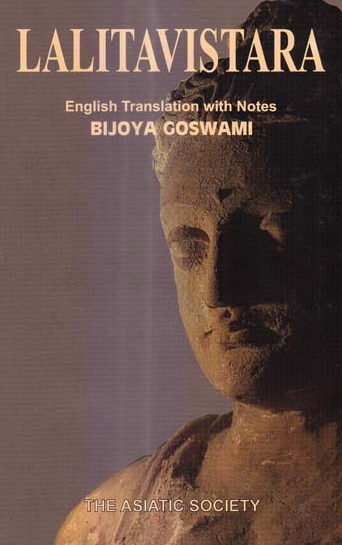
In the Lalitavistara sutra, a hagiographical account of the Buddha’s life, we read of a meeting between the young Siddhartha and the ‘great mathematician Arjuna’. Arjuna asks the boy to multiply numbers a hundredfold beginning with one koti (generally considered the equivalent of ten million). Without the slightest hesitation, Siddhartha correctly replies that one hundred kotis equals an ayuta (which would equate to one billion), and then proceeds to multiply this number by one hundred, and the new number by one hundred, and so on, until – after twenty-three successive multiplications – he reaches the number called tallaksana (the equivalent of 1 followed by 53 zeroes).
Siddhartha proceeds to multiply this number in turn, though it is unclear whether he does so by one hundred or some other amount. In a phrase reminiscent of Archimedes, he claims that with this new number the mathematician could take every grain of sand in the river Ganges ‘as a subject of calculation and measure them’. Again and again, the bodhisattva multiplies this number, until at last he reaches sarvaniksepa, with which, he tells the mathematician, it would be possible to count every grain of sand in ten rivers the size of the Ganges as a subject of calculation and measure them’. Again and again, the bodhisattva multiplies this number, until at last he reaches sarvaniksepa, with which, he tells the mathematician, it would be possible to count every grain of sand in ten rivers the size of the Ganges. And if this were not enough, he continues, we can multiply this number to reach agrasara – a number greater than the grains of sand in one billion Ganges.
Such extreme numerical altitudes, we are told, are the preserve of the pure and enlightened mind. According to the sutra, only the bodhisattvas, beings who have arrived at their ultimate incarnation, are capable of counting so high. In the closing verses, the mathematician Arjuna concedes this point.
This supreme knowledge I do not have – he is above me.
One with such knowledge of numbers is incomparable!
The story of the enlightenment of Siddhartha Gautama, to give him his full name, begins in his father’s palace. It is said that the Nepalese king resolved to seclude his son at birth from the heartbreaking nature of the world. Shut up behind gilded doors, the boy would remain forever innocent of suffering, aging, poverty and death. We can imagine his constricted royal life: the fine meals of rich food, lessons in literacy and military arts, ritual music and dance. In his ears he wore precious stones heavy enough to make his earlobes droop. But of course he was not free: he had only walls for a horizon, only ceilings for a sky. Bangle strings and brass flutes displaced all birdsong. Cloying aromas of cooked food overlay the smell of rain.
Nearly thirty years, a marriage and even the birth of his own son all passed before Siddhartha learned of a world beyond the palace walls. Having resolved to go forth and see it, he made a trip through the countryside, accompanied only by the charioteer who drove him. The prince saw for the first time men enfeebled by ill health, old age and want of money. He was not even spared the sight of a corpse. Deeply shocked by all that he had seen, he fled his old life for the ascetic’s road.
The story of the prince’s seclusion in a palace reads like a fairytale – it may very well be such a tale – with all its peculiar and thought-provoking charm. One particular aspect of Siddhartha’s revelation of the outside world has always struck me. Quite possibly he lived his first thirty years without any knowledge of numbers.
How must he have felt, then, to see crowds of people mingling in the streets? Before that day he would not have believed that so many people existed in all the world. And what wonder it must have been to discover flocks of birds, and piles of stones, leaves on trees and blades of grass! To suddenly realise that, his whole life long, he had been kept at arm’s length from multiplicity.
***
I am reminded of another story. This time the man was not a king but a mathematician. Unlike the Buddha’s father, big numbers pleased him; he enjoyed talking about them with his nine-year-old nephew. One day, a mid-twentieth-century day in America, the mathematician Edward Kasner invited the boy to name a number that contains a hundred zeroes. ‘Googol,’ the boy replied, after a little thought.
No explanation for the origin of this word is given in Kasner’s published account ‘Mathematics and the Imagination’. Probably it came intuitively to the boy. According to linguists, English speakers tend to associate an initial G sound with the idea of bigness, since the language employs many G- words to describe things which are ‘great’ or ‘grand’, ‘gross’ or ‘gargantuan’, and which ‘grow’ or ‘gain’. I could point out another feature: both the elongated ‘oo’ vowel and the concluding L suggest indefinite duration. We hear this difference in verbs like ‘put’ and ‘pull’, where ‘put’ – with its final T – implies a completed action, whereas an individual might ‘pull’ at something for any conceivable amount of time.
In a universe teeming with numbers, no physical quantity exists that coincides with a googol. A googol dwarfs the number of grains of sand in all the world. Collecting every letter of every word of every book ever published gets us nowhere near. The total number of elementary particles in all of known space falls some twenty zeroes short.
The boy could never hope to count every grain of sand, or read every page of every published book, but, like Archimedes and the Siddhartha of the sutras, he understood that no cosmos would ever contain all the numbers. He understood that with numbers he might imagine all that “existed, all that had once existed or might one day exist, and all that existed too in the realms of speculation, fantasy and dreams.
His uncle, the mathematician, liked his nephew’s word. He immediately encouraged the boy to count higher still and watched as his small brow furrowed. Now came a second word, a variation of the first: ‘googolplex’. The suffix -plex (duplex) parallels the English -fold, as in ‘tenfold’ or ‘hundredfold’. This number the boy defined as containing all the zeroes that a hand could write down before tiring. His uncle demurred. Endurance, he remarked, varied a great deal from person to person. In the end they agreed on the following definition: a googolplex is a 1 followed by a googol number of zeroes.Let us pause a brief moment to contemplate this number’s size. It is not, for instance, a googol times a googol: such a number would ‘only’ consist of a 1 with 200 zeroes. A googolplex, on the other hand, contains far more than a thousand zeroes, or a myriad zeroes, or a million or billion zeroes. It contains far more than the eighty quadrillion zeroes at which even the painstaking and persistent Archimedes ceased to count. There are so many zeroes in this number that we could never finish writing them all down, even if every human lifetime devoted itself exclusively to the task.
Wednesday, June 4, 2014
Kuyudaki adam: Tolstoy, Bediüzzaman ve Buda
1996 yapımı Anna Karenina filmini izleyen bir Bediüzzaman okuyucusu filmin girişini görse hayretler içinde kalır. Çünkü dünyada sadece Bediüzzaman’dan okuduğu bir hikâyenin (Sekizinci Söz’deki temsili hikâyeciğin) sinemadaki hâlini görecektir. Tolstoy’un Anna Karenina romanında olmamasına rağmen, onun İtiraflar’ında yer alan hikâye bu film için başlangıç fragmanı olarak kullanılmıştır. Hikâye arslandan kaçarken bir kuyuya atlayan adamın vaziyetine dairdir:
“İşte bu adam, dereden tepeden aşıp, git gide ta hâli bir sahrâya girdi. Birden müthiş bir sada işitti. Baktı ki, dehşetli bir arslan, meşelikten çıkıp ona hücum ediyor. O da kaçtı, ta altmış arşın derinliğinde susuz bir kuyuya rast geldi. Korkusundan kendini içine attı. Yarısına kadar düşüp elleri bir ağaca rast geldi, yapıştı. Kuyunun duvarında göğermiş olan o ağacın iki kökü var. İki fare, biri beyaz, biri siyah, o iki köke musallat olup kesiyorlar. Yukarıya baktı, gördü ki, arslan, nöbetçi gibi kuyunun başında bekliyor. Aşağıya baktı, gördü ki, dehşetli bir ejderha, içindedir. Başını kaldırmış, otuz arşın yukarıdaki ayağına takarrup etmiş. Ağzı kuyu ağzı gibi geniştir. Kuyunun duvarına baktı, gördü ki, ısırıcı muzır haşarat, etrafını sarmışlar. Ağacın başına baktı, gördü ki, bir incir ağacıdır. Fakat, harika olarak, muhtelif çok ağaçların meyveleri, cevizden nara kadar, başında yemişleri var. İşte, şu adam, sû-i fehminden, akılsızlığından anlamıyor ki, bu adi bir iş değildir. Bu işler tesadüfî olamaz. Bu acip işler içinde garip esrar var. Ve pek büyük bir işleyici var olduğunu intikal etmedi. Şimdi bunun kalbi ve ruh ve aklı şu elîm vaziyetten gizli feryad u figan ettikleri halde, nefs-i emmâresi, güya bir şey yokmuş gibi tecâhul edip, ruh ve kalbin ağlamasından kulağını kapayıp, kendi kendini aldatarak, bir bahçede bulunuyor gibi, o ağacın meyveleriniyemeye başladı. Halbuki o meyvelerin bir kısmı zehirli ve muzır idi. Bir hadis-i kudsîde Cenâb-ı Hak buyurmuş: ... ‘Kulum Beni nasıl tanırsa, onunla öyle muamele ederim.’ İşte bu bedbaht adam, sûizan ve akılsızlığıyla, gördüğünü adi ve ayn-i hakikat telâkki etti ve öyle de muamele gördü ve görüyor ve görecek. Ne ölüyor ki kurtulsun, ne de yaşıyor; böylece azap çekiyor.” (Bediüzzaman, Sekizinci Söz)
Tolstoy’un anlatımı aşağı yukarı aynıdır. Bir tek incir ağacındaki meyveler yerine kuyuya düşen adamın yediği şey ağaçtaki petekten damlayan baldır. Ölüm gerçeği karşısında hayatın anlamını sorgulatan bu meseli Tolstoy eski bir şark hikâyesi olarak zikreder ve kendi vaziyetini tarif için anlatır.
Peki, nasıl oldu da Said Nursi ve Leo Tolstoy bu hikâyeyi birbirlerinden habersiz kullandılar. Bediüzzaman’ın Sözler’inin sonundaki Fihrist bölümünde bu hikâye “Suhuf-u İbrahim’de aslı bulunan güzel ve parlak bir temsil” olarak tarif edilir. Hıristiyan gelenekte de bulunan bu hikâyeBarlaam ve Josaphat adlı eserde vardır. Barlaam bilge bir zahit, Josaphat ise birşehzadedir. David M. Lang’in 1966 tarihli kitabına göre kuyudaki adam meselinin de dâhil olduğu Barlaam ve Josaphat isimli bu hikmetli hikâyeler topluluğu, Ortaçağ Avrupa’sına bir Gürcü Hıristiyan kesişin tercümesiyle 11. asırda geçiyor. Aynı eser, 6. veya 7. asırda eski İran üzerinden Pehleviceye tercüme ediliyor ve daha sonra 8. asırda Arapçaya Bilawhar wa Yudasaf adıyla geçiyor. Eserin Gürcü versiyonunda adamı kovalayan arslan yerine fil,kuyu yerine uçurum vardır. Diğer unsurlar tamamen aynıdır.
Kadim Hıristiyanlıktan Bizans ve Roma’ya geçen bu hikâyelerin anlatıcısı ve muhatabı olan Barlaam ve Josaphat Avrupa’da azizleştiriliyor. Hıristiyanlar çok zaman sonra öğreniyorlar ki Barlaam ve Josaphat hikâyesinin aslı Buda’nın öğretilerine dayanıyor. İnsan ruhunun bu dünya tünelindeki yolculuğunu anlatan bu hikâyeyi Buda, kendisini dinlemeye gelen bir genç kral olan Şoko ’ya anlatır. Genç kral Şoko şok olur: “Bu hâldeki bir insan nasıl öyle gafletle meyveleri yer, o balı yalamaya çalışır?” Buda ise der ki “Bu hikâye senin hikâyendir, bütün insanların hikâyesi”. Budistler hala bu hikmetli hikâyeyi okurlar. İşte bu güzel mesel Buda, Bediuzzaman ve Tolstoy’un yollarını kesiştiren kadim bir hakikattir.
Bu metaforik hikâyenin anlam ve yorumunu merak edenler Bediüzzaman’ın Sözler kitabından Sekizinci Söz’e bakabilirler.
Tuesday, March 11, 2014
Hinduizm ve Budizm
“Hinduizm ile Budizm aynı derecede putperest bir yapıya sahipti. Hatta çoğu çaman Budizm, putperestlikte Hinduizm’e üstünlük sağlamıştı. Budizm başlangıçta ilâh fikrini kabul etmezdi. Fakat zamanla Buda en büyük ilâh halini aldı. Sonra buna meselâ Bodhisatvas gibi başka ilâhlar da eklendi. Putperest düşünce, özellikle ‘Mahâyânâ’ diye adlandırılan Budizm ekolünde iyice kökleşti ve Hindistan’da zirveye ulaştı. Öyle ki, Buda kelimesi bazı şark dillerinde ‘vesen’ ve ‘sanem (put)’ ile eş anlamlı kullanılmaya başlandı.”
Subscribe to:
Posts (Atom)