Showing posts with label Sanayi Devrimi. Show all posts

Sunday, October 7, 2018

How did Europe Conquered the World and Why China, Persians and Ottomans Could Not?

Image result for why europe

The fact that people from a large island in the northern Atlantic conquered a large island south of Australia is one of history’s more bizarre occurrences. Not long before Cook’s expedition, the British Isles and western Europe in general were but distant backwaters of the Mediterranean world. Little of importance ever happened there. Even the Roman Empire – the only important premodern European empire – derived most of its wealth from its North African, Balkan and Middle Eastern provinces. Rome’s western European provinces were a poor Wild West, which contributed little aside from minerals and slaves. Northern Europe was so desolate and barbarous that it wasn’t even worth conquering.

Only at the end of the fifteenth century did Europe become a hothouse of important military, political, economic and cultural developments. Between 1500 and 1750, western Europe gained momentum and became master of the ‘Outer World’, meaning the two American continents and the oceans. Yet even then Europe was no match for the great powers of Asia. Europeans managed to conquer America and gain supremacy at sea mainly because the Asiatic powers showed little interest in them. The early modern era was a golden age for the Ottoman Empire in the Mediterranean, the Safavid Empire in Persia, the Mughal Empire in India, and the Chinese Ming and Qing dynasties. They expanded their territories significantly and enjoyed unprecedented demographic and economic growth. In 1775 Asia accounted for 80 per cent of the world economy. The combined economies of India and China alone represented two-thirds of global production. In comparison, Europe was an economic dwarf.

The global centre of power shifted to Europe only between 1750 and 1850, when Europeans humiliated the Asian powers in a series of wars and conquered large parts of Asia. By 1900 Europeans firmly controlled the worlds economy and most of its territory. In 1950 western Europe and the United States together accounted for more than half of global production, whereas Chinas portion had been reduced to 5 per cent. Under the European aegis a new global order and global culture emerged. Today all humans are, to a much greater extent than they usually want to admit, European in dress, thought and taste. They may be fiercely anti-European in their rhetoric, but almost everyone on the planet views politics, medicine, war and economics through European eyes, and listens to music written in European modes with words in European languages. Even today’s burgeoning Chinese economy, which may soon regain its global primacy, is built on a European model of production and finance.


How did the people of this frigid finger of Eurasia manage to break out of their remote corner of the globe and conquer the entire world? Europe’s scientists are often given much of the credit. It’s unquestionable that from 1850 onward European domination rested to a large extent on the military–industrial–scientific complex and technological wizardry. All successful late modern empires cultivated scientific research in the hope of harvesting technological innovations, and many scientists spent most of their time working on arms, medicines and machines for their imperial masters. A common saying among European soldiers facing African enemies was, ‘Come what may, we have machine guns, and they don’t.’ Civilian technologies were no less important. Canned food fed soldiers, railroads and steamships transported soldiers and their provisions, while a new arsenal of medicines cured soldiers, sailors and locomotive engineers. These logistical advances played a more significant role in the European conquest of Africa than did the machine gun.

But that wasn’t the case before 1850. The military-industrial-scientific complex was still in its infancy; the technological fruits of the Scientific Revolution were unripe; and the technological gap between European, Asiatic and African powers was small. In 1770, James Cook certainly had far better technology than the Australian Aborigines, but so did the Chinese and the Ottomans. Why then was Australia explored and colonised by Captain James Cook and not by Captain Wan Zhengse or Captain Hussein Pasha? More importantly, if in 1770 Europeans had no significant technological advantage over Muslims, Indians and Chinese, how did they manage in the following century to open such a gap between themselves and the rest of the world?

Why did the military-industrial-scientific complex blossom in Europe rather than India? When Britain leaped forward, why were France, Germany and the United States quick to follow, whereas China lagged behind? When the gap between industrial and non-industrial nations became an obvious economic and political factor, why did Russia, Italy and Austria succeed in closing it, whereas Persia, Egypt and the Ottoman Empire failed? After all, the technology of the first industrial wave was relatively simple. Was it so hard for Chinese or Ottomans to engineer steam engines, manufacture machine guns and lay down railroads?

The world’s first commercial railroad opened for business in 1830, in Britain. By 1850, Western nations were criss-crossed by almost 40,000 kilometres of railroads – but in the whole of Asia, Africa and Latin America there were only 4,000 kilometres of tracks. In 1880, the West boasted more than 350,000 kilometres of railroads, whereas in the rest of the world there were but 35,000 kilometres of train lines (and most of these were laid by the British in India). The first railroad in China opened only in 1876. It was twenty-five kilometres long and built by Europeans – the Chinese government destroyed it the following year. In 1880 the Chinese Empire did not operate a single railroad. The first railroad in Persia was built only in 1888, and it connected Tehran with a Muslim holy site about ten kilometres south of the capital. It was constructed and operated by a Belgian company. In 1950, the total railway network of Persia still amounted to a meagre 2,500 kilometres, in a country seven times the size of Britain.

The Chinese and Persians did not lack technological inventions such as steam engines (which could be freely copied or bought). They lacked the values, myths, judicial apparatus and sociopolitical structures that took centuries to form and mature in the West and which could not be copied and internalised rapidly. France and the United States quickly followed in Britain’s footsteps because the French and Americans  “already shared the most important British myths and social structures. The Chinese and Persians could not catch up as quickly because they thought and organised their societies differently.

This explanation sheds new light on the period from 1500 to 1850. During this era Europe did not enjoy any obvious technological, political, military or economic advantage over the Asian powers, yet the continent built up a unique potential, whose importance suddenly became obvious around 1850. The apparent equality between Europe, China and the Muslim world in 1750 was a mirage. Imagine two builders, each busy constructing very tall towers. One builder uses wood and mud bricks, whereas the other uses steel and concrete. At first it seems that there is not much of a difference between the two methods, since both towers grow at a similar pace and reach a similar height. However, once a critical threshold is crossed, the wood and mud tower cannot stand the strain and collapses, whereas the steel and concrete tower grows storey by storey, as far as the eye can see.


What potential did Europe develop in the early modern period that enabled it to dominate the late modern world? There are two complementary answers to this question: modern science and capitalism. Europeans were used to thinking and behaving in a scientific and capitalist way even before they enjoyed any significant technological advantages. When the technological bonanza began, Europeans could harness it far better than anybody else. So it is hardly coincidental that science and capitalism form the most important legacy that European imperialism has bequeathed the post-European world of the twenty-first century. Europe and Europeans no longer rule the world, but science and capital are growing ever stronger. 


Modern science flourished in and thanks to European empires. The discipline obviously owes a huge debt to ancient scientific traditions, such as those of classical Greece, China, India and Islam, yet its unique character began to take shape only in the early modern period, hand in hand with the imperial expansion of Spain, Portugal, Britain, France, Russia and the Netherlands. During the early modern period, Chinese, Indians, Muslims, Native Americans and Polynesians continued to make important contributions to the Scientific Revolution. The insights of Muslim economists were studied by Adam Smith and Karl Marx, treatments pioneered by Native American doctors found their way into English medical texts and data extracted from Polynesian informants revolutionised Western anthropology. But until the mid-twentieth century, the people who collated these myriad scientific discoveries, creating scientific disciplines in the process, were the ruling and intellectual elites of the global European empires. The Far East and the Islamic world produced minds as intelligent and curious as those of Europe. However, between 1500 and 1950 they did not produce anything that comes even close to Newtonian physics or Darwinian biology.


This does not mean that Europeans have a unique gene for science, or that they will forever dominate the study of physics and biology. Just as Islam began as an Arab monopoly but was subsequently taken over by Turks and Persians, so modern science began as a European speciality, but is today becoming a multi-ethnic enterprise.

What forged the historical bond between modern science and European imperialism? Technology was an important factor in the nineteenth and twentieth centuries, but in the early modern era it was of limited importance. The key factor was that the plant-seeking botanist and the colony-seeking naval officer shared a similar mindset. Both scientist and conqueror began by admitting ignorance – they both said, ‘I don’t know what’s out there.’ They both felt compelled to go out and make new discoveries. And they both hoped the new knowledge thus acquired would make them masters of the world.

European imperialism was entirely unlike all other imperial projects in history. Previous seekers of empire tended to assume that they already understood the world. Conquest merely utilised and spread their view of the world. The Arabs, to name one example, did not conquer Egypt, Spain or India in order to discover something they did not know. The Romans, Mongols and Aztecs voraciously conquered new lands in search of power and wealth – not of knowledge. In contrast, European imperialists set out to distant shores in the hope of obtaining new knowledge along with new territories.


Saturday, April 28, 2018

Wars, not just genius, fuelled Britain’s industrial revolution


Conventional wisdom says Britain’s transformation in the 18th century from an agrarian economy to an industrial one was largely midwifed by technological innovation and mechanisation, as symbolised by the steam engine and the cotton factories, respectively.

However, in a new book titled Empire of Guns, Priya Satia, a professor of British history at Stanford University, argues that this isn’t the whole story. In fact, it was war that fueled the industrial revolution, and specifically war in the colonies, including India.

While doing research on the history of the global arms trade, Satia stumbled upon the story of one Samuel Galton Jr, born in 1753, who presided over a Quaker family business in Birmingham that would go on to become the largest gun manufacturing firm in Britain and a key supplier to the East India Company (EIC). When asked in 1795 to defend his line of business to the critical Quaker church, Galton Jr maintained that guns were an instrument of civilisation, not just war, and that Britain was actually a military-industrial society.

For Satia, this was eye-opening since it suggested that rather than an emerging industrial economy, Britain was actually shaping up to be a military economy in the 18th century. In this context, the widely accepted idea of “unfettered geniuses,” rather than the warring British state, sparking economic transformation, seemed particularly misleading.

“For some reason when we talk about the invention of industrialism in the 18th century, it’s always a very pacific affair. It was about entrepreneurial genius, a culture of tinkering, some special cultural qualities in Britain, rather than the fact that Britain is always at war,” Satia told Quartz. This idea, she argues in the book, has in turn shaped the way the world has thought about stimulating development for over 200 years, even though it’s wrong.

Recognising the connection between war manufacturing and economic development, the British sought to suppress arms-making traditions in their colonies, especially India, to ensure that they stayed relatively underdeveloped. For instance, the EIC’s forces went on to capture and take over the arms-making facilities of Indian rulers like Tipu Sultan, at the same time selling British guns to the native princes.

 Source: Quartz

Saturday, November 25, 2017

Why are some parts of the world rich, and other parts poor?


This “great divergence” is even more intriguing given how relatively recent it is: 500 years ago the west was no richer than the far east, while 1,000 years ago, the Islamic world was more developed than Christian Europe in everything from mathematics to philosophy, engineering to technology, agriculture to medicine; the medieval German nun and writer Hrotsvitha called Islamic Córdoba “the ornament of the world”.

By 1600, however, the Islamic world had fallen behind western Europe, and for centuries the Middle East has been beset by slow growth, persistent poverty and seemingly intractable social problems. North-western Europe, by contrast, became the richest corner of the world, the hub of industrialisation and globalisation. In this sweeping and provocative book, the economic historian Jared Rubin asks how such a dramatic reversal of fortunes came about.


Rubin has no time for those who see the answer in any supposed “backwardness” of the Muslim faith. The successes of medieval Islam alone show that there is nothing against progress in its religious doctrine: “The superiority of the learned man over the devout is like that of the moon over the rest of the stars,” states one of Muhammad’s hadiths. Instead, Rubin argues that differences in the way religion and government interact caused the economic fortunes of Europe and the Middle East to diverge.


The driving motivation of most rulers is not ideology or to do good, but to maintain and strengthen their hold on power: “to propagate their rule”. This requires “coercion” – the ability to enforce power – and, crucially, some form of “legitimacy”. In the medieval world, both Islamic and Christian rulers claimed part of their legitimacy from religious authorities, but after the Reformation, Rubin thinks that European governments had to turn away from religion as a source of political legitimacy.


By getting “religion out of politics”, Europe made space at the political “bargaining table” for economic interests, creating a virtuous cycle of “pro-growth” policy-making. Islamic rulers, by contrast, continued to rely on religious legitimation and economic interests were mostly excluded from politics, leading to governance that focused on the narrow interests of sultans, and the conservative religious and military elites who backed them.


The source of Europe’s success, then, lies in the Reformation, a revolution in ideas and authority spread by what Martin Luther called “God’s highest and ultimate gift of grace”: the printing press. Yet even though printers quickly discovered how to adapt movable type to Arabic lettering, there were almost no presses in the Middle East for nearly 300 years after Gutenberg’s invention. Conservative Islamic clerics did not want the press to undermine their power, and the state – still tied to religion not commerce – had no incentive to overrule them. Not until 1727 did the Ottoman state permit printing in Arabic script, with a decree that the device would finally be “unveiled like a bride and will not again be hidden”. The prohibition was “one of the great missed opportunities of economic and technological history”, a vivid example of the dead hand of religious conservatism.


By contrast, Europe was revolutionised. Rubin argues that the Dutch revolt against Catholic Spain and the English crown’s “search for alternative sources of legitimacy” after breaking with Rome empowered the Dutch and English parliaments: by the 1600s both countries were ruled by parliamentary governments that included economic elites. Their policies – such as promoting trade and protecting property rights – were conducive to broader economic progress. Decoupling religion from politics had created space for “pro-commerce” interests.


Answering long-term questions requires both Rubin’s big picture macro-history and his awareness that even small events can set history’s direction and create “path dependencies”. But zoom out too far and the big picture can blur. Many developments affected who got a seat at the table, from changes in wealth generation to the impact of imperialism, and there was a lot more to English and Dutch success than institutional change, not least innovation in science and technology. Most important, Europe’s long reformations were more a maze than a path. As Rubin notes, “getting religion (mostly) out of politics took centuries” – centuries of radical social upheaval and destructive warfare. He argues persuasively for the importance of both religion and secularisation in economic history, but religious change affected not just politics but culture and ideas.


Early in the 20th century, Max Weber noted that many regions that had done well economically were Protestant, while some Catholic regions lagged behind. Rubin thinks Weber’s explanation – a Protestant “spirit of capitalism” – was unquestionably wrong, but that the pattern he spotted was correct. Not all recent economic analyses agree that Protestant cities did better than Catholic ones, but one Catholic region that certainly did lag behind was Spain. Early modern Europe’s first superpower grew persistently slowly after the 16th century, and Rubin shows that poor governance from a Spanish crown that ignored the country’s pro-commercial interests was often to blame. Imperial overreach, overreliance on colonial treasure, and myopic policymaking all inhibited development.


But were Spain’s struggles really due to the continued power of religion? The Spanish inquisition was not purely, as Rubin characterises it, a “costly” concession to the church in return for legitimation, but a state institution of social control; and Spanish kings did not involve themselves in endless European warfare purely to “protect the church’s interests”. State and religious interests were not so easily separable, and Spain had other problems too, including a regional fragmentation that lingers today.


In the Middle East the powers of state and religion were fused by Ottoman sultans intent on legitimising their rule and expansion through Islam. Unity that had been a medieval advantage became an early modern hindrance: with no political need to negotiate with economic interests, the Ottomans failed to pursue modernising reforms in finance, currency and law. It was not until the 19th century, with the region far behind the west, that liberal reform came, and its advance was swiftly checked by authoritarianism, religious conservatism and colonialism.


Via Guardian

Saturday, September 16, 2017

Return of the city-state


If you’d been born 1,500 years ago in southern Europe, you’d have been convinced that the Roman empire would last forever. It had, after all, been around for 1,000 years. And yet, following a period of economic and military decline, it fell apart. By 476 CE it was gone. To the people living under the mighty empire, these events must have been unthinkable. Just as they must have been for those living through the collapse of the Pharaoh’s rule or Christendom or the Ancien Régime.
We are just as deluded that our model of living in ‘countries’ is inevitable and eternal. Yes, there are dictatorships and democracies, but the whole world is made up of nation-states. This means a blend of ‘nation’ (people with common attributes and characteristics) and ‘state’ (an organised political system with sovereignty over a defined space, with borders agreed by other nation-states). Try to imagine a world without countries – you can’t. Our sense of who we are, our loyalties, our rights and obligations, are bound up in them.
Which is all rather odd, since they’re not really that old. Until the mid-19th century, most of the world was a sprawl of empires, unclaimed land, city-states and principalities, which travellers crossed without checks or passports. As industrialisation made societies more complex, large centralised bureaucracies grew up to manage them. Those governments best able to unify their regions, store records, and coordinate action (especially war) grew more powerful vis-à-vis their neighbours. Revolutions – especially in the United States (1776) and France (1789) – helped to create the idea of a commonly defined ‘national interest’, while improved communications unified language, culture and identity. Imperialistic expansion spread the nation-state model worldwide, and by the middle of the 20th century it was the only game in town. There are now 193 nation-states ruling the world.
Jamie Bartlett, aeon.co

Saturday, January 28, 2017

Early Modern Europe was the Last Place You Would Have Expected a Scientific Revolution


We often associate science with the values of secularism and tolerance. If so, early modern Europe is the last place you would have expected a scientific revolution. Europe in the days of Columbus, Copernicus and Newton had the highest concentration of religious fanatics in the world, and the lowest level of tolerance. The luminaries of the Scientific Revolution lived in a society that expelled Jews and Muslims, burned heretics wholesale, saw a witch in every cat-loving elderly lady and started a new religious war every full moon.

If you travelled to Cairo or Istanbul around 1600, you would find there a multicultural and tolerant metropolis, where Sunnis, Shiites, Orthodox Christians, Catholics, Armenians, Copts, Jews and even the occasional Hindu lived side by side in relative harmony. Though they had their share of disagreements and riots, and though the Ottoman Empire routinely discriminated against people on religious grounds, it was a liberal paradise compared with Europe. If you then travelled to contemporary Paris or London, you would find cities awash with religious extremism, in which only those belonging to the dominant sect could live. In London they killed Catholics, in Paris they killed Protestants, the Jews had long been driven out, and nobody in his right mind would dream of letting any Muslims in. And yet, the Scientific Revolution began in London and Paris rather than in Cairo and Istanbul. 

Monday, January 2, 2017

Why the Industrial Revolution didn’t happen in China

To economic historians like Joel Mokyr, there's nothing inevitable about the incredible wealth and health of the modern world. But for a spark in a little corner of Europe that ignited the Industrial Revolution — which spread incredible advances in technology and living standards first across the north Atlantic coast in the 1700 and 1800s and gradually around the world — we could all be living the nasty, brutish and short lives of our ancestors centuries before.
Mokyr, who teaches at Northwestern University, dives into the mystery of how the world went from being poor to being so rich in just a few centuries in a forthcoming book, “A Culture of Growth: The Origins of the Modern Economy.”
Drawing on centuries of philosophy and scientific advancements, Mokyr argues that there's a reason the Industrial Revolution occurred in Europe and not, for example, in China, which had in previous centuries shown signs of more scientific advancement: Europe developed a unique culture of competitive scientific and intellectual advancement that was unprecedented and not at all predestined.
This interview has been edited for length and clarity. 
Why is it important to consider this question, of why the Industrial Revolution occurred?
It is a question that needs to be asked if we want to know how we became what we are. The 19th and 20th centuries are in many ways the most transformative centuries in all of human history. Until about 1800, the vast bulk of people on this planet were poor. And when I say poor, I mean they were on the brink of physical starvation for most of their lives.
Life expectancy in 1750 was around 38 at most, and much lower in some places. The notion that today we would live 80 years, and spend much of those in leisure, is totally unexpected. The lower middle class in Western and Asian industrialized societies today has a higher living standard than the pope and the emperors of a few centuries back, in every dimension. That is the result of one thing: Our ability to understand the forces of nature and harness them for our economic needs.
If we understood how that happened, we would understand human history. For thousands of years, the material conditions that people lived in changed very little. Then all of a sudden, in 1800, it just zooms up.
That came out of Western Europe and its offshoot in North America after 1800. If it hadn’t been for that, you and I would be looking at a life expectancy of maybe 40, and I probably I wouldn’t be sipping cappuccino from a fancy machine and talking to you on my smartphone. Look at what we have achieved in every dimension. Technology hasn’t just increased our income, it’s changed every aspect of daily life.
The question is, was all this inevitable? My answer is, absolutely no.
So why did this dramatic change occur? And why did it start in Europe, rather than in China?
China has a glorious past in its scientific achievements. And yet they were never able to turn it into economic growth as the West did. If you look at Europe and China in the 19th century, Europe is advancing at breathtaking speed. It’s building a rail network, steamships, factories. By the early 20th century, China looked like it was going to be completely occupied by imperialist powers. Clearly the technological and economic development of East and West diverged from 1850 on. The $64,000 question is “Why?”
People have given different answers, and I’m giving mine. One way of thinking about it is culture. But to state, “Hey, the Chinese have a different culture because they were Confucianists, and the Europeans were Christian,” I don’t buy that for a second. It’s much more subtle and complicated. The way I would phrase it is that culture is not independent of political and institutional circumstances.
China and Europe are different in many ways, but one is that after the Mongol conquest in the 12th century, China remains a unified empire run by a single Mandarin bureaucracy. There is nothing that competes with or threatens China. China does get invaded by Manchu tribes in 1644, but they don’t change the structure of the state. They learned to speak Chinese, dress like Chinese and eat like Chinese.
In Europe, no one ever succeeds in unifying it, and you have continuous competition. The French are worried about the English, the English are worried about the Spanish, the Spanish are worried about the Turks. That keeps everybody on their toes, which is something economists immediately recognize as the competitive model. To have progress, you want a system that is competitive, not one that is dominated by a single power.
I think that is the major difference. It isn’t just that China doesn’t have an Industrial Revolution, it doesn’t have a Galileo or a Newton or a Descartes, people who announced that everything people did before them was wrong. That’s hard to do in any society, but it was easier to do in Europe than China. The reason precisely is because Europe was fragmented, and so when somebody says something very novel and radical, if the government decides they are a heretic and threatens to prosecute them, they pack their suitcase and go across the border.
I want to make clear, very few serious historians think China failed. China wanted stability and security, and they achieved that for a long time. The Europeans don’t want stability. They want progress. Of course, China’s stability gets disrupted by Europeans showing up with more powerful ships and guns. Eventually, China crumbles under the onslaught of European modernity. It’s quite a tragic story.
Your book talks about how the Industrial Revolution resulted from a preference for “useful knowledge” and a connection that forms between the social elite and the productive sector of society. Explain that.
Between Columbus’s voyage to America in 1492 and the death of Isaac Newton in 1727, the agenda of research in Europe changes. For much of human history, people studied science and natural phenomena, not to make us materially better off, but just to satisfy curiosity. The ancient Greeks made fantastic scientific progress, but there are few instances in which they use it for anything. In fact, Aristotle says science shouldn’t be used, because work is something for the lower classes. Learned people didn’t work, and working people didn’t learn.
Before the Industrial Revolution, learned people in Europe changed the agenda. They say, “Look, we should study nature, but we should do so to improve our material welfare.” To people today, this sounds totally obvious. But it wasn’t in the year 1600. By the 18th century, this has become the consensus. That's what I call the Industrial Enlightenment.
Many of the scientific issues they were trying to solve, they couldn’t. But they kept trying, and by the 19th century, they start cracking problems. Electricity is one example. For 100 years, people struggle with trying to harness its power. Only by the 1860s is electrical generation cracked, and then all of a sudden you get Thomas Edison, electrical lighting and street cars. The same thing happened in the understanding of infectious disease, which is the main reason life expectancy goes up. These advances took a long time. But they never gave up, and in the end they cracked it. If you think about it, this is quite astonishing.
Now we haven’t cracked everything. I can’t tell you if we are going to crack nuclear fusion. But that’s what this game is all about, that nature is comprehensible, and we can understand and use it. We can never understand 100 percent of it, but we can do better and better.
In China today, people often talk about the country’s rich history of invention, for example of printing, gunpowder and the compass. And you mention that China had its own Enlightenment. So how was that different?  
China was extremely innovative in its heyday, which is basically under the Song dynasty, which ended in 1279. At that time, European and Islamic travelers realized that China was leading the world in technology. And China does have kind of an Enlightenment. And yet, in the end, they did not turn that innovation into sustained economic growth.
I believe the fundamental reason is China’s position as a single empire, and also its bureaucracy, which is a unique and peculiar animal. On the one hand, it is very progressive, because it is a meritocracy. In Europe, the people who were in power were the sons and nephews of other people in power. But in China there’s an examination, and the people who did the best rose in the Mandarin civil service. So you’d think, “Wow, that’s very progressive.” Except if you look at what they were studying for these exams, they were simply regurgitating the classics. It was the perfect tool to keep reproducing from the same mold generation after generation.
In Europe, something different happens. People study classical knowledge, Ptolemy and Hippocrates and Archimedes, and they begin to say, “Most of this stuff is wrong.” You couldn’t do that in China. If you said “This stuff is wrong,” you failed your exam. But in Europe, the ability to challenge received wisdom is irrepressible.
In the 17th century, Europeans build microscopes, telescopes and barometers that allow them to study nature in a way the classics never could. And they become rather cocky. There’s a French philosopher in the late 16th century, Pierre de La Ramée, who writes a book with the title “Everything Aristotle Has Said Is Wrong.” That’s chutzpah. A century earlier, he would have been strung up.
For example, Aristotle famously thought that a vacuum was impossible. Then one day, Europeans build a vacuum pump. The only conclusion they could reach is Aristotle is wrong. If he was wrong about that, could he be wrong about other things? You bet. Aristotle thought all the stars in the heavens were completely fixed; nothing is added and nothing is subtracted. In 1573, a Danish astronomer called Tycho Brahe observes a supernova. There was a star there before, and now it’s not. So people start being skeptical, and skepticism leads to what I call contestability. Arguments are decided not on authority, but on evidence, logic and mathematical proof.
That seems perfectly normal to us, but it's something that had to be learned. It's something no other society pulls off. In other places, wisdom and knowledge were revealed to our forefathers, and if you want to know the truth, you have to study their writings, whether it’s the Bible, or Confucius, or the Koran, or the Talmud.
What implications does all this have for our world today?
There's a debate about the extent to which everything that can be invented has been invented. Have we picked all the low hanging fruit, can we continue to grow the way we did? I take a very optimistic view. I think if you want to summarize the future of technology, the short summary is, “You ain’t seen nothing yet.”
The reason I say this is because science advances in part because people have the tools to work on problems. In the scientific advances of the 17th century, the microscope, the telescope and the barometer play a very important role. Now, if you ask what science has to work with today, it boggles the mind. We have microscopes that see the sub-molecular level. We have telescopes that see galaxies nobody dreamed existed. We have labs full of computers. A computer can find nanoscopic needles in a hay stack the size of Montana. The question is not, “What do computers do for our research?” The question people ask today is, “How the hell did anyone do anything before we had computers?”
We are going to make so much more progress, simply because we have more powerful tools. As science advances, it will push our capability of controlling nature further. Now, the problems also get harder. We are dealing with issues like climate change and desertification. But our capability of solving them is going even faster, which is why I’m optimistic.
Ana Swanson
The Washington Post, 28 Ekim 2016

Friday, September 30, 2016

Neden Bazı Ülkeler Müreffeh ve Bazılarıysa Başarısız ve Yoksul


Neden bazı ülkelerin müreffeh, bazılarınınsa başarısız ve yoksul olduklarına dair bir kurama ihtiyacımız var. Bu kuramın hem zenginliği ve onun tarihsel kökenlerini oluşturan etkenleri, hem de bunları geciktiren etkenleri betimlemesi gerekmektedir. Bu kitap böyle bir kuram ileri sürüyor. Dünyanın dört bir yanındaki yüzlerce devletin farklı ekonomik ve siyasal rotalarının kökenleri gibi büyük olasılıkla çok sayıda nedene dayanan her karmaşık sosyal fenomen, çoğu sosyal bilimciyi tek nedenli, basit ve genel olarak uygulanabilir kuramlardan uzak durmaya, bunun yerine farklı zamanlarda ve bölgelerde ortaya çıkan görünürde benzer sonuçlara farklı açıklamalar getirmeye itmektedir. Sosyal bilimlerdeki bu kökleşmiş eğilime rağmen basit bir kuram önerdik ve bunu Neolitik Devrim’den bu yana dünyadaki ekonomik ve siyasal gelişimin ana hatlarını açıklamak için kullandık. Tercihimizin arkasındaki motivasyon böyle bir kuramın her şeyi açıklayabileceği gibi naif bir inanç değildi; bir kuramın –bazen bizi ilgi çekici detaylardan soyutlaması pahasına– paralelliklere odaklanmamızı sağlaması gerektiği inancıydı. Dolayısıyla başarılı bir kuram sadakatle her detayı yeniden üretmek yerine bir dizi süreç için kullanışlı ve ampirik olarak sağlam temellere dayanan bir açıklama getirebilmeli ve aynı zamanda iş başındaki asıl kuvvetleri netleştirebilmelidir.

Kuramımız bu hedefe iki aşamada faaliyet göstererek ulaşmayı amaçlıyor. Birincisi, sömürücü ve kapsayıcı ekonomik ve siyasal kurumlar arasındaki ayrım. İkincisi, kapsayıcı kurumların dünyanın bazı bölgelerinde ortaya çıkıp bazılarında çıkmamasının nedenine ilişkin açıklamamız. Kuramımızın birinci aşaması tarihin kurumsal bir yorumuyla ilgiliyken ikinci aşaması tarihin ülkelerin kurumsal rotasını nasıl şekillendirdiğiyle ilgili.

Kapsayıcı ekonomik ve siyasal kurumlarla refah arasındaki bağlantı, kuramımızın odak noktasını oluşturuyor. Mülkiyet haklarını hayata geçiren, eşit rekabet şartları sağlayan ve yeni teknoloji ve becerilere yatırım yapmayı teşvik eden kapsayıcı ekonomik kurumlar, ekonomik büyüme konusunda çoğunluğun kaynaklarının azınlık tarafından sömürülmesi amacıyla yapılandırılan ve mülkiyet haklarını korumayı ya da ekonomik faaliyet için teşvik sağlamayı başaramayan sömürücü ekonomik kurumlardan daha elverişlidir. Kapsayıcı ekonomik kurumlar kapsayıcı siyasal kurumlara –yani siyasal gücü çoğulcu bir biçimde dağıtan; yasa ve düzeni sağlamak, güvence altına alınmış mülkiyet haklarının temellerini atmak ve bir kapsayıcı piyasa ekonomisi oluşturmak için belirli ölçüde bir siyasal merkeziyete ulaşmayı başaran siyasal kurumlara– destek olur ve onlardan destek alırlar. Aynı şekilde, sömürücü ekonomik kurumlar da iktidarı ele geçirdiklerinde mevcut sömürücü ekonomik kurumları kendi çıkarları doğrultusunda kullanıp geliştirmek için teşvik bulacak ve ellerine geçirdikleri kaynakları siyasal iktidar üzerindeki hâkimiyetlerini pekiştirmek için kullanacak az sayıda insanın elinde toplayan sömürücü siyasal kurumlarla sinerjik bir ilişki içindedir.

Bu eğilimler sömürücü ekonomik ve siyasal kurumların ekonomik büyümeyle uyumsuz oldukları anlamına gelmez. Aksine her elit, diğer koşullar sabitken, sömürecek daha fazla şey elde edebilmek için büyümeyi ellerinden geldiğince teşvik edecektir. En azından asgari ölçüde bir siyasal merkeziyete ulaşmış sömürücü kurumlar genellikle bir miktar büyüme sağlamayı başarırlar. Fakat asıl can alıcı olan, sömürücü kurumlara dayalı büyümenin iki önemli nedenden ötürü sürdürülebilir nitelikte olmamasıdır. Birincisi, sürdürülebilir ekonomik büyüme yenilik gerektirir; yenilik ise ekonomik alanda eskiyi yeniyle değiştirirken aynı zamanda siyasetteki mevcut güç ilişkilerini de istikrarsızlaştıran yaratıcı yıkımdan ayrıştırılamaz. Sömürücü kurumlara hâkim olan elitler yaratıcı yıkımdan korktukları için ona direnirler; sömürücü kurumlara dayalı her büyüme kısa ömürlü olmaya mahkûmdur. İkincisi, sömürücü kurumları ellerinde tutanların toplumun sırtından büyük çıkar sağlayabilmesi, sömürücü kurumlara dayalı siyasal iktidarı uğrunda pek çok grup ve bireyin mücadele ettiği hayli gıpta edilen bir konum haline getirir. Bu da sömürücü kurumlarla idare edilen toplumları siyasal istikrarsızlığa itecek büyük güçlerin ortaya çıkmasına neden olacaktır.

Sömürücü ekonomik ve siyasal kurumlar arasındaki sinerji bir kısır döngü meydana getirir ve sömürücü kurumlar bir kez bu döngüdeki yerlerini aldıklarında kalıcı olma eğilimi gösterirler. Benzer şekilde, bir de kapsayıcı ekonomik ve siyasal kurumlara bağlı verimli bir döngü vardır. Fakat ne kısır ne de verimli döngü mutlaktır. Aslında bugün bazı ülkelerin kapsayıcı kurumlarla yönetilmesi, her ne kadar sömürücü kurumlar tarih boyunca bir norm olagelmişseler de, bazı toplumların çemberi kırmayı başarıp daha kapsayıcı kurumlara geçmeyi başarmalarındandır. Bu geçişlere getirdiğimiz açıklama tarihseldir fakat tarihsel olarak önceden belirlenmiş değildir. Büyük ekonomik değişim için zorunlu olan büyük kurumsal değişim mevcut kurumlarla kritik dönemeçlerin etkileşimi sonucu ortaya çıkar. Kritik dönemeçler, 14. yüzyılda Avrupa’nın büyük kısmında nüfusun neredeyse yarısını yok eden Kara Ölüm gibi, Batı Avrupa’daki pek çok kişi için inanılmaz kâr fırsatları doğuran Atlantik ticaret yollarının açılması gibi ve dünyanın dört bir yanındaki ekonomik yapılarda hızlı fakat bir o kadar da yıkıcı bir değişiklik imkânı sunan Sanayi Devrimi gibi; bir ya da daha çok toplumdaki mevcut siyasal ve ekonomik dengeyi bozan büyük olaylardır.

**
Küçük farklılıklar ortaya çıkar, ardından kaybolur, sonra yeniden belirirler. Fakat bir kritik dönemeç gelip çattığında kurumsal sürüklenme sonucu ortaya çıkan bu küçük farklılıklar, diğer yönleriyle oldukça benzer toplumların radikal bir biçimde birbirinden ayrışmasında rol oynayan küçük farklılıklar olabilir.

7. ve 8. bölümlerde İngiltere, Fransa ve İspanya arasındaki pek çok benzerliğe rağmen Atlantik ticaretinin doğurduğu kritik dönemecin bazı küçük farklılıklar (15. ve 16. yüzyıldaki gelişmeler sonucunda denizaşırı ticaretin çoğunlukla Fransa ve İspanya kraliyetlerinin tekelinde olması nedeniyle İngiliz Kraliyetinin bu ticaretin tümünü kontrol edememesi) nedeniyle en çok İngiltere üzerinde dönüştürücü olduğunu gördük. Bunun sonucunda, Fransa ve İspanya’da Atlantik ticareti ve sömürgeciliğin yayılmasından asıl fayda sağlayanlar monarşi ve monarşiyle ittifak içindeki gruplar iken İngiltere’de bu kritik dönemecin yolunu açtığı ekonomik fırsatlardan kazanç sağlayan, monarşi karşıtı gruplardı. Kurumsal sürüklenme küçük farklılıklara yol açsa da kritik dönemeçlerle etkileşimi kurumsal ayrışmaya neden olur ve böylece bu ayrışma da bir sonraki kritik dönemecin etkileneceği daha büyük kurumsal farklılıklar doğurur.

Kritik dönemeçlerde kurumsal sürüklenme aracılığıyla önemli sonuçlar doğurabilecek farklılıkları yaratan tarihsel süreç olduğundan, tarihin anahtar bir rolü vardır. Kritik dönemeçler tarihsel dönüm noktalarıdır, kısır ve verimli döngüler ise tarihsel olarak yapılandırılmış kurumsal farklılıkları anlayabilmek için tarih çalışmamız gerektiğine işaret ederler. Fakat yine de bizim kuramımız tarihsel determinizme –ya da herhangi türden bir determinizme– dayanmıyor. Bu bölümün başında sorduğumuz sorunun yanıtının hayır olmasının nedeni de bu; Peru’nun Batı Avrupa ya da Birleşik Devletler’den çok daha yoksul hale gelmesi bir tarihsel zorunluluk değildi.

Her şeyden önce, coğrafya ve kültür hipotezlerinde ileri sürülenlerin aksine Peru, coğrafyası ya da kültürü nedeniyle yoksulluğa mahkûm olmadı. Bizim kuramımızda günümüzde Peru’nun Batı Avrupa ve Birleşik Devletler’e kıyasla çok yoksul olmasının nedeni Peru’nun kurumlarıdır ve bunun nedenini anlamak için Peru’nun kurumsal gelişim sürecini anlamamız gerekir. İlk bölümde gördüğümüz gibi, 500 yıl önce günümüzde Peru’nun bulunduğu bölgede hüküm süren İnka İmparatorluğu, Kuzey Amerika’daki daha küçük devletlerden daha zengin, teknolojik bakımdan daha gelişkin ve siyasal bakımdan daha merkezileşmişti. Dönüm noktası ise bu bölgenin sömürgeleştirilme biçimi ve bunun Kuzey Amerika’nın kolonileştirilmesiyle nasıl bir tezat oluşturduğuydu. Bu, tarihsel olarak önceden belirlenmiş bir sürecin sonucu değildi; kritik dönemeçler esnasında ortaya çıkan bazı önemli kurumsal gelişmelerin olumsal bir sonucuydu ve olayların gidişatını değiştirebilecek, çok farklı uzun vadeli “örüntülere yol açabilecek en az üç etken mevcuttu.

Birincisi, 15. yüzyılda Amerika’daki kurumsal farklılıklar bu bölgelerin kolonileştirilme biçiminde belirleyici oldu. Kuzey Amerika Peru’dan farklı bir kurumsal rota izledi; çünkü kolonicilikten önce de seyrek bir yerleşime sahipti ve Avrupalı yerleşimcilere cazip gelmişti. Öyle ki, bu yerleşimciler daha sonra Virginia Kumpanyası gibi teşekküllerin ve İngiliz Kraliyeti’nin oluşturmaya çalıştığı elite karşı başarıyla ayaklanacaklardı. Tersine, İspanyol conquistadorlar Peru’da devralabilecekleri merkezileşmiş, sömürücü bir devlet ve madenlerde, plantasyonlarda çalıştırabilecekleri büyük bir nüfus buldular. Fakat Avrupalıların geldiği sıralarda Amerika’daki vaziyete dair coğrafi anlamda önceden belirlenmiş bir şey yoktu. 5. bölümde gördüğümüz gibi, Kral Shyaam’ın önderliğinde merkezi bir devletin ortaya çıkmasının büyük bir kurumsal yeniliğin hatta belki de siyasal bir devrimin sonucu olması gibi, Peru’daki İnka uygarlığı ve bu bölgedeki büyük nüfus da büyük kurumsal yeniliklerin sonucuydu. Bunlar Peru yerine Kuzey Amerika’da da olabilirdi; mesela Mississippi Vadisi gibi yerlerde, hatta Birleşik Devletlerin kuzeydoğusunda bile. Eğer böyle olsaydı, Avrupalılar Andlar’da bomboş topraklarla ve Kuzey Amerika’da merkezi devletlerle karşılaşabilir, Peru ve Birleşik “Devletler rolleri değiştirebilirlerdi. O zaman Avrupalılar Peru’nun etrafındaki bölgelere yerleşirdi ve yerleşimcilerin büyük çoğunluğuyla elit arasındaki çatışma kapsayıcı kurumların Kuzey Amerika yerine orada oluşturulmasına yol açardı. Bunu izleyen ekonomik gelişim rotası da muhtemelen farklı olurdu.

İkincisi, Japonların Edo Körfezi’ne ulaşan Komodor Perry’nin gemilerine yaptıkları gibi, İnka İmparatorluğu da Avrupa sömürgeciliğine direnebilirdi. Japonya’daki Tokugava rejimine kıyasla İnka İmparatorluğu’nun daha sömürücü nitelikte olması Peru’da Meiji Restorasyonu’na benzer bir siyasal devrimin ortaya çıkma ihtimalini kesinlikle azaltsa da, İnkaların Avrupa hâkimiyetine boyun eğmeleri bir tarihsel zorunluluk değildi. Direnmeyi başarabilselerdi ve hele bir de bu tehditler karşısında kurumsal bir modernizasyon gerçekleştirselerdi Yeni Dünya’nın tüm tarihsel rotası ve böylece tüm dünya tarihi farklı olabilirdi.

Üçüncüsü ve en radikali, dünyayı sömürgeleştirenlerin ne tarihsel, ne coğrafi, ne de kültürel bakımdan Avrupalılar olması da önceden belirlenmiş bir zorunluluk değildi. Çinliler ya da İnkalar da olabilirdi. Elbette, Batı Avrupa’nın Amerika’nın önüne geçtiği ve Çin’in çoktan gerilemeye başladığı 15. yüzyıl perspektifinden dünyaya baktığımızda böyle bir sonuç imkânsızdır. Fakat 15. yüzyıl Batı Avrupa’sının kendisi de kritik dönemeçlerin araya girdiği olumsal nitelikte bir kurumsal sürüklenme sürecinin ürünüydü ve bunun kaçınılmaz hiçbir yanı yoktu. Bazı tarihsel dönüm noktaları olmaksızın Batı Avrupalı güçler öne geçemez ve dünyayı fethedemezlerdi. Feodalizmin köleliğin yerini alarak ve hükümdarların iktidarını zayıflatarak izlediği kendine özgü yol; Avrupa’da ilk bin yılı izleyen yüzyılların bağımsız ve ticari anlamda özerk şehirlere tanıklık etmesi; Avrupalı hükümdarların ne Çin imparatorları kadar denizaşırı ticaretin tehdidi altında kalmış ne de onların Ming hanedanı zamanında yaptığı gibi denizaşırı ticaretin önünü kesmeye çalışmış olması ve feodal düzeni temelden sarsan Kara Ölüm’ün varlığı, bu kritik dönemeçler arasındadır. Eğer bu hadiseler farklı gelişmiş olsaydı bugün belki de Peru’nun Batı Avrupa ve Birleşik Devletler’den zengin olduğu çok farklı bir dünyada yaşıyor olurduk.

Tuesday, September 13, 2016

Dönüm Noktası: Sorun Haline Gelen Çoraplar

1583’te William Lee, Cambridge Üniversitesi’ndeki çalışmalarını bırakarak rahip olmak için Calverton-İngiltere’ye döndü. I. Elizabeth yakınlarda bir karar çıkararak halkının her daim örgü başlık takmasını zorunlu kılmıştı. Lee şöyle yazıyor: “Bu tür giyim eşyalarını üretmenin tek yolu örgücülerden geçiyordu fakat ürünü bitirmek çok zaman alıyordu. Düşünmeye başladım. Akşamın alacakaranlığında oturmuş örgü şişleriyle iş gören annemle kız kardeşimi izledim. Eğer giyecekler iki örgü şişi ve bir sıra iplikle yapılıyorsa neden ipliği alan birkaç örgü şişi olmasın diye düşündüm.

Bu çığır açıcı düşünce tekstil üretiminin mekanizasyonunun başlangıcıydı. Lee insanları el örgücülüğünün bitmez tükenmez zahmetinden kurtaracak bir makine yapmayı saplantı haline getirdi. O zamanları şöyle hatırlayacaktı: “Kiliseye ve aileme karşı görevlerimi ihmal etmeye başladım. Makinemi ve onu nasıl yapacağımı düşünmek beni yiyip bitiriyordu.”

En sonunda, 1589’da örgü makinesi hazırdı. Makinenin ne kadar işe yarayacağını gösterip başkalarının tasarımını taklit etmesini engelleyecek bir patent istemek için I. Elizabeth’le (1558–1603) bir görüşme yapabilme umuduyla heyecanlanarak Londra’ya gitti. Makineyi kurmak için bir bina kiraladı ve kendi bölgesinin parlamento üyesi Richard Parkyns’in yardımıyla Kraliçe’nin Danışma Meclisi üyesi Henry Carey, Lord Hunsdon’la tanıştı. Carey Kraliçe Elizabeth’in gelip makineyi görmesi için bir buluşma ayarladı; fakat kraliçenin tepkisi kahrediciydi. Lee’ye patent vermeyi kabul etmediği gibi, ona “Hedefiniz çok yüksek Efendi Lee. Bir düşünün icadınızın zavallı kullarıma neler yapabileceğini. İşlerini ellerinden alarak mutlak surette yıkımın eşiğine getirir ve böylece hepsini dilenciye çevirir” diyerek karşılık verdi. Kırılan Lee şansını denemek için Fransa’ya gitti; fakat orada da başarısızlığa uğradı. Ardından İngiltere’ye dönerek Elizabeth’in halefi I. James’ten (1603–1625) patent istedi. James de Elizabeth ile aynı gerekçelerden ötürü patent vermeyi reddetti. İkisi de çorap üretiminin mekanizasyonunun siyasal istikrarsızlığa yol açacağından endişe etmişti. İnsanları işlerinden edecek, işsizlik ve siyasal istikrarsızlık yaratacak ve kraliyetin gücünü tehdit edecekti. Örgü makinesi muazzam bir verimlilik artışının yanı sıra yaratıcı yıkım da vaat eden bir yenilikti.

Lee’nin parlak icadına gösterilen reaksiyon bu kitabın temel fikirlerinden birini yansıtmaktadır. Yaratıcı yıkım korkusu, Neolitik Devrim ile Sanayi Devrimi arasında yaşam standartlarında sürdürülebilir bir artışın olmayışının ardındaki esas nedendir. Teknolojik yenilikler toplumları müreffeh hale getirir fakat aynı zamanda eskinin yerine yeninin geçmesine ve belirli insanların ekonomik ayrıcalıklarının ve siyasal güçlerinin yok olmasına da yol açar. Sürdürülebilir ekonomik büyüme için genellikle Lee gibi yeni insanlardan gelen yeni teknolojilere, yeni yöntemlere ihtiyaç duyarız. Teknolojik yenilik toplumu refaha taşıyabilir fakat başlattığı yaratıcı yıkım süreci, Lee’nin teknolojisiyle kendilerini işsiz bulacak el örgücüleri gibi eski teknolojilerle çalışanların geçimini tehlikeye atar. Daha da önemlisi, Lee’nin makinesi gibi büyük yenilikler siyasal gücün yeniden şekillendirilmesi tehlikesi de yaratırlar. Nihayet, Elizabeth ve James’in patente karşı çıkmalarının nedeni Lee’nin makinesi yüzünden işsiz kalabilecek insanların kaderleriyle alakadar olmaları değildi, bu icadın siyasal istikrarsızlık yaratıp iktidarlarını tehlikeye sokarak onları yerlerinden etmelerinden, siyaseten kaybetmekten korkmalarıydı. Luddistler örneğinde gördüğümüz üzere el örgücüleri gibi işçilerin direnişlerini kırmak çoğu zaman mümkündü. Fakat elitler, hele de siyasal güçleri tehlikeye girdiğinde, yeniliğin önünde çok daha zorlu bir engel oluşturuyordu. Yaratıcı yıkım nedeniyle kaybedecek daha fazla şeye sahip olmaları yalnızca yeni teknolojileri hayata geçirenlerin onlar olmayacağı anlamına gelmiyordu, aynı zamanda genellikle bu tür yeniliklere direnecekleri ve durdurmaya çalışacakları anlamına da geliyordu. Bu nedenle, toplumların radikal yenilikler yapmaları için yeni insanlara ihtiyaç duymalarının yanı sıra bu yeni insanların ve neden oldukları yaratıcı yıkımın da çoğu zaman çeşitli direniş odaklarının –güçlü hükümdarlar ve elitler de dahil– üstesinden gelmeleri gerekir.

Sömürücü kurumlar 17. yüzyıl İngiltere’sine kadar tüm tarih boyunca bir normdu. Son iki bölümde gösterildiği gibi bu kurumların ekonomik büyüme ürettikleri zamanlar da olmuştu; özellikle de Venedik ve Roma’da olduğu gibi kapsayıcı unsurlar taşıdıklarında. Fakat yaratıcı yıkıma izin vermemişlerdi. Sağladıkları büyüme sürdürülebilir değildi ve yeni teknolojilerin olmayışı, sömürüden fayda sağlamak için çıkan siyasal iç çatışmalar ya da Venedik’te olduğu gibi, henüz olgunlaşmamış kapsayıcı unsurların en sonunda tersine dönmesi nedeniyle sona ermişti.


Monday, September 12, 2016

Neden Daima Refah Tercih Edilmiyor?

Nihayetinde toplumun tercihleri olan siyasal ve ekonomik kurumlar kapsayıcı olabilir ve ekonomik büyümeyi teşvik edebilirler. Ya da sömürücü olabilir ve ekonomik büyüme için zorlu bir engele dönüşebilirler. Ülkeler ekonomik büyümeye ayak bağı olan, hatta onun önünü kesen sömürücü siyasal kurumların desteklediği sömürücü ekonomik kurumlara sahip olduklarında başarısız olurlar. Bu da kurumlara dair seçimin –yani kurumsal siyasetin– ülkelerin başarı ve başarısızlığının nedenlerini anlama girişimimizin odak noktasını oluşturduğu anlamına geliyor. Geçmişte ve günümüzde toplumların ezici çoğunluğunun izlediği siyaset ekonomik büyümeye engel olan sömürücü ekonomik kurumlara yol açarken bazı toplumların izlediği siyasetin ekonomik büyümeyi artıran kapsayıcı kurumlara yol açmasının nedenini anlamak zorundayız. Herkesin refah getirecek türden ekonomik kurumlar oluşturulmasına ilgi duyacağı aşikârmış gibi görünebilir. Her yurttaş, her siyasetçi, hatta her yağmacı diktatör, ülkesini mümkün olduğunca zenginleştirmek istemez mi?
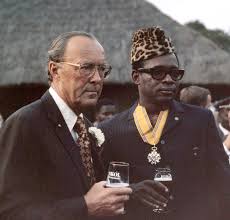
Mobutu and Dutch Prince (1973)

Gelin, daha önce ele aldığımız Kongo Krallığı’na dönelim. Bu krallık 17. yüzyılda çökmüş olsa da 1960’da Belçika’nın sömürge yönetiminden bağımsızlığını kazanan modern ülke, ismini ondan alıyor. Bağımsız bir devlet olarak Kongo, 1965-1997 yılları arasında Joseph Mobutu yönetiminde neredeyse aralıksız bir ekonomik gerileme ve artan yoksulluk yaşadı. Bu gerileme Mobutu’nun, Laurent Kabila tarafından devrilmesinin ardından da devam etti. Mobutu son derece sömürücü bir dizi ekonomik kurumu hayata geçirdi. Halk yoksullaştı fakat Mobutu ve çevresindeki “Büyük Zerzevat” (Les Gross Legumes) olarak bilinen elitler müthiş bir zenginliğe kavuştular. Mobutu doğduğu yer olan ülkenin kuzeyindeki Gbadolite’de kendisine büyük bir saray inşa ettirdi. Bu sarayın Avrupa seyahatlerinde kullanmak için sık sık Air France’dan kiraladığı süpersonik Concord jetinin inebileceği büyüklükte bir de havaalanı vardı. Avrupa’da şatolar satın aldı ve Belçika’nın başkenti Brüksel’de geniş araziler edindi.

Kongoluların yoksulluğunu artırmak yerine onları zenginleştirecek ekonomik kurumlar tesis etmesi Mobutu için daha iyi olmaz mıydı? Mobutu ülkesinin refah düzeyini artırmayı başarsaydı daha fazla parası olmaz mıydı? Kiralamak yerine bir Concorde’u satın alamaz mıydı? Ya da daha fazla şatoya, malikâneye ve muhtemelen daha büyük, daha güçlü bir orduya sahip olamaz mıydı? Dünyanın pek çok ülkesinin yurttaşları için üzülerek söylemek gerekir ki, yanıt hayır olacaktır. Ekonomik süreçler için teşvik sağlayan ekonomik kurumlar, eşzamanlı olarak, elde edilen geliri ve gücü yağmacı bir diktatörü ve çevresindeki politik güce sahip diğer kişileri yoksullaştıracak biçimde yeniden dağıtabilir.

Temel sorun, ekonomik kurumlar üzerinde mutlaka anlaşmazlıklar ve çatışmaların meydana gelecek olmasıdır. Bir ülkenin zenginliği, bu zenginliğin nasıl dağıtıldığı ve gücün kimin elinde olduğu konusunda, farklı kurumlar farklı sonuçlar doğururlar. Kurumların teşvik ettiği ekonomik büyüme hem kazananlar hem de kaybedenler yaratır. Bu durum, bugün dünyanın zengin ülkelerinde gördüğümüz refahın temellerini atan Sanayi Devrimi esnasında İngiltere’de çok belirgindi. Buhar gücü, taşımacılık ve tekstil üretimindeki bir dizi çığır açıcı teknolojik değişimde kendini gösteriyordu. Toplam gelirde muazzam bir artışa yol açmasına ve sonuçta modern sanayi toplumunun temelini atmasına rağmen pek çok kişi makineleşmeye kesin bir biçimde karşı çıktı. Cehalet ya da dar görüşlülük nedeniyle değil; tam tersine. Daha ziyade, ekonomik büyüme karşısındaki bu muhalefetin kendi içinde –maalesef tutarlı– bir mantığı vardır. Ekonomik büyüme ve teknolojik değişim, beraberinde büyük iktisatçı Joseph Schumpeter’in deyişiyle “yaratıcı yıkım” getirir. Eskiyi yeniyle değiştirirler. Yeni sektörler kaynakları eskilerden kendilerine doğru çeker. Yeni şirketler işi eskilerinin elinden alır. Yeni teknolojiler mevcut becerileri ve makineleri işe yaramaz hale getirir. Ekonomik büyüme süreci ve dayandığı kapsayıcı kurumlar, “siyasi arenada ve piyasada kazananlar olduğu kadar kaybedenler de yaratır. Yaratıcı yıkıma duyulan korku, çoğunlukla kapsayıcı ekonomik ve siyasal kurumlara muhalefetin temelini oluşturur.

Avrupa tarihi, yaratıcı yıkımın sonuçlarına canlı bir örnek teşkil eder. 18. yüzyılda, Sanayi Devrimi’nin arifesinde, çoğu Avrupa ülkesinin kontrolü aristokrasilerin ve geleneksel elitlerin elindeydi ve bunların başlıca gelir kaynaklarını arazi sahipliği ya da monarşilerin onlara sağladığı tekeller ve uyguladıkları giriş engelleri sayesinde yararlandıkları ticari ayrıcalıklar oluşturuyordu. Sanayinin, fabrikaların ve şehirlerin yayılması, yaratıcı yıkım fikriyle örtüşecek şekilde, kaynakları araziden ayırdı, arazi kiralarını düşürdü ve arazi sahiplerinin işçilerine ödedikleri ücretleri artırdı. Bu elitler aynı zamanda onların ticari ayrıcalıklarını aşındıran yeni işadamlarının ve tacirlerin ortaya çıkışına şahit oldular. Neticede, ekonomik bakımdan sanayileşmenin kaybedenleri açık bir biçimde bu elitlerdi. Şehirleşme ve sosyal bilince sahip bir orta sınıfın ve bir işçi sınıfının ortaya çıkışı, arazi sahibi aristokratların siyasal tekeline de meydan okudu. Böylece, Sanayi Devrimi’nin yayılmasıyla aristokratlar yalnızca ekonomik bakımdan değil siyasal bakımdan da kaybedenler olma riskiyle yüz yüze geldiler; çünkü siyasal güçlerini de kaybetmeye başlamışlardı. 

Ekonomik ve siyasal güçlerinin tehlikeye girmesiyle bu elitler sıklıkla sanayileşmeye karşı zorlu bir muhalefet oluşturdular. Sanayileşmenin tek kaybedeni aristokrasi değildi. El becerilerinin yerini makineleşmenin aldığı zanaatkârlar da sanayinin yayılmasına karşı çıktılar. Pek çoğu bu durum karşısında örgütlendi; ayaklandılar ve geçim şartlarındaki gerilemeden sorumlu tuttukları makineleri tahrip ettiler. Onlar “Luddistler”di; bu sözcük bugün teknolojik değişime karşı direnişle eşanlamlı hale geldi. 1733’te dokumacılığın makineleşmesindeki en önemli ilerlemelerden biri olan “atkı mekiği”ni icat eden John Kay’in evi 1753’te Luddistler tarafından yakıldı. İplikçilikteki en önemli ilerlemelerden biri olan iplik eğirme makinesinin mucidi James Hargraves de benzer bir muamele gördü.

Gerçekte, zanaatkârlar sanayileşmeye karşı muhalefet konusunda arazi sahipleri ve elitlerden çok daha az etkiliydi. Luddistler arazi sahibi aristokrasinin elindeki siyasal güce –başka grupların amaçlarına karşı siyasal sonuçlara etki edebilme yetisine– sahip değildiler. Sanayileşme Luddistlerin muhalefetine rağmen İngiltere’de ilerlemesini sürdürdü, çünkü aristokrasinin muhalefeti –ciddi bir muhalefet olmasına rağmen– bastırılmıştı.  Mutlakiyetçi monarşilerin ve aristokratların kaybedecek çok daha fazla şeye sahip olduğu Avusturya-Macaristan ve Rusya imparatorluklarında ise sanayileşme engellendi. Bunun sonucunda, Avusturya-Macaristan ve Rusya ekonomilerinin hızı kesildi. 19. yüzyılda büyük bir ekonomik büyüme gösteren diğer Avrupa ülkelerinin gerisinde kaldılar.

Belirli grupların başarı ve başarısızlıklarından bağımsız olarak, bu sözü edilenlerden çıkan bir ders çok açıktır; güçlü gruplar çoğunlukla ekonomik ilerlemenin ve refahın karşısında yer alırlar. Ekonomik büyüme yalnızca daha fazla ve daha iyi makinelere, daha fazla ve daha iyi eğitime dayalı bir süreç değildir, aynı zamanda geniş çaplı bir yaratıcı yıkımın eşlik ettiği dönüştürücü ve istikrarsızlaştırıcı bir süreçtir de. Bu nedenle ekonomik büyüme, ancak ekonomik ayrıcalıklarını yitireceklerini sezen ekonomik kaybedenler ve siyasal güçlerinin azalacağından endişe eden siyasal kaybedenler tarafından engellenmezse yol alabilir.