Monday, September 16, 2013

“Kem âlât ile kemâlat olmaz”


Adalet mekanizmasının işleyişi için söylenen ve Victor Hugo’ya atfedilen erdemli bir söz vardır: “Yargılamanın adil olması yetmez, adil görünmelidir de…”

Hem de bizzat mahkumun nazarında adil görünmelidir adalet. Siyaset için de, uluslararası ilişkiler için de, çocuk pedagojisi için de geçerli bir kuraldır bu: Haklı olman yetmez, senin haklılığından sureta zarar gören taraflar da dahil olmak üzere herkesin nezdinde haklı görünmeyi başarabilmelisin.
Haklı görünmenin temel koşulu, amaçlar kadar araçların da meşru olmasıdır. Eskilerin “Kem âlât ile kemâlat olmaz” dedikleri mesele…

Kerim Balcı-Zaman-13 Ey 13

Ölümcül Kimlikler


Bütün bir insanlık özel durumlardan başka bir şey değil, yaşam farklılıklara gebe, "yeniden üretim" varsa da asla aynı olmuyor. İstisnasız her insan karma bir kimlikle donanmış; unutulmuş çatlakları, hiç akla gelmeyen dallanmaları ortaya çıkarmak ve kendisinin karmaşık, biricik olduğunu, yerinin başkası tarafından doldurulamayacağını keşfetmesi için kendi kendine birkaç soru sorması yeter. İşte herkesin kimliğini belirten tam da bu: karmaşık, biricik, yeri doldurulamaz, başka hiç kimseyle karıştırılamaz. Bu noktada ısrar etmemin nedeni, kimliğini belirtmek için sadece "Arabım", "Fransızım", "Siyahım", "Sırpım", "Müslümanım", "Yahudiyim" denmesi gerektiği şeklindeki hâlâ son derece yaygın ve benim gözümde son derece sakıncalı düşünme alışkanlığı; çeşitli aidiyetlerini benim yaptığım gibi sıralayan biri, derhal kimliğini bütün renklerin silineceği bulanık bir çorba içinde "eritmek" istemekle suçlanır. Oysa benim söylemeye çalıştığım bunun tam tersi. Bütün insanların eşit olduğu değil ama her birinin farklı olduğu. Kuşkusuz bir Sırp bir Hırvat'tan farklıdır, ama her Sırp da bütün öteki Sırplardan farklıdır ve her Hırvat da bütün öteki Hırvatlardan farklıdır.

Gene Lübnanlı bir Hıristiyan Lübnanlı bir Müslümandan farklıysa, ben birbirinin aynısı iki Lübnanlı Hıristiyan tanımıyorum, ne de iki Müslüman, ayrıca dünyada birbirinin eşi iki Fransız, iki Afrikalı, iki Arap ya da iki Yahudi de yok. İnsanlar birbirinin yerini tutamaz ve aynı Ruandalı ya da İrlandalı ya da Lübnanlı ya da Cezayirli ya da Bosnalı aile içinde, aynı çevrede yetişen iki kardeş arasında, görünüşte çok küçük ama onları politika, din ya da günlük yaşam konusunda birbirlerinin kutbuna itecek, birini bir katil, diğeriniyse bir diyalog ve uzlaşma insanı yapacak farklılıklara sık rastlanır.

Sunday, September 8, 2013

Doğu-Batı


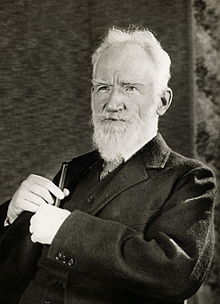
George Bernard Shaw and Islam


"If any religion had the chance of ruling over England, nay Europe within the next hundred years, it could be Islam."

"I have always held the religion of Muhammad in high estimation because of its wonderful vitality. It is the only religion which appears to me to possess that assimilating capacity to the changing phase of existence which can make itself appeal to every age. I have studied him - the wonderful man and in my opinion far from being an anti-Christ, he must be called the Savior of Humanity."

"I believe that if a man like him were to assume the dictatorship of the modern world he would succeed in solving its problems in a way that would bring it the much needed peace and happiness: I have prophesied about the faith of Muhammad that it would be acceptable to the Europe of tomorrow as it is beginning to be acceptable to the Europe of today."


Sir George Bernard Shaw in 'The Genuine Islam,' Vol. 1, No. 8, 1936.

Friday, September 6, 2013

The Legacy of European Occupation


The European powers colonized one Islamic country after
another. France occupied Algeria in 1830, and Britain Aden
nine years later. Tunisia was occupied in 1881, Egypt in 1882,
the Sudan in 1889 and Libya and Morocco in 1912. In 1915 the
Sykes-Picot agreement divided the territories of the moribund
Ottoman Empire (which had sided with Germany during the
First World War) between Britain and France in anticipation of
victory. After the war, Britain and France duly set up protectorates
and mandates in Syria, Lebanon, Palestine, Iraq and
Transjordan. This was experienced as an outrage, since the
European powers had promised the Arab provinces of the
Ottoman Empire independence. In the Ottoman heartlands,
Mustafa Kemal, known as Atatürk (1881-1938), was able to
keep the Europeans at bay and set up the independent state of
Turkey. Muslims in the Balkans, Russia and Central Asia became
subject to the new Soviet Union. Even after some of these
countries had been allowed to become independent, the West
often continued to control the economy, the oil or such resources
as the Suez Canal. European occupation often left a
legacy of bitter conflict. When the British withdrew from India
in 1947, the Indian subcontinent was partitioned between
Hindu India and Muslim Pakistan, which are to this day in a
state of deadly hostility, with nuclear weapons aimed at each
other's capitals. In 1948 the Arabs of Palestine lost their homeland
to the Zionists, who set up the Jewish secular state of Israel
there, with the support of the United Nations and the
international community. The loss of Palestine became a potent
symbol of the humiliation of the Muslim world at the
hands of the Western powers, who seemed to feel no qualms
about the dispossession and permanent exile of hundreds of
thousands of Palestinians.

Tuesday, September 3, 2013

Fundamentalism


The Western media often give the impression that the embattled
and occasionally violent form of religiosity known as
"fundamentalism" is a purely Islamic phenomenon. This is
not the case. Fundamentalism is a global fact and has surfaced
in every major faith in response to the problems of our
modernity. There is fundamentalist Judaism, fundamentalist
Christianity, fundamentalist Hinduism, fundamentalist Buddhism,
fundamentalist Sikhism and even fundamentalist
Confucianism. This type of faith surfaced first in the Christian
world in the United States at the beginning of the twentieth
century. This was not accidental. Fundamentalism is not
a monolithic movement; each form of fundamentalism, even
within the same tradition, develops independently and has its
own symbols and enthusiasms, but its different manifestations
all bear a family resemblance. It has been noted that a fundamentalist 
movement does not arise immediately, as a kneejerk
response to the advent of Western modernity, but only
takes shape when the modernization process is quite far advanced.
At first religious people try to reform their traditions
and effect a marriage between them and modern culture, as
we have seen the Muslim reformers do. But when these moderate
measures are found to be of no avail, some people resort
to more extreme methods, and a fundamentalist movement is
born. With hindsight, we can see that it was only to be expected
that fundamentalism should first make itself known in
the United States, the showcase of modernity, and only appear
in other parts of the world at a later date. Of the three
monotheistic religions, Islam was in fact the last to develop a
fundamentalist strain, when modern culture began to take
root in the Muslim world in the late 1960s and 1970s. By this
date, fundamentalism was quite well established among
Christians and Jews, who had had a longer exposure to the
modern experience.


Secular Ideologies and Results


The nation states of Europe embarked on an arms race
in 1870, which led ultimately to two world wars. Secular ideologies
proved to be just as murderous as the old religious bigotry,
as became clear in the Nazi Holocaust and the Soviet
Gulag. The Enlightenment philosophes had believed that the
more educated people became, the more rational and tolerant
they would be. This hope proved to be as utopian as any of the
old messianic fantasies. Finally, modern society was committed
to democracy, and this had, in general, made life more just and
equitable for more people in Europe and America. But the
people of the West had had centuries to prepare for the democratic
experiment. It would be a very different matter when
modern parliamentary systems would be imposed upon societies
that were still predominantly agrarian or imperfectly
modernized, and where the vast majority of the population
found modern political discourse incomprehensible.

**

But it is true that secularization has been very different in the Muslim
world. In the West, it has usually been experienced as
benign. In the early days, it was conceived by such philosophers
as John Locke (1632-1704) as a new and better way of
being religious, since it freed religion from coercive state
control and enabled it to be more true to its spiritual ideals.
But in the Muslim world, secularism has often consisted of a
brutal attack upon religion and the religious.
Atatiirk, for example, closed down all the madrasahs, suppressed
the Sufi orders and forced men and women to wear
modern Western dress. Such coercion is always counterproductive.
Islam in Turkey did not disappear, it simply went underground.


Ottomans' Struggle for Transformation


¨When the Ottomans had tried to reorganize their [16th century]army
along Western lines in the hope of containing the threat
from Europe, their efforts were doomed because they were
too superficial. To beat Europe at its own game, a conventional
agrarian society would have to transform itself from
top to bottom, and re-create its entire social, economic,
educational, religious, spiritual, political and intellectual
structures.And it would have to do this very quickly, an impossible
task, since it had taken the West almost three hundred
years to achieve this development.

Emniyet ve Güven


Cumhuriyet sonrası Türkiye’sinde emniyetin tesisi için dökülen kan, beş asır, hem de yabancı uyruklar arasında asâyiş temini adına dökülmemişti... Evet, yapılan araştırmalar ve istatistikler, altı yüz senelik Osmanlı dönemindeki, bütün müsademelerde ölenlerin sayısının, son yarım asırda ölenlerin sayısından daha az olduğunu göstermektedir. Öyleyse, Osmanlı fetihlerinin sırf kaba kuvvete dayandığını iddia etmek kat’iyen doğru değildir. Diğer taraftan, o günkü nakil vasıtaları nazara alınacak olursa, o kadar geniş toprağa dağılmış bir devleti idare etmenin, sadece devlet otoritesiyle ve askerî güçle mümkün olamayacağı bedîhîdir.

Sonsuz Nur - M. Fethullah Gülen

The Religious Movement in Islam History


The civil wars raised many crucial questions. How could a society
that killed its devout leaders (imams) claim to be guided
by God? What kind of man should lead the ummah? Should
the caliph be the most pious Muslim (as the Kharajites believed),
a direct descendant of the Prophet (as the Shiis contended),
or should the faithful accept the Umayyads, with all
their failings, in the interests of peace and unity? Had Ali or
Muawiyyah been right during the first fitnah? And how Islamic
was the Umayyad state? Could rulers who lived in such
luxury and condoned the poverty of the vast majority of the
people be true Muslims? And what about the position of non-
Arab converts to Islam, who had to become "clients" (mawali)
of one of the Arab tribes? Did this not suggest a chauvinism
and inequity that was quite incompatible with the Quran?

It was from these political discussions that the religion and
piety of Islam, as we know it, began to emerge. Quran reciters
and other concerned people asked what it really meant to be a
Muslim. They wanted their society to be Islamic first and Arab
second. The Quran spoke of the unification (tawhid) of the
whole of human life, which meant that all the actions of the
individual and all the institutions of the state should express a
fundamental submission to God's will. At an equally formative
stage of their history, Christians had held frequently vituperative
discussions about the nature and person of Jesus, which
helped them to evolve their distinctive view of God, salvation
and the human condition. These intense Muslim debates
about the political leadership of the u m m a h after the civil wars
played a role in Islam that was similar to the great Christological
debates of the fourth and fifth centuries in Christianity.

The prototype and supreme exemplar of this new Muslim
piety was Hasan al-Basri (d. 728).

Monday, September 2, 2013

Nusayrîler


Suriye'de nüfusa oranları en fazla yüzde on olan Nusayrîler (bunlara Alevîler de deniyor) ise, Hafız Esed'den önce birçok İranlı alim tarafından Müslüman kabul edilmeyen bir mezhebe bağlıdırlar. Hafız Esed darbe ile iktidara gelip de devlet başkanı olmak isteyince, o zamanın anayasasında 'devlet başkanlarının Müslüman olma şartı' bulunduğundan Mûsâ Sadr gibi bazı Şîî alimleri ikna ederek 'Nusayrîlerin Şîî Müslüman olduklarına dair' fetvalar aldı.

Günümüzün İslam Alimleri (!)

Bugün, ilham iklimine açılamadıkları için maneviyata inanmayan, Kur’ân’la alâkaları ilkokul talebelerinin ilimle alâkaları seviyesinde bile olmayan, hâfızalarında metin ve senediyle, bırakın Hadis adına en az 100.000 rivayet bulunmayı, 100 hadis bile bulunmayanlar, ilim olmaktan uzak malûmatları altında ezilip, içtihad iddia edebiliyorlar. Hazmedilmiş süt haline gelmemiş ve kaydan ibaret malûmatlarıyla halk tabanında da itibar görmeyince, kendilerini terazinin bir gözüne, büyük selef âlimlerini diğer gözüne koyup, kendilerini ağır göstermek için diğer göze koydukları âlimleri tenkitle güya hafifleştirmeye çalışıyorlar. Nerede şaz, cevaplandırılmış mesele varsa yeni meseleymiş gibi gündeme getiriyor, orijinalite hevesi ve ispat-ı vücut adına üzerinde icma hâsıl olmuş hususlarda bile farklı konuşup yazarak, komplekslerini tatmine çalışıyorlar. Bir yanda bunlar olurken, diğer yanda Mehdîlik iddia edenden geçilmiyor. Bir başka yanda farklı farklı İslâm telâkkileri, İslâm devrimciliği, hiç usûl bilgisi olmadan Kur’ân ve Hadis yorumları ve daha başka yönelişler, küçük küçük fırkalar oluşturuyor. Bunların halini Kur’ân, çok kötü bir misal nitelemesiyle, varıp da uzaklaştırmak için kendisine bir şey atsan, acaba bir kemik midir diye seğirten ve dili dışarıda telesen (soluyan); kendi haline bırakıp bir şey yapmasan, yine kemik peşinde yanına sokulup, dili dışarıda telesen köpeğin haline benzetmektedir.

Ali Ünal,Zaman Gazetesi, 2 Eylül 2013

Sonsuz Nimetler ve Matematik


Biliyorum, "Allah'ın sonsuz nimeti olduğunu herkes görebilir; seni bu kadar etkileyen ne?" diye düşünüyorsun. Bunu sana şu şekilde açıklayabilirim: Alman matematikçi ve kümeler kavramını ortaya atan George Cantor (1845–1918) sonsuz kümeleri birbiriyle karşılaştırmış; her sonsuzun aynı büyüklükte olmadığını ifade etmiştir. 

Pozitif tam sayılar {1, 2, 3, …} kümesi ile bire-bir eşlenebilen sonsuz kümelere, matematikte sayılabilir sonsuz (countably infinite), böyle bir eşleme yapılamayan kümelere de sayılamayan sonsuz (uncountably infinite) denir. Meselâ, pozitif çift tam sayılar {2, 4, 6, …} sayılabilir sonsuz bir kümedir; çünkü her çift sayı, yarısı ile eşlenebilir. Ama 3 ile 4 arasındaki reel (gerçek) sayılar [Bu (3,4) açık aralığı demek ve bu aralıktaki sayılardan birkaçı, p, 7/2, Ö15'tir.] pozitif tam sayılarla eşlenemediğinden sayılamayan sonsuz bir kümedir. İlki de ikincisi de sonsuzdur; fakat ikinci kümenin elemanları sayılamaz. Bunu, ikinci kümenin sonsuzluğu daha büyük veya eleman sayısı "daha çok" şeklinde de anlayabilirsin. 

Aslında şöyle anlaşılmalı: Sayılamayan sonsuza kıyasen, sayılabilir sonsuz neredeyse "yok" gibidir! Şimdi daha çok şaşırmış olmalısın! Âyette nimetlerin sonsuzluğu değil, sayılamayacağı ifade edilmiştir. Elbette "sayılamayan sayıda" nimet sonsuzdur; ancak bunun farklılığı ve büyüklüğü "sayılamayan sonsuz küme" ile bir nebze akla yaklaştırılabilir. Daha ötesini söyleyeyim: Eleman sayısı sayılamayan sonsuzdan da yüksek kümeler var!.. 

Enes, Ali'nin anlattıklarını anlama noktasında zorlanmıştı. Ancak o da Ali'yi şaşırtacak bir şey söyledi: "Son söylediğin; 'ne gözlerin gördüğü ne de kulakların işittiği, akla hayâle gelmez Cennet nimetleri'ne işaret ediyor olmasın!.."

Hasan Çamuş

Sızıntı Dergisi Haziran 2013 sayısı